Introduction
This is not a list pretending to be fully objective.
Film history matters to me deeply. I take words like greatness, innovation, foundation, and influence seriously. Some films stand there like bedrock and they deserve to be placed higher. But I have also always felt that film history should never be reduced to the endless recertification of a small group of classics. Alongside the names that have already been written about again and again, I care about the works that still deserve to be seen more widely, the films that remain too sharp, too strange, too personal, too ahead of their time to be fully absorbed. And some films enter this list not because history has already stamped them with approval, but simply because I love them.
So this Top 200 is neither a standard answer nor a performative rejection of standard answers. It feels more like a spiritual map I have made while living with cinema. Some places are towers, some are ruins, some are still burning. It respects film history, but it does not worship consensus. Cinema, after all, is not only an important art form. It is also an art form that leaves marks on people.
This list is simply my attempt to leave those marks behind as honestly as I can.

1

Meshes of the Afternoon
1943 ‧ Fantasy/Thriller ‧ 14 mins
I’ve always felt that Meshes of the Afternoon isn’t just one of the greatest experimental films of the twentieth century, it’s one of the very few works in film history that genuinely reinvented cinematic consciousness. What’s so staggering about Maya Deren is not simply that she was more avant-garde than her contemporaries, but that her understanding of dreams, time, the body, space, subjectivity, and even feminism still feels almost unbelievable today. A lot of great films become great because they open up a language that later gets quoted, imitated, and expanded on again and again. But Meshes of the Afternoon is much rarer than that, it has almost never been truly replicated. Later filmmakers can borrow its imagery, its loops, its fractures, its dizziness, but they rarely get anywhere near its actual core. It is not a classic that film history has fully absorbed, but a work that is still out in front, still forcing later artists to chase after it and honestly, maybe still not fully caught up with.
2

Jeanne Dielman, 23 Quai du Commerce, 1080 Bruxelles
1975 ‧ Drama ‧ 3h 18m
Today it is widely read as a feminist classic, and that reading is absolutely valid. But I’ve always felt that Akerman’s greatness lies precisely in the fact that she was not making a film that belongs only to “women’s issues.” What she reaches instead is something broader and more devastating is the modern human condition itself, the way daily order slowly turns into a trap, the way time loses all elasticity through repetition, the way life begins to collapse beneath an outward surface of calm. The power of Jeanne Dielman has never been only conceptual. Formally, it is almost flawless with the purity of its minimalism, the relentless use of static long takes, the refusal of non-diegetic music, and the cold realism of natural light. All of it fuses together with extraordinary precision. But what makes it truly overwhelming is that none of these choices exist for form alone. They are there to reshape time itself, to make the viewer physically feel the suffocation created by routine. It does not simply depict life, it reconstructs the pressure of living.
3

Citizen Kane
1941 ‧ Mystery/Mystery ‧ 1h 59m
That Orson Welles made this as his first feature at twenty-five still feels almost absurd. It’s one of those films that didn’t just enter film history, but actually shook it. The editing, the deep focus, the camera movement, the layered staging, the low angles, the production design, the sheer number of visual ideas packed into nearly every scene, all of it has been absorbed so deeply into cinema that it basically helped build the grammar the medium still speaks in. And that may be its greatest triumph, even as film technology keeps evolving, nothing has really managed to undo the foundation it laid down. What’s even more incredible is that Citizen Kane doesn’t survive only as a monument. More than eighty years later, it still moves with such force and invention that even a general viewer can watch it today and never feel like they’re doing homework.
4

Man with a Movie Camera
1929 ‧ Drama/Silent ‧ 1h 8m
Is a hundred years really that long? From film to digital, cinema has always been born out of the collision between technology and light, and Man with a Movie Camera pushed that collision to an extreme when the medium itself was still young. What’s most astonishing about it is that it creates a truly cinematic language without leaning on plot, characters, or performance in the usual sense. Vertov is practically using the camera and the editing to conduct a full-scale visual experiment, throwing montage around at dazzling speed, but never just for show. Every cut is proving that cinema can think, observe, and organize reality on its own terms. For a film made when the industry was still in its early rise, it feels almost impossibly ahead of its time. It’s not just a great film, but a declaration of what cinema could become. The pure force of its editing, its absolute trust in the audience, and its near-perfect fusion of documentary and experimental film are what make it still feel so sharp a century later.
5

Vertigo
1958 ‧ Thriller/Mystery ‧ 2h 9m
Vertigo feels like a dream all the way through. It is too beautiful, too dangerous, hypnotic to the point of madness, filled with a kind of spell you can’t quite shake off. What makes Hitchcock so extraordinary is that he can take what seems like a simple conceptual form and turn it into an image-system that keeps deepening, shifting, and folding back on itself. The famous “Hitchcock zoom” has of course become one of the most iconic devices in film history. Moreover, the greatness of Vertigo goes far beyond technique. What it really does is construct a whole system of the gaze. Hitchcock creates an object of desire that is already disguised, already manufactured to be looked at, but at the same time he also creates a viewing subject that only appears stable, and is just as false. As the story unfolds, that unstable relationship of looking and being looked at is gradually exposed, then turned inside out. Vertigo is one of the ultimate films about how cinema creates desire, and how it can just as easily destroy it.
6
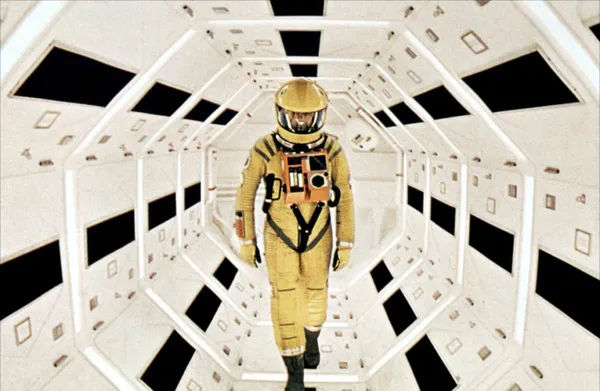
2001: A Space Odyssey
1968 ‧ Sci-fi/Adventure ‧ 2h 14m
Whenever we discuss science fiction in cinema, 2001: A Space Odyssey is always the one that we are not able to ignore. Kubrick views it from a god’s-eye perspective. He looks at the entire span of human civilization, from the past to the present and the future, and translates that broad vision into cinema with impressive confidence. Its view of the future is still amazing, but what truly makes the film significant is that it is never just about technology. It serves as a perfect cinematic representation of Nietzschean ideas: evolution, transcendence, the end of one form of existence, and the beginning of another. At the same time, 2001 is deeply unsettling in a more fundamental way. It explores humanity’s fear of the stars, the silence and indifference of the cosmos, and how incredibly small the human race seems when it measures itself against the universe. Very few films have ever felt so grand, so cold, and so awe-inspiring all at once.
7
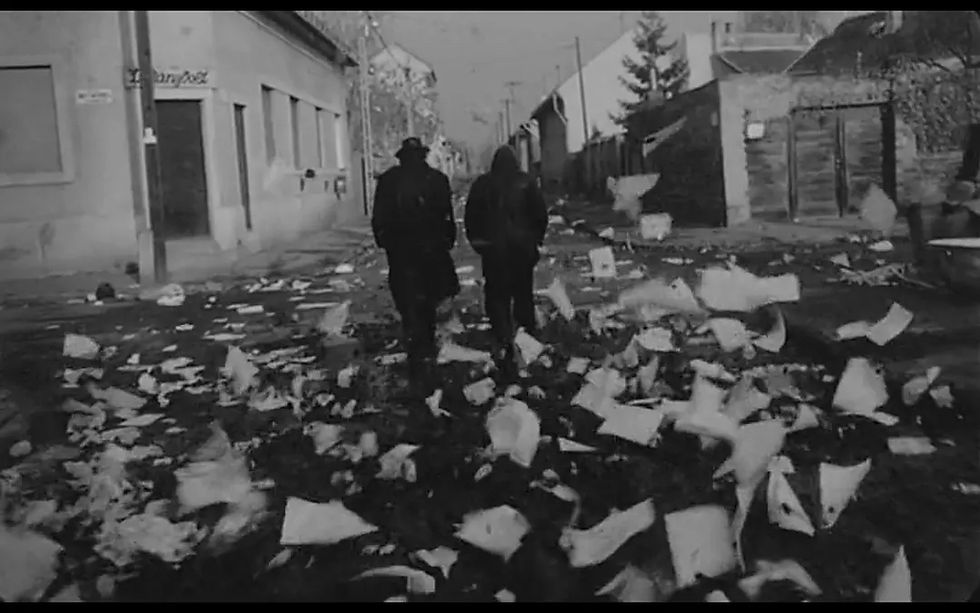
Sátántangó
1994 ‧ Drama/Narrative ‧ 7h 30m
Very few films make time feel the way Satantango does. It presents time not as an abstract idea, but as something heavy, damp, and decaying. Seven hours sounds almost shocking on paper. However, Béla Tarr is remarkable because he doesn’t waste much of that time showing he can go long. Instead, he uses it to create a complete temporal world, one that feels almost sealed shut. The wind, the mud, the rain, the bar, the ruins, and the slow movement of bodies all share the same rhythm of collapse, forming a world that feels impossible to escape. Its greatness comes not just from its long takes or its strict style, but from how it shifts time from serving the narrative to consuming the narrative, consuming the characters, and ultimately, consuming the viewer. Tarr turns cinema into a slow-disintegrating apocalypse, a death dance of repetition, ruin, and false hope. Merging poetry, despair, dark humor, political meaning, and this level of audiovisual control into something so whole makes Satantango feel less like a long film and more like a unique cinematic form that very few artists have ever truly achieved.
8

The 400 Blows
1959 ‧ Family/Drama ‧ 1h 40m
The 400 Blows marks the beginning of the French New Wave and showcases its full impact. To me, it remains the most sincere film of the movement. Truffaut moves away from traditional storytelling; he does not reject emotion but allows it to exist in a looser, unstable, and open form. The freshness of the language, the mobility of the camera, the use of real locations, and the feeling of life unfolding in real time all struck viewers as something genuinely new. The New Wave felt revolutionary not only because of its technical freedom but also due to its constant disruption of the smoothness of old cinema. It creates small fractures between narrative and feeling, between what is shown and what is understood, and pushes viewers into a more subjective way of thinking. The 400 Blows embodies all of this without losing its tenderness. That is why it remains a cornerstone of film history: it not only helped pave the way for what came next but also holds much of what followed within it.
9

On the Silver Globe
1988 ‧ Sci-fi/Adventure ‧ 2h 37m
On the Silver Globe feels like a film that history tried to tear apart, and that struggle somehow added to its greatness. As Żuławski’s ultimate space epic, it has the scale, chaos, and almost unhinged performances, along with a dark, heavy, dystopian atmosphere. What really makes it special is how Żuławski transforms this into a cosmic disaster of language, politics, and spiritual failure all at once. Coming from a literary family, his command of dialogue is on a whole different level; the lines feel like manifestos, curses, or the desperate last words of a dying civilization. Its critique of power, religion, political myth, and collective delusion is surprisingly ahead of its time. It was so ahead of its time that it faced real-life backlash: in 1977, when around eighty percent of the film was done, Żuławski was expelled because the film was viewed as an allegory of the Polish government. Production was halted, and a large amount of footage, props, and sets were destroyed. During that period of exile, he went on to make Possession. It wasn't until 1986, after political change in Poland, that the world could finally see On the Silver Globe in its damaged but still striking form. In a way, what is most remarkable about the film is that it doesn't just critique power in its content; its own fate serves as proof of that critique. It stands as a ruined masterpiece, unfinished yet somehow sharper, wilder, and greater than many films that were allowed to be completed.
10

Blue
1993 ‧ Documentary/Drama ‧ 1h 19m
Blue was Derek Jarman's final film. He made it during the last stage of his life after his AIDS diagnosis. It feels like his last and perhaps most daring act of self-exposure. The film strips away almost everything that cinema typically relies on, leaving only a single field of blue, voices, text, and music. In doing this, it pushes film toward a state that feels even purer and more overwhelming. Here, the viewer no longer just watches. You must engage your hearing, imagination, memory, and bodily sensation all at once. The flow of sound and language starts to create something like a synesthetic resonance. Jarman is not reducing cinema here. He is distilling it to the point where it comes closest to poetry. Poetry is important because it reaches the highest point of life awareness. It carries both great energy and the keenest sensitivity to being alive. That is what Blue becomes: a poem created through image and sound. The world seems to pull back into a cave. Things no longer appear as solid forms but as shadows, echoes, and afterglows cast onto the wall. It is a confrontation with death approaching. It also shows that life still burns inside it.
11

Mulholland Dr.
2001 ‧ Thriller/Mystery ‧ 2h 27m
Mulholland Dr. offers a unique cinematic experience. It presents a grand, strange, glamorous dream that never truly allows you to wake up. David Lynch is irreplaceable because he doesn’t just make dreams appear dreamlike; he brings the entire logic of dreaming into film. This includes its disruptions, its temptations, its harshness, and its flow, all while feeling somehow destined. He creates dreams on screen. The audience knows they are watching a film, but the character in the dream remains unaware that they are dreaming. This difference in perception adds to the almost unmatched magic of Mulholland Dr.. What’s even more impressive is its coherence amidst the chaos of images. Lynch’s skill lies in making something so daring, unpredictable, and close to the subconscious still feel carefully crafted and well-defined. Mulholland Dr. is not just about identity, desire, failure, or the darkness lurking beneath Hollywood's glamour. It resembles a film that fully departs from normal perception, achieving a different kind of truth through that departure.
12

Landscape Suicide
1987 ‧ Documentary/Crime/Drama ‧ 1h 35m
As an American independent filmmaker and educator, James Benning exemplifies cinematic minimalism, and Landscape Suicide takes that simplicity to a harsh level. The film uses static shots and a narration style that resembles recorded testimonies. It slowly immerses the viewer in the memories of two violent crimes. There is no typical emotional manipulation or dramatic direction. The camera remains still, waiting and insisting. It forces us to understand that we are, in a way, just fixed cameras, hunters with knives, or deer that have already fallen. We watch helplessly as the events unfold. The world absorbs death, absorbs violence, absorbs a few human lives, and then carries on as if nothing has truly changed. What is so impactful about James Benning is that the sequences of still images he presents often become the only evidence that an action took place, the final sign that the deceased were ever here. In this sense, cinema stops being a representation and becomes a witness arriving too late.
13

Sunrise: A Song of Two Humans
1927 ‧ Romance/Drama ‧ 1h 35m
F. W. Murnau’s skill with cinematic language in Sunrise is truly remarkable. At first glance, some of the camera movements, superimpositions, and visual designs may seem overly flashy, but the real genius is that every detail adds to the atmosphere, emotion, and tension of what we see. It stands out as one of the greatest achievements of the silent era because it realizes something essential that cinema is not reality, and it doesn't need to be. Murnau creates an experience that goes beyond everyday ways of seeing the world. Through lighting, camera work, costume, set design, and the arrangement of space, he captures the emotional depth of the characters in purely cinematic terms. His approach to perspective and the relationships between foreground and background helped shape visual methods that later filmmakers would build upon. The long takes and tracking shots still feel incredibly vibrant. Sunrise is not just an excellent silent film, it’s one of the clearest early examples of how cinema can develop its own emotional and visual language.
14

Mujō
1970 ‧ Drama ‧ 2h 23m
What is so astonishing about Mujo is that Akio Jissoji turns almost the entire film into an ever-expanding system of metaphor: sculpture and the body, masks and faces, strings and Buddhist ritual instruments, the purity of Kyoto and the young bodies slowly being swallowed by emptiness. Every image seems to collide with and contaminate the next. The camera moves with wild freedom, but never just for display; together with the musical arrangement, it pushes the film into a kind of ritualistic density of shadow. Jissoji is not working with a single theme here, but with a whole structure of ideas of polytheism, religious institutions, the worship and degradation of women, the body as both sacred object and site of violation. His characters feel at once like vessels of desire and figures of sacrifice, caught in a world where holiness and decay, devotion and corruption, can no longer be cleanly separated. What makes Mujo so extraordinary is not simply that it is strange or avant-garde, but that it fuses Japanese religious aesthetics, radical image-making, and a philosophical sense of emptiness into a cinematic language that feels nearly impossible to replace. Its multi-perspective approach and fluid, disruptive camera work also opened paths for later Japanese art filmmakers. That is why it deserves to be considered not only one of the greatest films in Japanese cinema, but one of the greatest in all of Asian cinema: because it reaches into the deepest layers of Eastern religious culture and turns beauty, desire, order, and destruction into one overwhelming vision.
15

The Act of Killing
2012 ‧ Documentary/War/Crime ‧ 2h 2m
The Act of Killing is one of the most spiritually shattering documentaries I have ever seen. What makes it so terrifying is not only that it opens up the historical wound of the anti-Chinese massacres in Indonesia, but that it uses a form so singular it allows cruelty itself to grow visible again in front of the camera. The film-within-the-film structure adds another layer of surrealism to everything with absurd, grotesque, blackly comic, deeply ironic, as if evil is not being narrated so much as slowly revealing itself through performance. The perpetrators reenact the killings while still refusing to truly acknowledge their guilt. They even step into the roles of the victims, yet even when their bodies temporarily enter that position, something in them still resists collapse. The cruelty and immediacy produced by that objectless performance feel even more devastating than straightforward realism, because the film is not simply reconstructing truth, it is forcing truth to surface on its own. What is frightening is that being seen does not automatically lead to repentance, and the camera does not naturally produce moral awakening. The Act of Killing lies captures a state of being that feels at once innocent and grotesquely distorted, where people can lie sincerely, expose themselves through laughter, and move closer and closer to reality through performance while still refusing to face it. Its greatness lies in the singularity of its form, but also in the way it completely destabilizes the boundary between the real and the fabricated, until something even more disturbing than “truth” begins to emerge.
16

Come And See
1985 ‧ War/Horror ‧ 2h 26m
Come and See understands something most war films still shy away from which is war is not just destruction, but an invasion of consciousness. Klimov writes something enormous through something small, using one boy’s experience to expose the machinery behind war and the madness of those who create it. The environment itself becomes a weapon. Mud, smoke, noise, fire, screaming faces, empty fields, and everything works together to carry out a kind of psychic assault, and that assault does not distinguish cleanly between enemy and victim. It contaminates everything it touches. What makes the film so devastating is that Klimov pushes the war film toward the grammar of horror. The dread, the sensory overload, the grotesque faces, the feeling that the world has already crossed into something infernal. All of it expands the expressive scale of the genre until you realize that, in a very real sense, the war film is also a horror film. Come and See is cold all the way through, with almost no room left for hope. And through its repeated direct gazes, its suffocating close-ups, and its brutally subjective point of view, it finally earns its title: this is not a film that tells you about war, but one that forces you to go and see for yourself.
17

Tokyo Story
1953 ‧ Drama ‧ 2h 16m
With a director like Yasujirō Ozu, who can reveal something immense through the smallest detail, Tokyo Story becomes a perfect demonstration of how rich and delicate cinema can be without ever raising its voice. It helped define what many people now think of as a distinctly Japanese screen aesthetic, but what makes it so lasting is that every part of it feels shaped by Ozu’s own unmistakable sensibility: the layered compositions, the stillness of the rooms, the way dialogue lands, even the placement of everyday objects inside the frame. Nothing is accidental. His low, quietly observant camera and those unforgettable frontal or slightly distanced views create a strange balance between intimacy and removal, as if the film is both living with these people and already mourning them. Even the perspective can feel subtly exaggerated, not for flourish, but to make space itself carry emotion. Ozu never pushes too hard, never explains too much, and that is exactly why the film cuts so deep. Everything it wants to say is already there in the images, and every viewer ends up finding the part that hurts them most.
18

The Passion of Joan of Arc
1928 ‧ Drama/Indie film ‧ 1h 54m
Carl Theodor Dreyer’s cinema always carries some of the most devastating images ever put on screen, and The Passion of Joan of Arc may be the purest example of that power. What makes it so overwhelming is that it tears down the invisible barrier between the character and the viewer. This is no longer just about moving emotion around; it is about insisting on presence, making suffering feel physically, unbearably near. The endless close-ups of faces do not simply register expression, they break through the screen. Every look, every tremor, every tear becomes overwhelming in its force. The film feels like one sustained climax, charged with a kind of theatrical intensity so extreme it turns into something almost abstract, almost terrifyingly pure. Dreyer takes suffering out of the realm of vague spiritual idea and makes it immediate, human, and impossible not to feel. Even without synchronized sound or music, it strikes with astonishing force. These are some of the most honest images cinema has ever produced, and for me it remains one of the greatest silent film ever made.
19

Pierrot le Fou
1965 ‧ Romance/Crime ‧ 1h 50m
Pierrot le Fou feels like cinema discovering it can burn and sing at the same time. Godard takes the road movie, the lovers-on-the-run story, the crime film, the political film, and the pop-art object, then tears holes through all of them until something stranger and freer begins to emerge. It has color that feels almost chemically alive, dialogue that can turn from flirtation to philosophy in a second, and a rhythm that is always threatening to break apart but somehow never loses its grace. What makes the film so great is that its chaos is never empty. Beneath the play, the jokes, the references, and the formal rebellion, there is a real sadness here, a sense that modern life, language, love, and even images themselves are all slipping out of reach. Godard lets the film keep reinventing itself from scene to scene, and that constant instability becomes its deepest beauty. Pierrot le Fou is wild, romantic, self-destructive, and dazzlingly alive, one of those films that makes cinema feel less like a medium than like an event.
20

La Dolce Vita
1960 ‧ Comedy/Thriller ‧ 2h 56m
La Dolce Vita is, to me, Fellini’s greatest film. With a gaze that feels almost brutally clear, he exposes the spiritual imbalance hiding beneath material abundance, glamour, and spectacle. Its critique of media culture is one of the reasons the film still feels so alive now: the cameras, the gossip, the performance of public life, the endless circulation of surfaces, none of it belongs only to its own era. What makes the film so powerful is that its sweetness is always false. The sweetness of the images is emptiness. Fellini takes the lightest, most decadent, most seductive surface and uses it to approach the heaviest questions possible. Beneath all the grandeur and elegance there is only exhaustion, decay, and a void that keeps widening. La Dolce Vita understands that pleasure, when pushed to its limit, becomes hollow; that spectacle, when seen clearly enough, begins to rot from within. Those who see through it drift toward self-destruction, while those who cannot bear that clarity choose exile of another kind — a surrender to distraction, drifting, and spiritual abandonment. It is a film of dazzling surfaces and
21

Blow-Up
1966 ‧ Thriller/Mystery ‧ 1h 51m
What makes Blow-Up so fascinating is the way it lets professional detachment and human uncertainty keep bleeding into each other. A photographer is supposed to capture, to verify, to turn the world into evidence, and yet the more the film moves forward, the less stable that entire idea becomes. Antonioni’s reflexive and inventive use of the medium is astonishing. He keeps giving us images that seem to confirm something, then quietly undoing them, pushing the viewer into the same state of doubt as the protagonist. What is real and what is illusion stop feeling like clean opposites. Ideology itself begins to look like a surface, and beneath that surface the relationship between the individual and the world they inhabit starts to feel strangely imagined, unstable, almost fictional. If truth can exist outside human perception, does it still function as truth for us? Is truth something objective, or does it only come into being once it passes through consciousness? Blow-Up does not offer easy answers, and that is exactly why it stays with you. Antonioni turns uncertainty into a whole field of philosophical tension, and once you enter that field, questions about image, reality, perception, and existence begin multiplying on their own.
22

The Color of Pomegranates
1969 ‧ Drama/Music ‧ 1h 19m
The Color of Pomegranates is one of those films that almost defeats language the moment you try to describe what it feels like. Sergei Parajanov seems to be searching for a way to express a poet’s inner world through images that are often still, frontal, and nearly sculptural, yet somehow never inert. Religion, ritual, and national culture are always overwhelmingly present in his cinema, and here they reach an almost unbearable intensity. What makes the film so singular is the way Parajanov fuses painting, music, costume, gesture, and sacred iconography into a single highly stylized image-world. It does not unfold like an ordinary biography, nor does it try to explain the poet through psychology or narrative logic. Instead, it gathers fragments of a life and stitches them into something elusive, ceremonial, and dreamlike. Poetry is often said to be untranslatable, but The Color of Pomegranates comes astonishingly close to translating not the words of poetry, but its texture, its mystery, and its way of existing between vision and feeling.
23

Spring in a Small Town
1948 ‧ Romance/Drama ‧ 1h 38m
Spring in a Small Town feels almost startling in how ahead of its time it is. Watching it now, you realize that some of what makes it great may only become fully visible in retrospect. Fei Mu builds an entire audiovisual system out of atmosphere, emotional hesitation, and spatial tension. The damaged environment, the fragile emotional states of the characters, the enclosed spaces, the deep-focus compositions, the camera movement, the performers’ restraint, everything is working together with extraordinary precision. Nothing feels accidental, and nothing needs to announce itself loudly. What is so astonishing is that as early as 1948, Chinese cinema had already arrived at something that feels uncannily close to what later modernist cinemas and even aspects of the French New Wave would be praised for with loosened narrative pressure, emotional ambiguity, a camera that observes consciousness rather than merely recording action. The film is elegant, daring, and incredibly pure. More than a story, it feels like a film unfolding inside thought itself.
24
DuCinema01.jpg)
Histoire(s) du cinéma
1988 ‧ Documentary ‧ 4h 26m
Godard does not approach film history as something stable, orderly, or complete. He treats it as a battlefield of images, sounds, wars, faces, texts, ghosts, and unfinished moral debts. What makes the work so overwhelming is that it never simply “talks about” cinema. It thinks through cinema, collides films against each other, lets one image accuse another, lets history leak into aesthetics and aesthetics stain history. Watching it can feel like being buried under fragments, but that density is exactly the point. Godard is not organizing a museum. He is showing that cinema was always bound up with the twentieth century’s beauty and violence, its memory and its failures. The result is essay film taken to an almost impossible extreme, at once personal, philosophical, mournful, and furious. Histoire(s) du cinéma does not give you film history in a neat line. It gives you film history as ruins, prophecy, and haunted consciousness.
25

Stalker
1979 ‧ Sci-fi/Adventure ‧ 2h 43m
It is a masterpiece of metaphysical emptiness, dense with symbols yet never reducible to any one meaning, the kind of film that seems to contain an entire philosophical argument inside every ruined wall, every puddle, every pause in speech. What makes it so overwhelming is the way it opens itself to everything at once: faith and doubt, desire and disgust, transcendence and humiliation, the sacred and the absurd. The Zone may look like a place, but it slowly becomes something closer to consciousness itself, or maybe the battlefield between consciousness and desire. Tarkovsky is not interested in giving us grand revelations so much as forcing us to sit inside the unbearable tension of wanting, believing, and not knowing. Even the smallest conversations in the film, the petty doubts, the exhausted quarrels, the fragile confessions, start to feel like pieces of a much larger philosophical struggle about what human beings really seek and whether they could survive actually receiving it. It is cosmic without ever abandoning the humiliating smallness of human life. Stalker does not just ask whether faith is possible. It asks whether desire itself is trustworthy, whether self-knowledge is even bearable, and whether the miracle people long for might be the very thing that destroys them.
26

Chimes at Midnight
1965 ‧ War/Comedy ‧ 1h 55m
Chimes at Midnight is the absolute summit of Shakespeare on film. Welles does not simply adapt Shakespeare here. He condenses, reshapes, and elevates the dramatic force, the tragic weight, and the philosophical depth of the material into something even more concentrated and overwhelming. What makes the film so extraordinary is that it never feels literary in a dead way. The language remains rich, but the images carry just as much thought and emotion as the words do. And then there is the battle sequence, which is still astonishing. Through a wildly intelligent use of camera angles, varied locations, rapid cutting, violent movement, and those unforgettable close-ups, Welles creates the sensation of total war with barely more than a hundred extras. It feels chaotic, brutal, physical, almost apocalyptic. But the greatness of Chimes at Midnight is not only technical. Beneath all that force, it is also one of the saddest films ever made about aging, loyalty, performance, and abandonment. Welles turns Shakespeare into something earthy and monumental at once, and in doing so makes Falstaff not just one of cinema’s great characters, but one of its great heartbreaks.
27
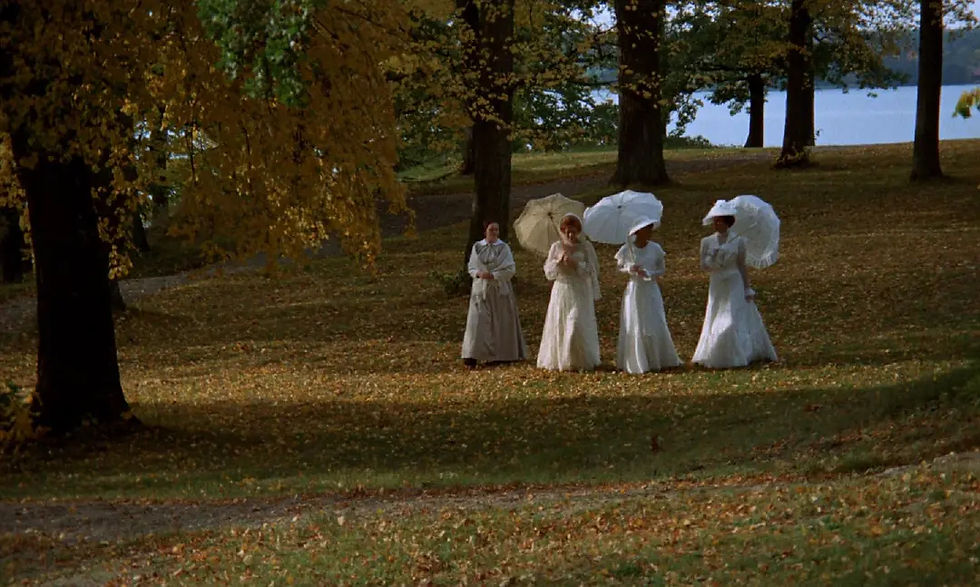
Cries and Whispers
1972 ‧ Drama ‧ 1h 31m
In Cries and Whispers, Bergman pushes his understanding of emotional tension and human intimacy to an almost unbearable extreme. Every relationship in the film feels stripped raw, every gesture heavy with resentment, tenderness, fear, or helplessness. The red and white interiors are unforgettable, as if the characters are trapped somewhere between heaven and hell, between the body and the soul, between comfort and torment. Within those spaces, joy, cruelty, pity, shame, and grief keep brushing against one another until they become impossible to separate. What makes the film so devastating is that Bergman does not present suffering as something distant or abstract. He soaks life in blood, yet somehow does it with a touch that feels both restrained and completely exposed. The result leaves you with a strange, almost conflicted emotional state, because the film never offers a clean moral release. It simply makes you confront the possibility that despair is not an interruption of human nature, but one of its deepest annotations.
28

Metropolis
1927 ‧ Sci-fi/Thriller ‧ 2h 33m
Metropolis still feels impossibly alive for a film made so early, as if Lang had already seen the future not as progress, but as a fever dream of steel, hierarchy, machinery, and mass obedience. Few films in history have built a world on this scale and made it feel so architecturally complete. The city itself is the film’s first great character, at once magnificent and monstrous, a place where geometry becomes ideology and beauty is inseparable from domination. What makes Metropolis truly enduring is not just its influence on science fiction, though that influence is enormous, but the way it turns modernity into myth. Everything here feels both industrial and biblical, mechanical and hallucinatory. Lang imagines class conflict, labor, desire, and apocalypse through images so overwhelming that they stop feeling like set pieces and start feeling like prophecy. Even now, the film’s visual imagination remains startlingly powerful. Metropolis is not simply an early masterpiece of scale. It is one of cinema’s first great demonstrations that the screen could invent entire civilizations and make them feel like nightmares we were always destined to inherit.
29

Last Year at Marienbad
1961 ‧ Thriller/Drama ‧ 1h 34m
Last Year at Marienbad constructs a pure stream of consciousness out of irrationality. It strips away the usual guarantees of order, logic, and narrative stability until what remains are relations in their most distilled form: looking, speaking, remembering, desiring, insisting. People no longer feel anchored in ordinary reality so much as suspended inside a mental architecture built from repetition and doubt. What makes the film so singular is the way Resnais uses those cold, gliding lateral movements to arrange space with almost impossible precision, as if every corridor, statue, and salon were part of a thought process rather than a physical setting. At the same time, the sound design quietly erodes the reality of everyone outside the central exchange, making secondary figures feel less like people than like residues, echoes, or decorative traces left behind by memory. Time and space keep slipping out of alignment, and from those dislocations the film assembles a viewing experience that is fully nonlinear without ever feeling careless. It becomes a kind of embodiment of abstract memory itself, not memory as something recalled clearly, but memory as obsession, projection, and endless rearrangement.
30

Andrei Rublev
1966 ‧ Drama/History ‧ 2h 30m
Andrei Rublev feels less like a historical epic than a miracle of spiritual cinema. Tarkovsky approaches it not through the usual logic of plot or character-driven progression, but through something closer to the method of poetry, building the film as a sequence of visions, crises, silences, and revelations that slowly gather into an overwhelming whole. Across its three hours of wandering through human suffering, art and faith are never treated as stable ideals. They are questioned, wounded, tested again and again. What gives the film its power is that it refuses to isolate one man’s inner life from the larger violence of history. Rublev matters, but the film is never only about Rublev. Beneath him, behind him, and around him is an entire people, an entire spiritual condition, moving through chaos, brutality, fear, and endurance. That shift away from traditional character-centered narrative is one of the reasons the film feels so vast. Its large-scale scenes are staggering, but their force comes not just from spectacle. They carry the weight of collective fate. Everything in the film is touched by a mystical texture, as if history itself were being seen through mud, blood, prayer, and dream. Tarkovsky turns the epic into something mournful, visionary, and interrogative all at once, and that is what makes Andrei Rublev feel so inexhaustible.
31

Persona
1966 ‧ Thriller/Drama ‧ 1h 23m
Persona is one of Bergman’s defining works, and also the film that feels like a turning point in his career, the moment when everything became more exposed, more unstable, more psychologically dangerous. From the hallucinatory montage at the beginning and end, to the seamless merging of faces, to the repetition of words that seem to lose meaning even as they cut deeper, the film keeps dissolving the line between the abstract and the real. What makes it so overwhelming is that every element is operating at its highest level. The editing is precise and elusive at once, the performances are stripped down to something almost frighteningly bare, and the whole film feels like psychoanalysis turned inward on cinema itself. Bergman does not just tell a story of fracture. He breaks apart fixed identities, fixed meanings, fixed emotional positions, then recomposes them into something more unsettling. Fear here does not come from an outside threat, but from the collapse of any stable boundary between self and other, mask and face, selfhood and instinct. And once that conflict between the social self and the deeper, irreconcilable inner life can no longer be resolved, the film leaves us facing a much darker question: where can anyone go from there? Persona is Bergman leading us straight into the deepest interior of human nature, stripping away protection after protection until all that remains is an almost sacred confrontation with the self.
32

The Rules of the Game
1939 ‧ Romance/Comedy ‧ 1h 50m
The Rules of the Game is Renoir’s defining masterpiece, a film that stages tragedy through comedy, farce, flirtation, and social chaos until the laughter itself starts to feel unstable. What makes it so devastating is the tonal precision. The film moves with such ease, such wit, such apparent lightness, but once the commotion dies down, what remains is a strange hush of sadness, agitation, and moral emptiness. That is where its greatness really lies. It captures the frivolity and spiritual vacancy of the French bourgeoisie on the edge of World War II with extraordinary sharpness, yet never in a blunt or heavy-handed way. Renoir lets social surfaces expose themselves. The elegance, the games, the rituals of politeness, the endless motion of bodies through rooms and across class lines all become part of a world already rotting from within. As a work of poetic realism, it is nearly perfect. The deep-focus images, the fluid staging, the intricate ensemble choreography, and the camera movement all feel effortless, but that effortlessness is exactly what makes the film so miraculous. Few films have ever arranged so many people, so many desires, and so many emotional currents within the frame with this much grace. The Rules of the Game is both dazzlingly alive and quietly fatalistic, which is why its sadness lingers so long after its brilliance.
33

Battleship Potemkin
1925 ‧ War/Thriller ‧ 1h 15m
Battleship Potemkin is one of those films that feels almost impossible to discuss without sounding like a textbook, and yet the miracle is that it still hits with real force. The images are so precise, so rhythmic, so charged with momentum that the film never feels like a lesson in montage even though it became one of cinema’s great lessons. Eisenstein’s editing remains astonishing because it is never only technical. It generates shock, urgency, emotion, collective movement. The film knows exactly how to make an image collide with the next until meaning begins to flare up between them. The famous lion montage is a perfect example. The sleeping lion, the crouching lion, the rising lion turn stone into uprising, metaphor into action, and show just how thrilling montage can be when it thinks symbolically as well as kinetically. The structure is just as sharp. Built with the clarity and force of a classical five-act drama, the film keeps escalating with almost mathematical control, while the compositions and cutting patterns give it a visual rhythm that feels relentless without ever becoming chaotic. Battleship Potemkin is not just historically important. It is still one of the purest demonstrations of how cinema can organize energy, emotion, and political charge through form alone.
34

Camera Buff
1979 ‧ Comedy/Romance ‧ 1h 57m
In Camera Buff, Kieślowski seems to arrive at one of the central contradictions of modern image-making through the closest possible observation of ordinary life. The more carefully he looks at reality, the more clearly he realizes that art and reality can never fully be reconciled. A camera that tries to capture life “as it is” inevitably enters that life, interferes with it, changes it, and what finally appears on screen is no longer untouched reality but a processed, shaped, and already altered version of it. What makes Camera Buff so rich is that Kieślowski folds this realization directly into the film itself. It becomes not just a story about a man with a camera, but a film thinking through the ethics and instability of representation. And the conclusion it reaches is quietly radical: carefully constructed fiction can sometimes come closer to truth than pure documentation ever could. That is why Camera Buff is so much more than a film imitating documentary realism. It is a fully realized fiction charged with documentary sensitivity, using crafted narrative to wrap itself around something raw and real. What emerges is not a lesser truth, but a more complex one, where reality and invention do not cancel each other out, but deepen each other.
35

Symbiosychotaxiplasm: Take One
1968 ‧ Documentary/Drama ‧ 1h 15m
Symbiopsychotaxiplasm: Take One is the kind of film that can look like nothing at all at first, almost like stray behind-the-scenes material, and then slowly reveal itself as something radically deep, experimental, and oddly addictive. It is boring and fascinating at the same time, which is part of what makes it so good. William Greaves is clearly trying to invent another way of narrating, one where the film is never confined to the “main event” because everything around the event becomes the event too. What happens outside the film is still the film. That is the key. The structure is brilliant precisely because it seems so loose, and the crew becomes just as important as the supposed subject. Creation itself starts to look like a slippery word. Rational planning matters, but so do accidents, and so does the experience of those accidents happening in real time. What the film finally exposes is not a finished meaning, but the process by which meaning gets made. Because Greaves deliberately breaks down his own authority as director, the people involved in the shoot, and even the viewer, are pushed into a kind of symbiotic state, forced to search for any possible model that might produce meaning. The ending sharpens this even more by introducing an angry racist outburst on yet another level of reality, making it clear that art is never private or sealed off. It is shaped by its moment, its social conditions, its collective tensions, and survives as a form that exists in symbiosis with all of them. But that openness also has a limit. A completely fluid form cannot automatically become meaningful just because it is open. Without some process of narrative shaping, meaning cannot really travel. That tension is exactly what makes the film so exciting. For anyone trying to learn what cinema can be, this feels like essential viewing.
36

Window Water Baby Moving
1959 ‧ Documentary/Short ‧ 12 mins
What is so overwhelming about Window Water Baby Moving is that it turns the emergence of life back into something language can barely contain. The mystery of pregnancy, the pain of childbirth, the body opening, the fact of arrival, all of it is confronted directly here, not as spectacle, not as exploitation, but as one of cinema’s most primal and dangerous acts of approach. As one of the major figures of twentieth-century experimental film, Stan Brakhage spent more than fifty years pushing at the limits of form, method, and technique, and this film feels especially great because it drives the act of seeing itself to an extreme. It does not place the image above the event, does not violently impose meaning onto birth from the outside. Instead, it lets the image remain unfinished, unnamed, almost still in the process of becoming. That is exactly why it is not a “spectacle” in any safe or ordinary sense. It becomes an image experience that reaches back toward the viewer’s own body. Life is not merely shown here. It seems to happen again inside the frame. And that trembling is not only the trembling of the baby, but the trembling of perception itself, the moment when body and gaze are both awakened, shaken, and forced into the first scene of life.
37

Harakiri
1962 ‧ Action/Mystery ‧ 2h 13m
Harakiri is built with the kind of narrative tension that makes it impossible to look away. Like Rashomon, it gradually draws a complete story out of shifting perspectives, letting each new layer reframe everything that came before it. But what makes the film so powerful is that this structure is never just a clever device. Kobayashi uses it to strip away illusion with almost surgical precision. As the truth slowly surfaces, the film becomes a devastating critique of bushido, exposing the distance between its supposed moral nobility and the empty, brutal formalism it often hides behind. Family glory, clan history, honor, loyalty — all of these things are revealed not as eternal truths, but as narratives polished by power, beautified by repetition, and protected by those who benefit from them. What is called honor turns out to be a rigid performance, and what is called sacrifice often becomes nothing more than obedience to a hollow idea. Countless men are destroyed in the name of that abstraction, only to end up as pawns in someone else’s political theater. Harakiri is gripping as drama, but its real greatness lies in how mercilessly it dismantles the myths that sustain violence.
38

Rear Window
1954 ‧ Thriller/Mystery ‧ 1h 52m
Hitchcock understood better than almost anyone how dangerous looking can be, and Rear Window almost compresses the whole essence of cinema into a single apartment and a single window. A man who cannot move is forced to sit still and watch other people’s lives, and the more he watches, the harder it becomes to stop, until looking itself starts to open onto a whole abyss of desire, voyeurism, judgment, and misjudgment. What makes the film so extraordinary is that it turns watching into both pleasure and unease at the same time. We spy alongside Jeff, speculate alongside him, wait alongside him for some hidden truth to reveal itself, and in doing so slowly realize that seeing is never the same as knowing. Hitchcock controls space, sightlines, rhythm, and suspense with near-perfect precision, until the entire apartment building begins to feel like a miniature version of cinema itself. Every window becomes a screen, every fragment becomes a story in the process of being assembled. Rear Window is of course a textbook suspense film, but what makes it even more fascinating is the way it suggests that cinema itself may be a legalized form of voyeurism, and Hitchcock simply films that fact with more elegance, and more cruelty, than anyone else.
39
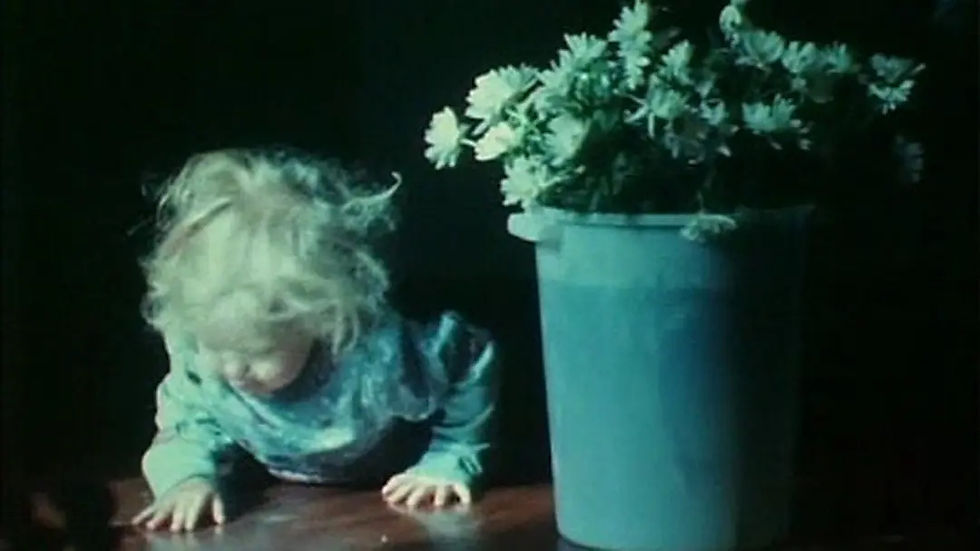
As I Was Moving Ahead Occasionally I Saw Brief Glimpses of Beauty
2000 ‧ Documentary/Experimental ‧ 4h 48m
Jonas Mekas once said he did not really make films, that he had simply taken home-movie footage from more than twenty years earlier and edited it together without any strict plan. But whatever modesty is in that statement, the result is still one of the most moving monuments to memory that cinema has ever produced. It runs for more than four hours, yet what lingers are not plots or dramatic turns, but flashes of life that feel impossible to forget. There is no war here, no argument, no great external catastrophe, only love, time, intimacy, and the fragile miracle of ordinary existence. In sleepless nights, Mekas sits in the editing room and looks back at these images: the birth and growth of his children, the ease of his wife during travel, the looseness and joy of gatherings with friends. The fast-moving images carry the sensation of memory itself, the way the mind races through fragments, skipping, returning, losing and retrieving all at once. Time is always slipping away, but Mekas refuses to let it pass in silence. Through voice, narration, and music, he annotates the flow of these vanished moments, as if the man in the present were trying, however hopelessly, to hold on to what the past keeps taking back. That is what makes the film so beautiful. It is not only a record of private happiness, but also an end-of-century act of remembrance, a tender attempt to rescue fleeting life from disappearance.
40

The Seven Samurai
1954 ‧ Action/Adventure ‧ 3h 27m
Seven Samurai has the kind of greatness that feels almost too large to pin down, because it works at once as epic, action film, human drama, social study, and pure cinema. Kurosawa gives the film extraordinary scale, but what makes it last is not only the size of the story. It is the clarity with which every gesture, every movement, every cut, every shift in weather or space seems to matter. The battles are rightly legendary, not just because they are thrilling, but because Kurosawa films action with an understanding of rhythm, geography, and collective motion that still feels astonishing. You always know where bodies are, where danger is coming from, where fear is gathering. But the film would not be this great if it were only a masterpiece of action. What gives it real weight is the way it holds together heroism and exhaustion, nobility and futility, solidarity and class tension. The samurai may fight for the village, but Kurosawa never lets us forget the distance between those who protect and those who survive. That is what gives the film its depth. Seven Samurai moves with force, humor, grief, and absolute command, but beneath all its grandeur there is also a sober understanding that history rarely belongs to the heroic. It belongs to those who remain.
41

Word on a Wire
1973 ‧ Sci-fi/Crime ‧ 3h 25m
World on a Wire is one of Fassbinder’s most ambitious works, a science-fiction film that feels eerily ahead of its time. Long before end-of-century cycles of virtual reality cinema, it was already imagining the instability of reality itself through a nested structure of three worlds, turning simulation into something both philosophical and political. The film obviously opens onto the question of the virtual and the real, something close to the old “brain in a vat” thought experiment, but what makes it so rich is that it never stops there. Fassbinder ties this uncertainty to modern technology, corporate monopoly, surveillance, and the subtle mechanisms by which power shapes thought. Reality in the film is never just a metaphysical puzzle. It is also something administered, manipulated, and owned. That is part of what makes it feel so chilling. At the same time, the film has a strange emotional grandeur to it, as if beneath all the cold surfaces, mirrored spaces, and synthetic systems, Fassbinder were staging a search for something more absolute. In that sense, World on a Wire becomes a journey not only through layers of reality, but through the dream of infinite time itself, the desire to break past the artificial limits imposed on consciousness and existence. It is cerebral, stylish, paranoid, and deeply prophetic, one of those films that seems to keep catching up with the future.
42

Three Colours: Red
1994 ‧ Romance/Mystery ‧ 1h 39m
In Red, Kieślowski brings the paradoxical qualities of his cinema to their highest point. It feels like the trilogy’s true culmination, the place where his fascination with chance, distance, connection, and unseen structures finally crystallizes into something almost miraculous. What makes the film so extraordinary is the way it stages a collision between the order of perception and the order of signs, then slowly turns that collision into an image experience of passage, as if the film were moving from the imaginary into the symbolic without ever losing emotional warmth. Blue may be the most formally adventurous of the trilogy, but at times it can feel slightly more committed to style than to fullness. White is the one closest to traditional narrative form. Red somehow resolves both tendencies. With fraternity as its central idea, it opens outward into a much larger moral and emotional horizon, yet its command of audiovisual language has become so refined that nothing feels forced, announced, or over-shaped. It reaches that rare state where form has become invisible not because it is absent, but because it is fully absorbed into feeling. That is what makes Red feel like a miracle unique to cinema. It is grand without strain, philosophical without stiffness, intimate without shrinking its world.
43

Suspense
1913 ‧ Horror/Drama ‧ 10 mins
As early as 1913, Lois Weber and Phillips Smalley were already making something astonishingly inventive with Suspense. Watching it now, you can see early filmmakers actively discovering how point of view could become one of cinema’s most exciting tools. The film is full of visual ideas that still feel striking: subjective camera setups, overhead shots, rearview-mirror chases, and most famously the triangular split screen that places husband, wife, and intruder into a single field of simultaneous tension. Together with the sharp use of cross-cutting, all of this intensifies the sense of imminent danger and gives the film a narrative rhythm that feels genuinely urgent. What is most impressive is how clearly it understands visual tension. These are not just clever tricks. They are early demonstrations of how cinema could organize fear through space, perspective, and simultaneity. So much of what later thrillers would rely on is already being grasped here in embryonic form. And just as importantly, the film stands as a reminder of how foundational women directors were to early cinema. Weber was not simply present in film history. She was helping invent its language.
44

Film
1965 ‧ Drama/Indie film ‧ 24 mins
Film is one of those works where you can almost feel early cinema’s mischievous spirit still alive inside a much more severe philosophical experiment. At one level, it is thrilling simply to watch how the camera itself becomes part of the joke, the chase, and the structure, as if cinema were testing how far it could go by turning perception into action. But what makes the film so fascinating is the collision of minds behind it. The screenplay was written by Samuel Beckett, the great absurdist playwright of Waiting for Godot, while the lead is played by Buster Keaton, one of silent comedy’s supreme faces and bodies. That pairing alone already feels like a small miracle. Out of it comes a film that is at once playful and unsettling, simple on the surface yet full of strange philosophical tension. Questions of subjectivity, perception, selfhood, and the impossible desire to escape being seen are all folded into its brief running time. It is funny, uncanny, abstract, and oddly moving, a work that turns the camera into both a comic device and a metaphysical threat. For a film titled Film, it more than earns the name.
45

The Naked Island
1960 ‧ Drama ‧ 1h 36m
The Naked Island is a quietly singular masterpiece, a film that reduces everything to essentials without ever becoming thin. It exists somewhere between silent cinema and sound cinema. Dialogue is almost entirely removed, yet the realistic textures of environmental sound remain, and the camera movement, framing, and musical design are all handled with remarkable precision. In the absence of speech, bodily action, facial expression, and everyday routine take over the place language would normally occupy. What emerges from that is a stark vision of human life in its most ordinary, exhausting, repetitive form. Labor, fatigue, persistence, and silence all become visible with unusual clarity. And yet what is so striking is that Shindō still makes the film intensely absorbing. Part of that comes from how deeply it taps into something primal, the memory of work, endurance, and collective human rhythm. But just as important is the constant variation in the visual language. The rowing, the carrying of water, the climbing of steps, the watering of crops may seem endless in repetition, but each return is shaped differently through angle, composition, cutting, and movement. Even the moments of cross-cutting are never simply repeated in the same way. That is what makes the film so beautiful. It takes the most ordinary acts and, through form, reveals how much life and struggle are already inside them.
46

Shoah
1985 ‧ Documentary/War ‧ 9h 26m
Shoah is one of the most overwhelming documentary achievements ever made, and part of its force comes from the severity of its method. Lanzmann refuses archival footage, refuses historical illustration, refuses the comfort of ready-made images from the past. Instead he builds the film through multiple languages, long takes, synchronous sound, extended pauses, and voices that are allowed to continue long enough for hesitation, resistance, memory, and breakdown to become visible. The result is a form of testimony that feels almost unbearably direct. The interviews are expansive in every sense, reaching survivors, bystanders, perpetrators, witnesses, people positioned differently in relation to the catastrophe, and forcing them into a space where speech can no longer stay neutral. That is why the film’s impact is so devastating. At the same time, there is no denying that its nine and a half hours can feel punishing. The experience is deliberately exhausting, suffocating even. But that difficulty is inseparable from the film’s ethics. Lanzmann keeps pressing, sometimes bluntly, sometimes almost cruelly, asking questions that cut toward the deepest places people would rather not expose. Do former SS men remember particular scenes of extermination? Did Polish witnesses really feel grief? What did Jews who were temporarily spared feel when they watched others being sent to the gas chambers? Again and again, the film returns to the point where memory, repression, shame, and human weakness meet. Shoah is not simply trying to recover facts thirty or forty years after the event. It is trying to excavate the truth that history, self-protection, and time have all tried to bury.
47

La Jetée
1962 ‧ Sci-fi/Drama ‧ 28 mins
La Jetée is one of the clearest proofs that cinema does not depend on movement in any ordinary sense to generate intensity. Built almost entirely from still images, it turns montage into the engine of narrative, emotion, and thought, showing how much can happen between images when memory, desire, and time begin pressing against each other. The photography is ravishing, the score has a piercing melancholy, and the voiceover gives the film the calm gravity of something half-remembered, half-prophesied. What makes it so singular is that its science fiction is never really about the future as conquest or discovery. Time travel here is bound to longing. It is less a leap forward than a return toward something already lost, a face, a moment, a fragment of happiness that seems to resist disappearance. The present and the future both drift toward erasure, but the past, or at least its image, begins to feel strangely indestructible. That is why the film’s fragmented stillness feels so exact. It mirrors the way memory and dream actually come to us, in flashes, ruptures, frozen instants, and recurring images that survive long after life has moved on. That all of this is achieved in under half an hour, while still holding together love, war, apocalypse, and science fiction, makes La Jetée feel less like a short film than like a condensed shock of cinema itself.
48

Breathless
1960 ‧ Crime/Thriller ‧ 1h 30m
Breathless has the charge of a beginning, the feeling that cinema has suddenly decided it no longer wants to behave. As Godard’s debut feature and one of the defining films of the French New Wave, its most famous formal intervention is of course the large-scale use of jump cuts, a move that shatters the smooth continuity of classical Hollywood editing and makes time feel nervy, broken, alive. What had once been treated as error becomes attitude, rhythm, even a new kind of thought. But the film’s force is not just technical. It also has that loose, insolent, seductive energy that makes everything feel as if it is being invented on the spot. The long hotel-room scene is still remarkable for how casually it turns flirtation into drift, conversation into performance, intimacy into something restless and unstable. And then there is the ending, abrupt, stylized, almost mocking in its finality, leaving behind a distinctly existential chill. If sadness still implies attachment, then Breathless seems tempted by something emptier and more dangerous. It chooses drift, pose, disappearance, a kind of modern void disguised as freedom. That is part of why the film still feels so fresh: it does not simply break cinematic rules, it turns that break into a whole new mood of being.
49

The Cabinet of Dr. Caligari
1920 ‧ Horror/Fantasy ‧ 1h 11m
The Cabinet of Dr. Caligari is where German Expressionism seems to erupt fully formed, and where horror cinema first discovers how deeply atmosphere can think. Nothing in the film is neutral. Every set is built in the studio and deliberately warped, every painted shadow, every jagged line, every twisted roof, window, and doorway seems to push the world out of balance. Even the intertitles, the forced close framings, the tinted film stock all contribute to a vision that feels diseased, theatrical, and uncannily alive. What makes the film so lasting is that this stylization is never mere decoration. It externalizes psychology itself, turning fear, anxiety, repression, and instability into architecture, light, and space. Seen that way, the hypnotic control at the center of the film can be read as a figure for authority shaping consciousness from above, while the violence that follows suggests the collapse of reason under systems of domination and collective irrationality. From this angle, the film opens onto something larger than gothic nightmare. It becomes a warning about power, obedience, and the fragility of humanism. But what makes Caligari even more interesting is that it does not leave that reading untouched. The ending throws everything into doubt and asks a far more unsettling question: is this really a critique of authority, or only the symptom of a damaged mind? That twist does not weaken the film. It makes it stranger, more unstable, and more modern, because from that point on, terror is no longer just in the world outside. It may already be inside perception itself.
50

Shoeshine
1946 ‧ Drama‧ 1h 33m
Shoeshine is heartbreaking because De Sica is really filming the weight of human nature itself. What makes Italian Neorealism so enduring is that it does not try to force truth out of reality by exaggerating it. It works by taking the visible surface of the world, a few concrete fragments of daily life, and letting social truth emerge from them with painful clarity. Once the fact-image becomes a basic principle, the filmmaker’s responsibility toward lived conditions, toward the texture of ordinary survival, starts to feel less like a choice than like an ethical duty. That is exactly the kind of duty De Sica fulfills here. Shoeshine is a masterpiece of showing society through children, not by sentimentalizing them, but by revealing how quickly innocence is bent, traded, and damaged by the world around it. The tragedy cuts deeper because everything feels so plain, so close to life, so undesigned. And that is why the destroyed projector scene lingers so strongly. It feels like the destruction of an older cinematic illusion, the burning away of the narcotic dream machine that once softened reality. In that moment, De Sica and Neorealism seem to declare that cinema must now look directly at life instead of consoling us with fantasy. That is part of their greatness, and part of why Shoeshine still hurts so much.
51

Playtime
1967 ‧ Comedy/Drama ‧ 1h 55
In PlayTime, Tati extends his signature fascination with movement and duration, but pushes it further into something even stranger and more architectonic. Here his attention shifts toward the construction of spatial order and the orchestration of sound, and the result feels less like conventional narrative cinema than like a vast installation made out of modern life itself. By relying so heavily on medium and long shots, Tati gathers people and environment into the same visual field, reducing the dominance of individual performance and making the surrounding world just as expressive as any character. At the same time, he reverses the usual hierarchy between dialogue and ambient sound, letting language lose its privileged place while footsteps, echoes, machinery, glass, and urban noise begin to shape meaning in its place. What emerges is a form of comedy that is not driven by plot in the usual sense, but by spatial relations, sonic accidents, and the choreography of bodies moving through systems that barely seem made for them. And beneath all that elegance and play, the film carries a surprisingly intricate critique. Its exaggerated rendering of modern architecture, design, and decorative surfaces is never just visual wit. It hides an anxious and deeply intelligent reflection on the future city, on the sterility of technocratic order, and on how modern life can make people feel at once hyper-organized and strangely lost. PlayTime is Tati’s great machine of observation, but it is also one of the most inventive acts of cinematic world-building ever made.
52

Close-Up
1990 ‧ Drama/Crime ‧ 1h 38m
Close-Up is one of those films whose form feels almost impossible to replicate. The boundary between fiction and reality, a question Kiarostami kept returning to throughout his career, reaches its most complete and delicate fusion here. What makes the film so singular is that it never treats cinema as a tool for simply recording reality or reshaping it into fiction. Instead, it reveals how the two are already entangled, how performance, desire, deception, identification, and truth are all bound up together the moment a camera enters the world. Kiarostami’s understanding of the medium feels astonishingly ahead of its time, yet also humble and disarmingly simple, as if he were offering cinema back to us in its most stripped-down and profound form. In that sense, Close-Up is also a kind of self-portrait and self-defense, a reflection on what it means to love cinema so deeply that the line between living and performing begins to dissolve. Even on the level of sound and image, the film keeps working through this instability. Continuous sound paired with close cutting creates one kind of proximity and emotional pressure, while elsewhere broken audio, obstructed long takes, and distant framings remind us of everything that remains partial, inaccessible, or unresolved. That tension is exactly where the film lives. Close-Up does not ask whether cinema lies or tells the truth. It asks whether those two things were ever separable to begin with.
53

Abraham's Valley
1993 ‧ Drama ‧ 3h 23m
Vale Abraão can feel difficult to enter at first. The long stretches of poetic narration and the dense, elaborate dialogue seem to hold the viewer at a distance, almost as if the film is asking to be read before it can be watched. But once you begin moving at Oliveira’s rhythm, the design becomes clear. This is not a literary adaptation in any ordinary sense, but a symbolic literary image-world, one that rethinks how a novel might survive inside cinema. The voiceover guides the progression of the story in a way that echoes Flaubert’s narrative method, while the relationships between characters, and the allegorical charge each of them carries, begin to rework the original material from within. What makes the film so remarkable is the sophistication with which it lets image and text complete each other rather than compete. Oliveira handles this fusion of artistic modes with astonishing control. The rich colors often feel close to painting, the philosophical dialogue remains intricate without losing shape, and the Chopin piano passages add another layer of beauty without softening the film’s intelligence. All of this gives Vale Abraão a grandeur that most literary adaptations never come close to reaching. It does not merely translate literature into cinema. It turns cinema into another form of literature altogether, one with its own textures, silences, and splendors.
54

Beau Travail
1999 ‧ War/Drama ‧ 1h 32m
Beau Travail is one of Claire Denis’s most fluid and mesmerizing films. Male bodies, taut muscles, and military drills are pushed into extreme visibility through close framings, isolated details, and drifting handheld movement, until training begins to resemble ritual, choreography, or a strange form of performance. What makes the film especially compelling is that it also carries a distinctly female gaze toward male physicality, quietly reversing the usual hierarchy of looking in mainstream cinema. These men are not simply figures of power or action. They become objects of beauty, desire, tension, and scrutiny. But Denis is doing far more than aestheticizing the body. Beneath the surface of discipline and control, the film keeps exposing jealousy, repression, loneliness, and the slow corrosion of identity inside a rigid system. That is what gives Beau Travail its unusual force. It is sensual without softness, severe without becoming cold, and so precise in its use of gesture and movement that posture itself begins to reveal what words cannot. By the time the film reaches its final eruption, Denis has already turned the body into a battlefield of desire, pride, and collapse.
55

Elephant
1989 ‧ Crime/Thriller ‧ 39 mins
Alan Clarke takes an almost ruthless approach in Elephant, and that severity is exactly what gives the film its force. Built around eighteen murders, most of them drawn from Belfast police reports, the film begins from the specific reality of the Troubles, but its extreme abstraction allows it to reach far beyond that immediate context. There are almost no explanations, no motives, no psychological comfort, no narrative scaffolding to tell us how to feel. Violence is presented with such stripped-down directness that it starts to resemble a daily condition rather than an exceptional event. That is what makes the film so chilling. Clarke’s Steadicam tracking shots have a strange dual quality, steady but faintly uneasy, as if the camera itself were walking inside a world where murder has become part of the atmosphere. The contrast between those moving shots and the still, lingering views after each killing is especially powerful. Motion belongs to life continuing. Stillness belongs to death, or perhaps to the emptiness that follows it. The film’s coldness is part of its intelligence. It refuses to turn violence into argument or spectacle, and in doing so arrives at something even harsher: the sense that death can be brutally real while life around it remains terrifyingly hollow. The football sequence lingers in particular because of how casually it lets normality sit beside murder, as if violence had already announced itself long before the gun is raised.
56

Fear
1983 ‧ Horror/Crime ‧ 1h 23m
Fear is one of the most suffocating films ever made about a killer’s interiority. Told from the perspective of a psychopathic murderer, it builds its whole world around a few brutally stark coordinates: childhood abuse, cruelty toward animals, motiveless violence, random killing. But what gives the film its terrifying charge is not just the subject matter. It is the way Gerald Kargl and cinematographer Zbigniew Rybczyński turn form itself into a vehicle for diseased consciousness. Low angles, overhead shots, handheld instability, stalking camera movement, extended takes, even those unnerving 360-degree motions all work together to trap the viewer inside a mind that feels fractured, compulsive, and fatally unmoored. The inner monologue makes this even worse in the best way. The film is not interested in providing explanation or moral distance. It wants to present something closer to the texture of “real” psychic disarray, ugly, impulsive, and horribly intimate. That is part of why every scene lands with such lethal force. You can also feel how deeply it shaped later directors, especially Gaspar Noé. The traces are easy to spot in Irreversible and Enter the Void. But Fear remains singular in its own right, because few films make terror feel this cold, this immediate, and this perversely mesmerizing. The electronic score only intensifies that effect, giving the whole film a sickly propulsion that never lets the viewer fully breathe.
57

The Blood of a Poet
1932 ‧ Drama/Experimental ‧ 55 mins
The Blood of a Poet already contains so much of what would make Cocteau singular. As his first film and the opening work of the Orphic Trilogy, it stands as one of the key achievements of French avant-garde cinema, drawing on both surrealism and expressionism without fully dissolving into either. Its form is fragmented, dreamlike, and resistant to strict logic, coming very close to what feels like the deepest essence of surrealist image-making. And yet it is not as completely scattered or uncontrolled as many surrealist works. There is still a faint narrative pull, a set of recurring gestures and situations, a thematic gravity that keeps returning to the same core question: the death and rebirth of the artist and the artwork. That is what gives the film its strange clarity beneath all the discontinuity. Cocteau is not simply arranging beautiful irrational images. He is trying to understand what it means for art to emerge from destruction, from self-loss, from passage through mirrors, statues, wounds, and dreams. In that sense, The Blood of a Poet feels less like a puzzle to be solved than a meditation on the conditions of creation itself. It is one of those films where cinema begins to think like poetry, and where the image seems to ask what it takes for an artist, or a work, to truly come alive.
58

The Wages of Fear
1953 ‧ Thriller/Adventure ‧ 2h 36m
The Wages of Fear is one of the clearest examples of suspense built with absolute patience and precision. Clouzot is astonishing here, not only in the way he generates tension, but in how completely he earns it. He spends nearly an hour laying out the social reality of his characters, their poverty, their humiliation, their exhaustion, their trapped existence, and that slow groundwork is exactly what gives the second half its unbearable pressure. Once the nitroglycerin enters the film, suspense stops being a device and becomes the film’s whole atmosphere. Every movement, every bump, every pause begins to feel dangerous. In that sense, Clouzot feels like both a realist and a master of pure tension at once. He shares something with Bazinian realism in the attention he gives to lived conditions and material reality, but he also puts Hitchcock’s bomb theory into stunning practice, turning the mere presence of explosive danger into a force that saturates every second. What is so brilliant is that the anxiety of the first half, born from war, deprivation, and social decay, does not disappear once the journey begins. It contracts inward. What first appeared as a collective condition becomes an internalized struggle, a duel between nerves, fear, survival, and self-destruction. That is why the film remains so gripping. It is not only about danger on the road, but about the way material desperation transforms human beings from within.
59

Nostalgia for the Light
2010 ‧ Documentary/Drama ‧ 1h 30m
Nostalgia for the Light is one of those rare films that can place the universe, time, memory, and human life within the same frame without reducing any of them. Faced with questions this large, humanity inevitably seems small, and yet the film never treats that smallness as insignificance. If anything endures against the flow of time, it may be memory. Guzmán begins with the striking spatial juxtaposition of the observatory and the concentration camp, and from there opens up a profound parallel between astronomical discovery and the search for the victims of Pinochet’s dictatorship. Both are bound to the same temporal impulse: the attempt to recover what has already disappeared. That is what gives the film its philosophical force. Its structural montage is beautifully judged, constantly inviting thought without ever feeling heavy or schematic. And visually it is stunning. The desert, the sky, the telescopes, the bones, the dust, all of it feels charged with both beauty and grief. What makes the film so remarkable is the elegance of its idea. Guzmán turns looking into an ethical act, and in doing so creates a work where cosmic scale and historical wound illuminate each other with extraordinary clarity.
60

Psycho
1960 ‧ Horror/Mystery ‧ 1h 49m
Psycho is one of those films where Hitchcock seems to take the whole machinery of cinema and tighten it until it becomes pure nerves. Everything is controlled with terrifying precision, but it never feels mechanical. The film keeps shifting its center of gravity, playing with identification, expectation, and moral footing until the viewer is left with nowhere stable to stand. That is part of what makes it feel so modern. It does not simply tell a suspense story. It reorganizes the viewer’s trust in narrative itself. And of course the shower scene has long since become film-school scripture, not only because of its shock, but because of how completely it demonstrates what camera movement, framing, cutting, rhythm, and sound can do when used with absolute confidence. It is one of the clearest lessons cinema has ever produced in how to make violence felt without relying on graphic display. But Psycho is greater than a single famous sequence. What lingers is the film’s chill, its strange sadness, its sense that horror is no longer located in distant monsters or gothic spaces, but in something far more domestic, fractured, and intimate. Hitchcock turns the ordinary into a trap and the mind into a crime scene, and that is why the film still feels so lethal.
61

The Conformist
1970 ‧ Thriller/Drama ‧ 1h 51m
Few films make style feel this dangerous. In The Conformist, photography, camera movement, lighting, color, editing, and music are all pushed to an astonishing level, yet the film never feels like a hollow display of control. Bertolucci is not interested in reconstructing history as fixed reality. What matters to him is the way history seeps into consciousness, desire, memory, and self-deception. That is why fascism here is never just a political backdrop. It becomes entangled with personal weakness, erotic anxiety, and the longing to disappear into the comfort of conformity. Formally, the film is just as daring. Through montage, shifts in point of view, and the fragmentation of scenes across different temporal layers, Bertolucci lets past and present bleed into each other until multiple planes of time seem to coexist naturally. The result is not confusion for its own sake, but a precise sense that history never really disappears, it only survives in new gestures, new fears, new forms of submission. The Conformist is ravishing to look at, but its beauty is never innocent. That is what makes it so unsettling, and so great.
62
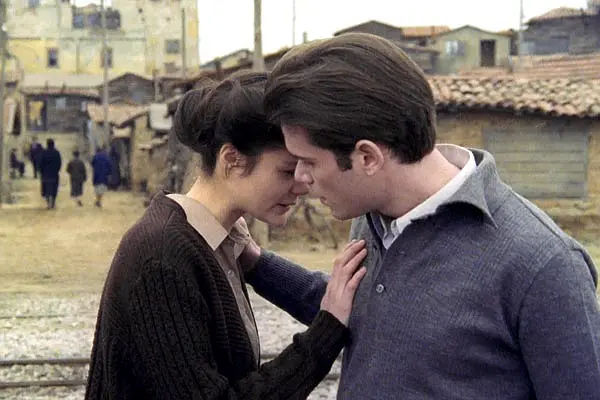
Trilogy: The Weeping Meadow
2004 ‧ Drama/History ‧ 2h 49m
Angelopoulos’s images always carry weight, the weight of thought, of history, of souls that seem to have been walking for far too long. In The Weeping Meadow, that gravity becomes a vast lament for Greece itself, a film where national memory, exile, and longing are stretched into something almost mythic. What makes it so affecting is the way Angelopoulos never rushes toward emotion. He lets poetry arrive slowly, through distance, through fog, through bodies moving across ruined landscapes as if they were already part of history’s afterimage. War leaves its scars everywhere, but the film is not only about destruction. It is about the sorrow that remains after destruction has already entered the bloodstream of a people. The title alone feels like a wound. To search for the source of the river, to arrive at a meadow that seems to weep, is not really to find a stable origin or some comforting root. It is to discover that what endures may only be the tears of injured souls, gathering over time, deepening, becoming an inner current that never stops flowing. That is where the film’s grandeur lies. Angelopoulos turns grief into landscape, and landscape into memory.
63

The Wolf House
2018 ‧ Horror/Drama ‧ 1h 13m
The Wolf House is one of the few animated films that truly feels alive in a state of permanent mutation. It appears to move like a single unbroken flow, yet within that flow it constantly breaks down the boundary between two-dimensional and three-dimensional space, creating an image-world that never settles into one stable form. That is part of what makes it so uncanny. Everything seems to be becoming something else while still carrying traces of what it was before. In that sense, the film comes close to a Bergsonian sense of duration, where memory, feeling, present perception, thought, and imagination are not separate layers but forces continually blending into one another. The result is dense, unstable, and almost impossible to pin down in language. Another great achievement of the film lies in its treatment of materials. Its postmodern vitality comes from the raw visibility of making itself. Surfaces are collaged, mixed, scratched, carved, broken apart, and recomposed without pause, and the materiality of the image becomes expressive in its own right. Wood, paint, paper, wall, object, and figure keep colliding until form itself starts to feel haunted. That is why The Wolf House is so mesmerizing. It is not just a remarkable stop-motion film, but one of the greatest achievements in the history of animation on a purely formal level.
64

Inland Empire
2006 ‧ Horror/Mystery ‧ 3 hours
Inland Empire may be David Lynch’s most impenetrable film, the one that seems to resist being cleanly decoded at every turn. Once it moves into its second half, narrative more or less splinters apart, and what remains is not a puzzle waiting to be solved so much as a full immersion into psychic disorientation. Multiple layers of story, blurred and trembling images, distorted close-ups, unstable pools of colored light, stray dialogue, recurring figures, and colliding fragments of symbolism all pile up until interpretation itself starts to feel exhausted. The three-hour duration only deepens that effect. At a certain point, the film no longer invites orderly thought. It leaves you staring, disarmed, caught inside its logic without ever fully possessing it. That is exactly where its power lies. This is Lynch at his most uncompromising, the point where cinema stops trying to resemble waking experience and becomes something closer to a direct projection of inner life in all its terror, seduction, confusion, and drift. Inland Empire does not simply depict the mind. It traps the viewer inside one that is already coming apart.
65

Ace in the Hole
1951 ‧ Noir/Thriller ‧ 1h 51m
The failure of Ace in the Hole almost feels inevitable in retrospect. Wilder made a film that openly exposes and mocks the news media, only to be attacked by that same media in return, and at the same time he painted the public as a crowd so easily manipulated that another person’s disaster can become their carnival. No wonder it was rejected. But that rejection now feels like part of the film’s proof. Wilder saw with brutal clarity how quickly suffering can be converted into spectacle, how neatly morality can be rearranged once cameras, headlines, and public appetite begin feeding each other. What makes the film so sharp is that it never softens its contempt. Kirk Douglas is magnificent as a man whose intelligence, charm, and desperation curdle into something corrosive, and Wilder’s dialogue keeps cutting with that same bitter precision. The result is vicious, funny, and deeply sour all at once. And once you have seen that final image, Douglas collapsing while the fairground life outside the cave keeps humming, it becomes impossible to forget. Ace in the Hole feels less like a satire of one moment than a blueprint for the age of entertainment swallowing reality whole.
66

Tropical Malady
2004 ‧ Romance/Fantasy ‧ 2 hours
Tropical Malady unfolds like a love story that quietly slips its leash and wanders into myth, turning into something closer to a fable of release, desire, and return. What the film gradually presents is a process of becoming-animal, not in any crude sense, but as the loosening of social form, the return of instinct, longing, scent, fear, and hunger. The struggle between the tiger spirit and the soldier-hunter carries a much larger tension inside it, between wildness and civilization, between the premodern and modernity, between the rational world and the older forces that still refuse to disappear. That is what makes the film so haunting. Even in the contemporary world, old legends do not vanish. They linger at the edge of daily life, waiting for the right darkness to become real again. Apichatpong films all of this with extraordinary patience and sensuality, until the jungle itself seems to think, desire, and remember. Tropical Malady is not just strange or beautiful. It feels like a film listening for the part of human experience that modern life has never fully managed to silence.
67

Mirror
1975 ‧ Drama ‧ 1h 48m
Mirror feels like a film that invented its own way of remembering. Its structure, its shifts between color and monochrome, its movement between dream, memory, history, and sensation all belong to a cinematic language that is unmistakably Tarkovsky’s. But what makes the film so powerful is that its poetic images reach the viewer more directly than any neat explanation ever could. The wind moving through grass, the balloon, the disappearing warmth, the collapsing ceiling, the bird released upward, levitation, the burning house, the spilled milk, these are not just symbols to decode, but images that strike the inner life with almost physical force. Tarkovsky’s familiar elements are all here, long takes, the slow forward drift of the camera, Bach, sudden rain, leaking water, pools, wet plants, burning paper and wood, horses, dogs, apples, mirrors, miracles, and in Mirror he pushes his use of the natural world to an extreme. Wind, water, fire, light, wood all seem to carry memory inside them. The opening hypnosis sequence is brilliant, and so are the recurring traces of the absent father, the printing-house passages, the book of Leonardo, all of which deepen the film’s sense of fractured inheritance. What is most extraordinary is that for all its intimacy, for all its private and stream-like movement through consciousness, Mirror never feels sealed inside one life alone. It becomes one of those rare films in which the most personal images somehow open outward, allowing people from entirely different times and places to recognize something of themselves inside them.
68

Eraserhead
1977 ‧ Horror/Fantasy ‧ 1h 29m
What feels most electrifying about Eraserhead is that Lynch somehow revives the surrealist mythology of Buñuel, Dalí, even Cocteau, and does it without feeling second-hand. Before seeing it, that almost seems impossible. But Lynch finds a way to make the irrational feel freshly diseased, intimate, and industrial. The film’s bizarre incidents and uncanny symbols build a world whose logic is never meant to be decoded cleanly, only endured, absorbed, and half-recognized. Beneath all its grotesque imagery, the film is also a profoundly warped vision of modern life, especially domestic life. Familiar relationships, anxieties, and responsibilities are pushed into nearly pathological metaphor, stretched until they reveal how much dread and alienation were already hiding inside them. What makes the film so powerful is that it never stops at surface weirdness. The dream-state is not there as ornament, but as an entry point into a buried psychic reality, a place where fear of intimacy, parenthood, sex, and existence itself begin to take monstrous form. That is why Eraserheadstill feels so singular. It does not simply create a nightmare world. It turns the hidden inner life of modern anxiety into one.
69

Sunset Boulevard
1950 ‧ Noir/Drama ‧ 1h 50m
Sunset Boulevard is one of those masterworks that seems to contain several films at once. On the surface, it is a biographical noir, a story of ambition, delusion, dependency, and decay. But underneath that first layer, Wilder builds a dense network of self-reference, turning the film into one of cinema’s earliest and greatest acts of cinephilia. What makes it so rich is that it is never only about individual downfall. The shift from silent cinema to sound, the transformation of Hollywood’s industrial logic, the brutal speed with which the industry discards its own idols, all of that is folded directly into the film’s tragic machinery. And everything keeps circling back to the same central image: Sunset Boulevard itself. Wilder turns that street into far more than a location. It becomes a route of glamour curdling into ruin, a road leading not toward triumph but toward exhaustion, illusion, and self-mythologizing collapse. That is what gives the film its bite. It is not just a story set in Hollywood, but one of the sharpest ironies Hollywood ever produced about itself. The more dazzling the illusion, the harsher the aftertaste.
70

W.R.: Mysteries of the Organism
1971 ‧ Documentary/Fantasy ‧ 1h 24m
Makavejev’s tribute to the late social psychologist Wilhelm Reich is as unruly and provocative as the title suggests. At its core, the film is about sexual repression under authoritarian systems and the longing for liberation, but it refuses to make that argument in any clean or orderly way. Instead, it builds itself through an explosive collage of documentary material and fiction. On the documentary side, there are interviews, therapeutic sessions, fragments of Reich’s theory, and political images drawn from socialist states. On the fictional side, those ideas are pushed into performance, satire, and grotesque embodiment. What makes the film so exhilarating is the density of its montage. Meaning is constantly being produced not only between sequences, but inside individual shots, through juxtapositions that feel at once absurd, aggressive, and strangely lucid. A wild sex comedy, street performance, pseudo-scientific fraud, revolutionary iconography, all of it is hacked together through deliberately jarring cuts until the film begins to resemble a world where ideology, desire, and spectacle have all collapsed into one delirious surface. And yet that chaos is precisely the point. By the end, what remains is a vision of modern life where repression and liberation, politics and bodies, seriousness and farce all bleed into absurdity, leaving behind something both hilarious and deeply nihilistic.
71

8½
1963 ‧ Fantasy/Comedy ‧ 2h 18m
8½ turns artistic blockage into one of cinema’s richest acts of invention. Fellini brings creative crisis and emotional collapse to the surface, then lets dream, memory, fantasy, and reality slide into one another so seamlessly that the film seems to move by pure mental association. It is unmistakably stream-of-consciousness, yet never empty or shapeless. The whole thing still feels open to psychoanalytic reading, as if desire, guilt, vanity, fear, and longing were all staging themselves in real time. The music matters enormously here too. Between the classical pieces and Nino Rota’s score, the film becomes noisy, playful, mournful, and dreamlike all at once. Fellini’s camera glides with astonishing grace, the long takes often feeling closer to choreography than observation. The opening traffic jam, the sudden flight, the violent pull back into reality, the childhood memory of the prostitute and the punishment that follows, the harem fantasy, all of it remains unforgettable because it is staged with such precision and such freedom at the same time. And then there is the ending, one of the great endings in film history, a gathering that feels both festive and haunted. Is it a rejection of meaning, a reconstruction of meaning, a final closure of the self, or a reconciliation with it? Or is it simply another Fellini dream, one that refuses to choose between despair and release? That is part of what makes 8½ so enduring. It is a film about the exhaustion of inspiration that somehow became a permanent source of inspiration for generations of filmmakers after it.
72

Dimensions of Dialogue
1983 ‧ Animation/Short ‧ 12 mins
In just three episodes, Dimensions of Dialogue turns communication into a cycle of devouring, reproducing, and breakdown. The stories move through annihilation and assimilation, erotic fusion and overgrowth, mutual dependence and exhausted repetition, and each one ends with some form of failure already written into its structure. What makes Švankmajer so extraordinary is his editing instinct. He can take the most ordinary objects and, through rhythm, collision, and transformation, make them carry meanings that are almost impossible to paraphrase. That is why his animation should never be reduced to mere “wild imagination.” This is not randomness, but exact design. In his hands, animation becomes a way of intensifying expression beyond what live action could easily do, a form capable of giving texture to philosophical despair. And despair is really the film’s atmosphere. Švankmajer seems hopeless about people, hopeless about history, hopeless about the future of dialogue itself. What remains is a world where exchange turns violent, intimacy turns corrosive, and communication collapses into absurd ritual. Yet the film is never dry or schematic. It is tactile, cruel, funny, and full of that brutal earthy pleasure that only Švankmajer can summon.
73

The Spirit of the Beehive
1973 ‧ Fantasy/Drama ‧ 1h 37m
The Spirit of the Beehive is one of the richest and most delicate achievements in Spanish cinema, a childhood poem made out of honey, silence, and death. Everything in the film moves with an almost mysterious softness, yet beneath that softness there is always something wounded, something historically buried but still breathing. Erice builds the film through color with extraordinary sensitivity. At times it is steeped in a honeyed gold, especially indoors, where the hive-like windows turn the house into a structure of quiet enclosure, carrying suggestions of authority, patriarchy, even a larger atmosphere of repression. Elsewhere the open landscape is washed in pale blues and whites, giving childhood a brief sense of freedom and natural vastness. Then night arrives, and with it blackness, ghostly figures, fantasy, and the nearness of death. What makes the film so haunting is how much it holds inside that sensory world. Frankenstein, cinema itself, religion, family structure, and the collective afterimage of post-Civil War Spain all seem to pass through the child’s consciousness without ever becoming heavy-handed symbols. Instead, Erice lets innocence and incomprehension do the work. Vision, sound, smell, all become uncertain ways of knowing. The child sees but does not fully understand, hears but cannot yet interpret, senses danger without being able to name it. That is where the film’s beauty lies. It captures the purity and immaturity of childhood not as something sentimental, but as a fragile state in which history, fantasy, and fear first begin to take shape.
74

Antichrist
2009 ‧ Horror/Mystery ‧ 1h 44m
Some films disturb you. Antichrist seems to want to injure the mind itself. Von Trier made it after a long period of depression and spoke of it as a kind of self-treatment, which perhaps explains why the film feels less like a constructed provocation than like a nervous system tearing itself open. The familiar von Trier obsessions are still here, women in extremity, cruelty, guilt, the rot inside human intimacy, but everything has been pushed into a more diseased and symbolic register. The black-and-white slow-motion prologue is already enough to announce the method: transcendence fused with catastrophe, eroticism fused with death, beauty made almost intolerable. Then the film keeps sinking. Chapter by chapter, image by image, it drifts further from ordinary realism and deeper into a world of ritual, hallucination, and psychic ruin. What lingers is the sheer perversity of the contrast. No one films things this bloodied with such sanctity. No one makes mutilation feel this liturgical. That is the film’s special cruelty. It does not simply show suffering. It aestheticizes breakdown until grief, misogyny, sexuality, and despair seem to grow into the same poisoned forest.
75

The Passenger
1975 ‧ Thriller/Romance ‧ 1h 59m
Antonioni once again uses the shell of a mystery to approach the question of existence, but here the inquiry feels even barer, sadder, more terminal. If Blow-Up turns toward the instability of artistic truth and the ideological conditions that shape perception, The Passenger shifts the problem inward, toward the contradiction between the self as a social being and the self as a private, unstable consciousness. Identity becomes something one can exchange, escape from, or fail to inhabit, but never truly master. That is what gives the film its strange existential chill. The famous final long take is one of Antonioni’s great miracles. Lasting several minutes and unfolding in extraordinary depth, it layers multiple figures and actions within a single movement, allowing several stories to coexist inside one shot. As the camera drifts from inside the room to the space beyond the window, the perspective seems to transform as well, moving from something fixed and objective toward something almost spectral, as if the protagonist’s soul were slipping free of its enclosure. Then comes the devastating contrast. The wife says she does not know him, the girl says she does. In that moment, the conflict between social existence and individual existence becomes almost physically visible. For society, each person may be no more than a passerby. The harder question, and the one Antonioni leaves hanging in the air, is whether existence can ever mean more than that.
76

I Am Cuba
1964 ‧ Drama ‧ 2h 21m
I Am Cuba moves like a long, floating prose poem, but beneath that lyrical surface there is a fierce political and psychological tension. What makes Kalatozov’s film so singular is the way the camera stops functioning as a neutral recorder of events and becomes something more autonomous, almost a living force inside the image. It glides, soars, descends, and slips through space with an eerie freedom, as if it were not merely showing the world but thinking and feeling through it. That is why the film’s famous camera movement never feels like empty virtuosity. The formal bravura has an ideological charge. Again and again, wide-angle distortion, tilted compositions, and unstable framing place bodies at the edge of collapse, as though they are about to splinter away from the environments enclosing them, yet can never quite escape those environments. The result is a cinema of pressure. The image seems to register invasion, fragmentation, and entrapment all at once. In that sense, the camera’s upward and downward movements feel less like spectacle than like acts of rebellion, attempts to break through the physical world in search of some psychic or historical release. And yet no matter how far it travels, the camera always comes back down, often settling into low angles that restore a relation to the ground, to the collective, to the nation’s wounded but persistent root. That return gives the film its real power. I Am Cubadoes not simply fly. It rises in order to look again, and to look more deeply.
77

Toni
1935 ‧ Crime/Romance ‧ 1h 30m
Renoir approaches Toni with a remarkable refusal of sentimentality. Beneath its seemingly simple surface lies a reverse Babel parable, a tragedy of ordinary lives trapped in repetition, misrecognition, and historical indifference. It is also one of the films that can be traced back as a source of Italian Neorealism, not because it announces that future loudly, but because it already trusts reality more than dramatic embellishment. The deep-focus compositions are crucial here. They create a rational, objective sense of space and help strip away theatrical emphasis, preventing the film from collapsing into easy pity for its characters. Renoir does not exaggerate suffering in order to make it legible. He lets it remain embedded in labor, landscape, social position, and failed human connection. That restraint is exactly what makes the film so cutting. The beginning and ending seem to form a loop, but the effect is not one of poetic closure. It is harsher than that. The cycle only underlines how little trace the tragedy of ordinary people leaves once it disappears into the larger flow of society and history.
78

Ordet
1955 ‧ Drama ‧ 2h 6m
Few filmmakers have ever handled the camera with the kind of gravity Dreyer reaches in Ordet. Every shot seems to come from somewhere beyond mere technique. The pacing is patient without turning inert, the interior staging is exact and quietly full of meaning, the lighting is severe yet luminous, and the performances are so stripped down that even the slightest gesture carries immense weight. Those slow, controlled movements through deep space are unmistakably Dreyer, powerful without ever trying to dominate the film itself. What makes Ordet so extraordinary is that it gives the ordinary world the pressure of the miraculous. Dreyer does not treat faith as comfort, and certainly not as decoration. He gives us a world in which belief has already begun to decay from within, where people still speak in the language of religion but are really clinging to pride, dogma, habit, and fear. That is why the film cuts so deep. It keeps asking what faith is worth if it cannot transform life at its most desperate point, and where belief can finally lead if no one is willing to risk the impossible. By the end, Dreyer does not simply depict a miracle. He makes cinema itself seem capable of one.
79

The Gospel According to St. Matthew
1964 ‧ Drama/History ‧ 2h 17m
Pasolini’s fourth feature remains one of the most singular religious films ever made. Working through a severe blend of Italian Neorealism and minimalism, he uses handheld camera movement, distant landscape framings, stark close-ups, voiceover, title cards, and the direct language of scripture itself to trace Christ from birth to resurrection with an almost unnerving clarity. What makes the film so powerful is that Pasolini refuses the usual softness or ornamental piety of biblical cinema. The words of Christ arrive with real force here, not as abstract doctrine but as demands, severe, loving, impossible, absolute. To love beyond family, to surrender life in order to gain it, to pray for those who persecute you, this is faith not as comfort but as radical moral exposure. Pasolini also keeps a certain distance between the film and the audience. We are not gently absorbed into devotion. We remain watchers, almost cold observers, and yet that distance only sharpens the experience. Out of that austerity comes something spiritually overwhelming, a cinema of pilgrimage and inner cleansing. That is where both religion and Pasolini’s genius meet.
80

Shadows of Forgotten Ancestors
1964 ‧ Romance/Drama ‧ 1h 37m
Parajanov created a cinematic language that belongs entirely to himself, one that keeps opening up a visual space of startling freedom and metamorphosis. You never know how he will lead you into the next image, whether blood will suddenly burst outward and seem to become a rushing horse, or whether the camera will sink into water and hold there long enough for the gaze of the dead to feel as though it has risen from another world. That unpredictability is part of the film’s power. Every shot feels as if it has been released from ordinary narrative gravity and allowed to move according to emotion, memory, folklore, and desire instead. What makes the film so unforgettable is not just its beauty, but the sheer force of its expression. Color, movement, landscape, costume, ritual, sound, and camera all surge together until feeling itself seems to become visible. Few films have ever reached this level of sensory and emotional intensity. Parajanov does not simply represent the world here. He reinvents how cinema can feel it.
81

The Lodger: A Story of the London Fog
1927 ‧ Thriller/Crime ‧ 1h 38m
So much of Hitchcock begins here. What makes his suspense distinctive is that it never depends on spectacle alone, but on the disturbance already hidden inside everyday domestic life. That is why space matters so much in The Lodger. The house is not just a setting but a system of tension, with its doors, staircase, hallway, windows, ceiling, and layered interiors all folded directly into the film’s suspense logic. Hitchcock uses these architectural elements with astonishing intelligence, not only visually but almost acoustically, which is even more remarkable in a silent film. Every creak, every step above, every threshold crossed seems to sharpen the narrative with exact precision. Yet the film’s greatness is not only structural. Ivor Novello’s presence gives it another charge entirely. His beauty, fragility, nervousness, and dangerous erotic ambiguity make him one of the most unforgettable screen figures of the silent era. He is at once avenger, victim, suspect, and fantasy, and that unstable allure becomes central to the film’s power. The Lodger is not just an early thriller. It is the point where Hitchcock first discovers that fear can be built out of space, desire, and uncertainty all at once.
82

M
1931 ‧ Thriller/Crime ‧ 1h 57m
At the very beginning of sound cinema, Lang was already making a film that still feels astonishingly complete from the perspective of modern film language. Nothing about M feels transitional or tentative. Its use of sound, silence, offscreen space, rhythm, and visual tension is so assured that the film seems to arrive fully formed, and in the process it quietly opens the path toward what noir would later become. But the film’s greatness is not only formal. Like so much of Lang’s work, its spaces, narrative structure, and characters function as displaced allegory, reflecting a Germany caught in the unstable passage from the Weimar era toward fascist terror. What begins as the hunt for a child murderer gradually expands into something much larger, a portrait of collective fear, moral panic, surveillance, mob logic, and the fragility of justice under social breakdown. That is why M still feels so unsettling. It is not merely about one criminal or one city, but about the conditions under which a society starts to lose its soul. In that sense, the film reaches far beyond its immediate historical moment and becomes a reflection on civilization itself, on how thin the line can be between order and barbarism, and on what kind of future human beings are always preparing for without fully knowing it.
83

In a Lonely Place
1950 ‧ Noir/Thriller ‧ 1h 34m
There is something especially thrilling about a film that hides its explosive force inside genre structure, and Nicholas Ray does that here with extraordinary intelligence. From the very beginning, Bogart’s face already carries the charge of a timed device. The countdown is there, but Ray keeps it partially concealed, letting it flicker beneath the surface rather than announcing it outright. That is part of what makes the film so good. Bogart is so elegant, so self-possessed on the surface, that people can forget how much violence he is capable of radiating. Ray understands that tension perfectly and folds it into the film’s entire dramatic design. The suspense no longer comes only from outside threats or plot turns, but from the unstable pressure inside the protagonist himself, a pressure that keeps building alongside his conflicts with other people. Violence here is never random. Ray lets it accumulate inwardly until it becomes inseparable from loneliness, moral confusion, wounded pride, and emotional isolation. That is why the relationship with the woman matters so much. He cannot escape his attraction to her, but he also cannot escape the intuition that something dangerous is already moving beneath that intimacy. As the story advances, the question stops being whether violence will happen and becomes something darker. We begin to understand that an eruption would not simply be the result of circumstance, but the natural consequence of an inner collapse already underway. Then Ray does something even crueler. When the countdown finally seems ready to hit zero, the expected explosion never fully arrives. The bomb turns out to be a dud, but only in the most deceptive sense. The violence does not disappear. It survives in another form, more poisonous and more lasting, buried inside the silence that remains after love has already been destroyed.
84

Solaris
1972 ‧ Sci-fi/Adventure ‧ 2h 47m
Tarkovsky lets Solaris unfold through those slow, flowing long takes that seem less interested in moving the story forward than in letting thought itself take shape. The pace can feel punishing if one resists it, but once it settles into you, the film leaves an aftertaste that is hard to shake. There are no conventional effects, no spectacle for its own sake, only a sustained probing of human weakness, grief, memory, and self-deception. Solaris is less a planet than a mirror, one that reflects back the oldest and most unresolved questions human beings carry about themselves. That is what makes the film so haunting. It may wear the outline of science fiction, but its real subject is the interior life. The individual begins to resemble a planet, sealed, wounded, orbiting its own histories, while the vast ocean of Solaris feels like a gathering place for thought, feeling, and unconscious residue, something immense, sentient, and unbearably intimate. The highway sequence, the water plants, the rain, the ending that arrives with almost supernatural softness, all of it belongs to Tarkovsky’s singular language. He turns the cosmic into something tender, sorrowful, and deeply inward, as if the film were touching the ear with one hand while quietly unsettling the soul with the other.
85

12 Angry Men
1957 ‧ Thriller/Crime ‧ 1h 36m
Lumet’s first feature already shows an astonishing command of cinematic space. What makes 12 Angry Men so impressive is that its formal strategy keeps tightening along with the drama. As the film progresses, the focal lengths grow longer, and that gradual shift makes the room feel more and more compressed, as though the walls themselves were quietly closing in around the men. The camera height changes just as carefully. The first third is shot from slightly above eye level, the middle settles into a more neutral human perspective, and the final section drops lower, giving the figures greater weight, force, and authority while drawing the viewer further under the pressure of the room. None of this is showy. It is simply exact. Lumet turns a single jury chamber into a field of shifting power, doubt, hostility, and persuasion. That is why the film never feels static even though it barely leaves one space. The suspense comes not from external action but from the movement of thought, prejudice, ego, and moral responsibility. By the end, the room has become almost psychological in its intensity, and the film stands as one of the clearest lessons in how pure cinematic control can deepen drama without ever calling attention to itself.
86

Witness for the Prosecution
1957 ‧ Thriller/Crime ‧ 1h 56m
With Agatha Christie’s brilliantly constructed script, Billy Wilder’s impeccably tuned dialogue, the film’s supple sense of pacing, and performances of the highest order from Charles Laughton, Tyrone Power, and Marlene Dietrich, Witness for the Prosecution comes very close to flawlessness. What makes it so satisfying is the ease with which Wilder fuses comedy, suspense, and courtroom drama into a single polished machine without letting any one element overwhelm the others. The wit never weakens the tension, the tension never hardens the humor, and the legal intrigue keeps generating new pleasures without losing clarity. Everything lands exactly when it should. That balance is the film’s real elegance. It is a classic not only because it is cleverly made, but because it makes craftsmanship itself feel exhilarating.
87

Koyaanisqatsi
1982 ‧ Indie film/Experimental ‧ 1h 26m
Koyaanisqatsi brought back for me the same shock I felt the first time I encountered art cinema at full force. Its method is accumulation, duration, repetition, return, but what it builds is far more than a city symphony. Reggio uses the image flow to question an industrialized world that has already begun to lose its human face. Time-lapse is pushed to an extreme, yet the film’s true core lies in its musical conception of time, open, pulsing, nonlinear, constantly expanding and contracting. What emerges from that structure is a vision of everyday life already deformed by speed. Acceleration and deceleration, slow motion and high velocity, temporal distortion and mechanical rhythm all become tools for diagnosing the condition of modern society. The film does not simply observe the city. It dissects the velocity that governs it. That is why it feels so prophetic. A life out of balance begins with speed out of balance, and Koyaanisqatsi turns that imbalance into an apocalyptic form of revelation. It remains the greatest of the trilogy for exactly that reason.
88

The Ascent
1977 ‧ War/Drama ‧ 1h 51m
The Ascent carries an emotional force that is hard to shake because it never treats war as spectacle, only as a condition that strips human beings down to their most exposed selves. Following two Soviet partisans through hardship, capture, and the terrible approach of execution, the film keeps tightening the moral pressure until every gesture feels fateful. What makes it so powerful is the precision of its imagery. The balance between close shots and distant ones is exact, and those faces in close-up are especially unforgettable, at once poetic and painfully revealing, as if the camera were watching thought itself harden into fear, faith, pride, or surrender. Shepitko uses real environments and human conflict not just to depict wartime suffering, but to ask what remains of morality when survival and conviction begin pulling in opposite directions. That is where the film becomes truly cruel. The traitor may be contemptible, yet the film also leaves just enough room for us to understand him, and that understanding is what makes the whole thing so unsettling. It is as if the possibility of betrayal has to remain legible to us, because otherwise we would never have to confront how unstable our own humanity might be under the same pressure. That is the film’s deepest wound. Its moral dilemmas do not come from outside humanity, but from within it.
89

Time of the Gypsies
1988 ‧ Fantasy/Comedy ‧ 2h 22m
From the dirt and disorder of Yugoslavia to the chaos of the Italian streets, Time of the Gypsies follows a boy who returns, survives, and is deformed into adulthood by the world around him. Kusturica turns that journey into another of his great magical-realist epics, at once delirious, grotesque, and deeply mournful. The family at its center seems marked by something almost supernatural, a bloodline touched by strange gifts, yet nearly everyone in it is still dragged toward ruin, punishment, or loss. That tension gives the film much of its sadness. The trafficking networks, the absent parents, the cycles of abandonment and return all begin to feel like more than plot. They open onto a larger history of Romani displacement, rootlessness, and inherited sorrow. At moments the film carries traces of something like a Yugoslav Once Upon a Time in America or The Godfather, but just as often it feels possessed by Fellini. A river ritual unfolding like a dream, the attempt to jump over one’s own shadow, Perhan suspended with the great bell, the house hanging in the storm, the surreal visions that arrive without warning, all of it gives the film its peculiar grandeur. Kusturica keeps pushing reality until it starts to wobble, and in that wobble he finds both myth and heartbreak.
90

Limite
1931 ‧ Drama ‧ 1h 54m
Mário Peixoto was only twenty-two when he made Limite, and somehow he turned that youth, uncertainty, and audacity into one of the most ravishing endings silent cinema could have asked for. The film is rough, strange, even baffling at times, yet that rawness is inseparable from its mystery. With only a tiny crew, a borrowed camera, and four central figures, Peixoto builds a work obsessed with exactly what its title announces, the limits of human beings, of fate, of cinema itself. The men and women here never seem fully in control of their lives. They are pressed on by circumstance, by memory, by punishment, by the world closing in around them, until the sea and the prison both begin to feel like extensions of the same trap. What makes the film so unforgettable is its refusal to let the viewer settle. Handheld movement, abrupt angles, irregular montage, unstable shifts of scale, even the occasional dizzying rotation keep dislocating attention. Nature often seems more present than the characters, as if flowers, trees, and waves were the true witnesses. And when all that disturbance finally passes, what remains is not clarity, but one of the saddest and most lingering sighs in silent cinema.
91

Ali: Fear Eats the Soul
1974 ‧ Romance/Drama ‧ 1h 33m
What Fassbinder gives us here is not simply an absurd sketch exposing reality, not a straightforward indictment of human nature, and not a pessimistic claim that relationships between people are doomed from the start. At its deepest level, the film is about the subject’s failure to secure its own sense of value, and the way it is then forced to seek consolation through objects, through others, through recognition that never truly belongs to itself. The unequal marriage at the center sharpens this with brutal clarity. By widening the difference between the two lovers, the film magnifies the fragility of subjectivity itself, and what begins as something intimate and private inevitably takes on political meaning. That is part of why the film cuts so deeply. The fear that consumes Emmi and Ali does not really originate from within them. It grows through the gaze, judgment, and naming of others, until insecurity hardens into a fear of exclusion, a fear of becoming socially unlivable. What devours the soul is not simply the object that appears threatening, but the existence of fear as a condition. Fassbinder understands that the self can never fully establish its worth outside social relations, and the film’s recurring mirrors make that painfully clear. They seem to invite self-recognition, but the gesture is futile, because what appears in the mirror is still the self as seen by others. Even we, as viewers, are not exempt from that trap. The discomfort of the gaze catches us too.
92

Bicycle Thieves
1948 ‧ Thriller/Drama ‧ 1h 33m
Bicycle Thieves remains the purest summit of Italian Neorealism for me, and probably De Sica’s greatest film. It is also one of the few films that feels as if it truly belongs to the proletariat, not as a slogan or pose, but in its entire way of seeing. What makes it so extraordinary is that it opens another path toward pure cinema. The usual notions of character, actor, performance, even dramatic emphasis seem to fade almost completely. The film strips away overt theatricality, avoids visible manipulation, and often feels as though it has no staging at all, as though life were simply arranging itself before the camera. And yet that apparent simplicity is the result of immense precision. The images form naturally, the emotions emerge without pressure, and nothing seems marked by an intrusive stylistic signature. That clarity is what makes the film so overwhelming. It offers a realism so lucid, so transparent, so ethically direct that it can feel almost unprecedented. Before seeing Bicycle Thieves, it is hard to imagine cinema can be this bare and this full at the same time. De Sica really is one of the great treasures of world cinema.
93

The Life and Death of 9413: a Hollywood Extra
1928 ‧ Drama/Indie film ‧ 11 mins
What makes 9413 so striking is that as early as 1928, Robert Florey and Slavko Vorkapich were already making a film this direct and this bitter about Hollywood’s star-making machinery. Long before the studio system had fully settled into its most iconic form, the film was already questioning the way it flattens people into images, functions, and numbers. That is the real sting of the title itself. He is not remembered as a person, only as “9413,” an expendable extra whose dream of entering the industry ends with his identity almost completely erased. The film’s experimental form sharpens that critique rather than obscuring it. The distorted sets, expressionist shadows, exaggerated angles, repeated visual motifs, and stripped-down symbolic design all make Hollywood feel less like a real place than a mechanical dream-space, a machine that processes human desire and spits out emptiness. At the same time, the narrative is surprisingly blunt and legible. It does not hide behind abstraction. The rise, humiliation, collapse, and death of this would-be star are presented with a kind of cruel simplicity, and that directness makes the satire hit harder. The avant-garde method gives the film its nightmare texture, while the plainness of the story keeps the critique unmistakable. That combination is what makes 9413 feel so ahead of its time. It is not only an early experimental film, but one of the earliest cinematic works to understand that Hollywood does not simply manufacture fame, it manufactures disposability too.
94

Thunder
1982 ‧ Experimental ‧ 5 mins
Takashi Ito’s Thunder is one of the clearest early demonstrations of what might be called an architecture of vision. But this is not architecture as lived space, or as the stable experience of moving through a real environment. What Ito creates is closer to a cybernetic gaze, even a proto-computational visual system, one that asks the viewer to process density, speed, and spatial information as a new kind of aesthetic challenge. The film does not simply record space. It manufactures the illusion of space, whether that space exists physically or only as a perceptual event. That is where its breakthrough lies. Through projected imagery on walls, rapid cutting, flickering light, and streaking traces that feel like drawn motion, Ito builds a dynamic composite image that makes the viewer feel as though they are traveling through a simulated three-dimensional field. The result is intensely disorienting, almost hallucinatory, but never random. Everything is calibrated toward a new mode of spatial perception. In that sense, Thunder feels startlingly ahead of its time, less like a conventional short film than like an encounter with an early full-motion visual environment, where cinema starts to edge toward the logic of interactive media while remaining purely optical. It is absolutely overwhelming in the best way, a full assault of light, motion, and synthetic space.
95

The Man Who Sleeps
1974 ‧ Drama ‧ 1h 17m
In The Man Who Sleeps, past, present, and future are folded into the same temporal surface, impossible to separate and with no need to separate them. The female voiceover sometimes seems to instruct the protagonist’s actions, yet at other moments those actions feel like they are anticipating the narration before it arrives. Statements in the past tense settle over present behavior, present behavior in turn reshapes the meaning of what is being said, and the two keep layering over one another until the film seems to move forward only by repetition, drift, and accumulation. What makes it so hypnotic is the tension between the flatness of the narration and the expressive force of the images. As the film goes on, those expressive visual moments seem almost buried beneath the calm, level voice, only for the ending to release everything at once. In the final sequence, built largely around tracking shots, the voice grows faster and faster, the editing can barely keep pace, and then overexposure arrives like an image of pure nothingness, followed by a silence so abrupt it feels like a cut into emptiness itself. Paris, its streets, its pedestrians, its buildings, all begin to disappear into a ghostly visual field. By that point, the film has completed something extraordinary. It has turned the city into a map of estrangement, and estrangement into a way of inhabiting time.
96

Breaking the Waves
1996 ‧ Romance/Thriller ‧ 2h 39m
Breaking the Waves tells the story of a woman so pure, so vulnerable, and so emotionally exposed that her faith in love becomes a form of self-annihilation. The film is crushing in its sadness, and its emotional force comes partly from how nakedly it stages sacrifice. Von Trier experiments here with handheld camerawork, rough and yellowed textures, chapter divisions, abrupt emotional leaps, and a deliberately unstable visual language that makes the film feel both intimate and spiritually bruised. The rawness never looks accidental. It becomes the medium through which faith, desire, shame, and devotion tear at one another. Emily Watson is extraordinary, giving one of those performances that seem to exist without protection, all trembling openness and unbearable sincerity. What makes the film even harder to shake is the cruelty of its structure. A woman is made to suffer in order to sustain a man’s fantasy of love, and then made to die so that he may in some sense be restored. That violence is not incidental. It is exactly where von Trier’s larger fury lives. Few directors have been as consistent in attacking religious authority, closed communities, and patriarchal logic, and here all three collapse into the same tragic mechanism.
97

Distant
2002 ‧ Drama ‧ 1h 50m
With Distant, Ceylan arrived fully as a major filmmaker. The film has that cold, slow, and emotionally airless texture that makes alienation feel almost architectural. Fixed shots, measured pans, offscreen space, sparse dialogue, frame-within-frame compositions, blocked views, all of it recalls Antonioni at his most merciless, but Ceylan’s world is never merely derivative. What he captures with such precision is a specifically modern form of distance, the way emotional failure, class embarrassment, masculine pride, and urban fatigue can all settle into the same room without ever being spoken aloud. The setup is simple enough, one man carrying the residue of a failed marriage, another arriving in the city with uncertainty and hope, but once the two share a space, the film becomes a study in discomfort, humiliation, and quiet hostility. That tension gives it more overt drama than Ceylan’s earlier films, yet it still moves with the same patient melancholy. Exile remains central here, not only geographical exile, but exile from intimacy, from purpose, from any real sense of belonging. And then there are the small touches of absurdity, the dry humor, the moments where reality seems to tilt just slightly into the surreal. They matter because they keep the film from becoming inert. Distant is bleak, but never dead. It keeps finding new shades inside loneliness.
98

The Turin Horse
2011 ‧ Drama ‧ 2h 26m
The Turin Horse is Béla Tarr’s final film, and it carries the weight of a last statement. Black and white returns here as cinema’s most elemental color, silence becomes one of sound film’s most charged blank spaces, and the long take reaches a kind of ultimate severity. Tarr’s long takes have nothing to do with display. They are acts of attention, ways of granting every body, object, gesture, and gust of wind the fullest possible existence on screen. He is not showing off. He is creating a world. This is art cinema at its most extreme and rigorous, a film so stripped down and relentless that if there is a cinematic image of hell, it may well look like this. Across seven days, Tarr does not build a world but slowly undoes one. The film carries a distinctly Nietzschean shadow. God is dead, meaning is exhausted, and what remains is repetition, depletion, and the slow extinction of light. The horse lingers like a haunted emblem of that crisis, while the old man seems bound to a lifeless order of existence, mechanical, joyless, and ruled by dead habit. God created the world in seven days. Tarr spends seven days letting it die.
99

The Red and the White
1967 ‧ War/Drama ‧ 1h 30m
After Orson Welles, Jancsó is one of the few directors who made people truly see the camera dance again. What matters in his cinema is not whether the camera “cares” for the characters in any ordinary humanist sense, but the fact that movement itself becomes thought. His long takes are never just the opposite of montage. They are closer to an internalized montage, a kind of montage within the shot, where the choreography of bodies, space, and camera movement replaces cutting without losing dialectical force. That is what makes his style so special. The image does not feel passively recorded. It feels organized by tension, by attraction, by invisible political and spatial forces. In Red Psalm, the camera moves as if drawn by magnetic poles inside the frame, gliding toward songs, groups, gestures, and confrontations with such inevitability that the composition seems to rearrange itself from within. Nothing feels ornamental. The motion is too exact, too necessary. What emerges is a cinema in which history, revolution, ritual, and collective desire are all carried by movement itself. Jancsó does not use the long take to preserve reality. He uses it to set reality in motion until it becomes pure relation.
100

Weekend
1967 ‧ Comedy/Drama ‧ 1h 45m
Weekend is Godard at his most unhinged, most ferocious, and perhaps most purely anarchic. Everything in the film seems designed to attack order. Large blocks of color and text keep crashing into the image, the plot leaps and splinters, scenes stretch until they become absurd endurance tests, then suddenly snap into fragments again. The famous traffic jam sequence alone is enough to announce the film’s method, a long, deranged lateral drift through modern society as spectacle, stalemate, and apocalypse. Elsewhere the camera spins, wanders, loses focus, repeats itself, collides with noise, slogans, philosophy, racism, sex, music, blood, and black comedy until the whole film begins to feel less like narrative than like a civilization decomposing in real time. That is what makes it so exhilarating. Godard is not merely being provocative. He is trying to destroy the habits of looking that make bourgeois life seem coherent. The film’s world is filthy, violent, cannibalistic, ridiculous, and hopelessly alive, as if society itself were a garbage heap and cinema had been sent in to dig through it. Weekend does not just reject conventional film. It turns anti-cinema into a cosmic joke and a political nightmare at the same time.
101

The Eternal Breasts
1955 ‧ Romance/Drama ‧ 1h 50m
What makes The Eternal Breasts so powerful is that it never falls into the easy assumption that the removal of sexual traits automatically severs a woman from the structures of identity imposed on her. The body changes, but the woman is still trapped between social expectation and her own desire, still pulled back and forth by roles, shame, longing, and the stubborn residue of being seen. That is why every sensation in the film, whether terrifying or unexpectedly joyful, lands with such force. The character seems at once painfully exposed and strangely weightless, like something cut loose from certainty, and yet the film gives both life and death a profound gravity. What finally makes this all work is Tanaka Kinuyo’s extraordinary control of form. So much of what people call lived experience or bodily feeling in cinema only becomes real when a director has the visual and sonic intelligence to transmit it with precision. Tanaka does exactly that. She turns intimate suffering into something lucid, unsentimental, and deeply felt, which is why she deserves to be recognized as one of the great directors in film history.
102

A Brighter Summer Day
1991 ‧ Crime/Romance ‧ 3h 57m
At certain moments, you can tell purely from the staging that this is the work of a true cinematic intellectual, someone with a fully formed understanding of film grammar and how space, bodies, and duration generate meaning. There are times when that precision almost feels too precise, as if the design itself briefly tightens around the film, but even that comes from the rigor of the vision. What is remarkable is how much the film can hold without ever losing shape. The cast of characters is enormous, yet each figure remains distinct. The narrative is sprawling, yet never confused. Dialogue, gesture, and social detail all feel vivid enough to turn the film into something like an encyclopedia of 1960s Taiwan. Yang refuses the emotional shortcuts of close-up, relying instead on distant and medium-long framings, austere long takes, dim yellowed interiors, and the complete absence of score. That refusal matters. It gives the film its severe, realistic tone, and makes the violence, confusion, and tenderness all the more cutting because nothing is underlined for us.
103

Brazil
1985 ‧ Sci-fi/Comedy ‧ 2h 22m
Gilliam turns dystopia into something grotesque, airborne, and absurdly overdesigned in Brazil, a filthy bureaucratic nightmare where authoritarian control is rendered not through sleek futurism but through clutter, pipes, paperwork, malfunction, and decay. That contrast is part of the film’s special force. Against the suffocating banality of total administration stands the protagonist’s fantasy life, all soaring heroism, rescue imagery, and impossible romantic escape, as if the mind can only survive this world by hallucinating its opposite. The details are unforgettable because they are so ridiculous and so exact. The endless ducts and primitive machinery make technological rule look less advanced than terminally stagnant, while the obsession with cosmetic youth and surgical self-maintenance turns the body itself into another site of bureaucratic horror. Gilliam keeps loading the frame with visual noise, yet the film never loses its target. Every absurd flourish sharpens the satire. By the end, when files and paper seem to take on the force of weather, and the fantasy of liberation curdles into something much darker, Brazil reveals itself as more than a cult dystopia. It is a vision of modern life as administrative delirium, where systems become so total that even dreaming starts to look like resistance.
104

In the Mood for Love
2000 ‧ Romance/Drama ‧ 1h 38m
In the Mood for Love is one of the great examples of using color as emotion. Maggie Cheung’s cheongsams are never just beautiful costumes. They quietly register shifts in mood, restraint, intimacy, and emotional temperature, so that feeling is often carried by fabric and color before it is ever spoken. What makes Wong Kar-wai so special here is the way he handles emotion by both holding it back and letting it spill outward. Desire never arrives as full confession. It lingers around the characters, diffused into hallways, meals, doorframes, glances, and repeated encounters. That is why the film needs its particular camera language. Wong pulls back from some of his more aggressive stylistic habits and relies more heavily on medium close framings and faces, not to emphasize plot, but to catch emotion at the moment it trembles into visibility. The camera is there to serve the shifts within the relationship. Physical nearness and emotional alignment briefly create the possibility of closure, of two lives touching in a complete way, and Wong keeps returning to that possibility only to let it slip away. What makes the film so heartbreaking is that its tragedy comes after all the possibilities have already been felt.
105

A Trip to the Moon
1902 ‧ Sci-fi/Adventure ‧ 14 mins
A Trip to the Moon is where science fiction in cinema truly begins, and with it begins the separation between fantasy film and the realist or documentary tradition opened up by the Lumière brothers. Méliès came from magic, and that matters. He was among the first to understand that film did not have to simply record reality, it could manufacture wonder, illusion, and impossible worlds. In that sense, he was not only an early master of special effects, but also one of the first directors to experiment with colorizing the image. The film still carries the marks of theatre in its fixed frontal setups and staged middle-distance compositions, yet even within those limits it introduces something genuinely new to film language. Fades and dissolves begin to do more than connect scenes. They become part of cinema’s dream logic. That is why the film still feels astonishing now. This is not just an origin point for science fiction, but the beginning of fantasy itself in cinema, the moment when film first began to dream on behalf of humanity.
106

Hours for Jerome
1982 ‧ Documentary/Experimental ‧ 1 hour
What makes Hours for Jerome so moving is exactly that it lasts an hour. An hour matters because it is neither trivial nor complete. It can hold many different scales of time at once, a second dense with sensation, a season resting inside a second, a day compressed into a gesture, years folded into a glance. In that shared duration, distance between these measures briefly disappears, and love becomes immediate, tactile, alive. Dorsky understands that the image of the world does not belong only to things themselves, but also to the consciousness that dreams through them. Light, faces, leaves, interiors, passing textures, all of it seems gathered into a form of attention so delicate it turns perception into care. Reality and wonder are not opposed here. They vibrate together. That vibration never needs to be solved, only received. The hour becomes wide and fragile, lasting and fleeting at once, and that is the gift Dorsky gives.
107

The Hole
1960 ‧ Crime/Thriller ‧ 2h 12m
Jacques Becker’s final film is one of the great prison-break classics, but what gives Le Trou its special force is its almost absolute commitment to realism. There is no score to guide emotion, no decorative flourish to soften the labor, only the stubborn material presence of bodies, tools, walls, floors, and time. Becker relies again and again on fixed long takes to observe the essential actions, digging through the floor, sawing metal, carving openings, passing objects, waiting, listening. The repetition of these gestures becomes the film’s real suspense. Because nothing is rushed and nothing is underlined, the viewer’s attention grows sharper and sharper, until even the smallest sound or movement begins to feel charged. That is why the tension becomes so intense. The film does not manufacture excitement from outside. It lets concentration itself become dramatic. And Becker’s control is so complete that even the opening and ending carry a rare weight, framing the whole escape not just as an action, but as a test of trust, endurance, and the fragile ethics of men enclosed together.
108

The Young and the Damned
1950 ‧ Crime/Drama ‧ 1h 25m
Buñuel’s films, Los olvidados is one of the closest to Neorealism in both subject and texture, yet it twists that proximity into something far harsher. It may also be one of the coldest and most merciless narrative films in all of cinema. Poverty, pain, and cruelty do not appear here as separate conditions but as one vicious circle, dragging everyone downward until the whole world seems to have slipped into frost or fire. The slum becomes less a social setting than a moral climate, a place where the weak brutalize the weaker, where boys torment the blind, the disabled, the defenseless, and where innocence survives only long enough to be contaminated or destroyed. What makes the film so devastating is that Buñuel offers almost no real escape route. Goodness corrodes, tenderness fails, and death becomes the only stable fact. At the same time, the film is far from simple realism. Symbol and metaphor run through it constantly, especially the recurring image of chickens, creatures that watch, suffer, and endure, unable to fly, carrying something of the bystander, the victim, even the martyr. They become an image of people trapped in a society that promises movement yet denies it. And then there is the dream sequence, where Buñuel’s surrealism enters not as interruption but as revelation, turning relationships into psychic states and making the buried violence of the film suddenly visible in another register. That is why Los olvidados cuts so deep. It gives a brief glimmer of hope only to erase it at once, as if to insist that in this world the truly forgotten are not simply neglected by society, but abandoned by the very idea of redemption.
109

Happy End
1967 ‧ Comedy/Crime ‧ 1h 11m
Happy End builds its brilliance on a simple but devastating idea. Fast motion, fixed framings, and reverse projection are not just formal tricks here, but the entire logic through which the film thinks. What appears to be a cheerful comic structure is in fact still shadowed by death from the very beginning and the very end. That is what makes the film so strange. It turns an ordinary, even traditional tragic story into the dream of a perfect circular resolution, but in that dream life and death, sorrow and laughter, beginning and ending all lose their usual temporal order. They are no longer separated by the neat labels reality would impose on them. Instead they are laid out side by side, available all at once. The viewer is almost given a choice in how to receive it. If you want the comfort of conventional narrative, you could almost imagine running the film backward and letting it become a clean, happy story. But that is exactly the point. Whether watched forward or backward, the beginning is already the ending, and the ending has always been there from the start. Happy Endturns reversibility itself into a philosophical joke, and that joke is darker than it first appears.
110

The Deer Hunter
1978 ‧ War/Thriller ‧ 3h 4m
The Deer Hunter draws its force from the way it keeps withholding as much as it reveals. Its tripartite structure is clear enough, but within that structure the film is full of absences, obscured details, and emotional blind spots that keep asking to be excavated. The opening wedding sequence alone is astonishing in its sheer duration and density, almost forty minutes of ritual, gesture, noise, ethnicity, community, and exhaustion, all of it grounding the characters inside a specifically Russian American world before history begins tearing it apart. That background matters. The Orthodox music during the deer hunt, the scene in the Vietnamese hospital where Nick’s full name and orphaned immigrant identity surface and seem to crack something open inside him, these moments keep widening the film beyond the usual frame of war trauma. And then there is Russian roulette, the film’s most infamous and most concentrated image, not simply as spectacle but as a terrible condensation of chance, masculinity, nationalism, performance, and self-annihilation. What makes the film so fascinating is that it cannot be neatly reduced to any single war-film formula. It is about Vietnam, but also about World War II’s residue, Cold War anxiety, immigrant identity, and America’s own unstable mythology of toughness, loyalty, and self-destruction. All of those layers are thrown together in a way that should feel unruly, yet the result is not incoherence but a kind of overwhelming force. The film does not explain America falling apart. It stages that collapse as a pressure too chaotic to be contained by any one narrative.
111

Nosferatu: A Symphony of Horror
1922 ‧ Horror/Fantasy ‧ 1h 34m
The design of Nosferatu remains one of the true origin points of the vampire image in film history, a creation so complete that the genre has never really escaped its shadow. What still feels remarkable is how the film builds narrative through light and darkness themselves. Shadows, silhouettes, empty space, and shifting illumination do not simply decorate the frame, they carry the drama forward. For a film made in the 1920s, that kind of visual intelligence still feels startlingly advanced. And with this score, the atmosphere becomes even richer. It preserves the uncanny chill of the film while bringing in something more lyrical, a thread of classical beauty, melancholy, and strange romanticism. What lingers most is the realization that more than a century ago, silent cinema was already capable of this kind of image-making. Film has changed in its tools, but not in its deepest power.
112

Reflections
1987 ‧ Horror/Drama ‧ 1h 42m
The opening subjective tracking shot alone is enough to secure the film a place in the history of the long take. It does not simply impress, it immediately throws the viewer into a state of unstable intimacy, as if the camera were already moving through memory, dread, and buried sensation rather than through ordinary space. What follows is essentially an extended act of psychoanalysis. The core may still lie in the wounds of the family, the father’s betrayal, the damaged inheritance of intimacy, but once the film folds in historical violence and the brutality of reckoning, the whole thing rises to another level entirely. What is so astonishing is how much of this is held together through match cutting. The temporal shifts keep appearing and vanishing with eerie confidence, and the flashes forward, especially those shaped through wide-angle distortion and altered perception, make psychological breakdown feel spatially real. You can sense traces of Carpenter and De Palma in the technique, and Hitchcock in the film’s deeper psychoanalytic pull, but what finally gives Reflections its power is something more inward and sincere than homage. Beneath all the formal control is a structure of feeling that keeps reaching toward the deepest layers of the mind, not to explain them away, but to keep listening as they answer back.
113

The Grapes of Wrath
1940 ‧ Family/Drama ‧ 2h 9m
There is something remarkable in the fact that John Ford, so often taken as a pillar of American conservatism, could adapt Steinbeck’s great left-wing novel and still preserve so much of its moral force. The result may bend more toward idealism in the end, but that does not diminish the film’s power. If anything, it proves that truly great images can cross ideology, time, geography, and race to find the people who still need them. Watching The Grapes of Wrath now, more than eighty years later, the shock remains almost physical. It feels distant from us in history, language, and circumstance, yet unbearably close in what it reveals about poverty, displacement, exploitation, and the quiet endurance of ordinary people. That is what makes the film so unsettling. It is not just a document of one place or one era, but a declaration on behalf of the dispossessed, a people’s testament that keeps returning wherever systems ask human beings to survive humiliation as if it were natural. Ford gives that suffering a monumental plainness, never emptying it of dignity, and that is why the film still trembles with life.
114

The Piano
1993 ‧ Romance/Drama ‧ 2h 1m
The Piano remains Jane Campion’s defining work, and one of the fullest achievements of feminist cinema. What makes it so powerful is not simply that it centers female experience, but that it renders female psychology with unusual delicacy, force, and sensual precision. Holly Hunter is extraordinary, giving a performance that fully earns its double Best Actress honors, severe and proud on the surface, yet carrying beneath that stillness an entire undercurrent of desire, humiliation, resistance, and need. Campion understands how to make the body speak even when language is withheld. The film is also ravishing to look at. The cold blue sea, the grey sky, the damp forest, the piano stranded at the shore, even the small visual shocks scattered through the landscape all give the film a tactile, haunted beauty. And beneath that beauty is an exact visual intelligence. Aerial views, close framings, over-the-shoulder angles, two-shots, acts of looking and being looked at all become part of a poetic system of composition and movement. Nothing is merely decorative. Every image is charged with power, intimacy, and the question of who gets to possess whom.
115

Blade Runner
1982 ‧ Sci-fi/Action ‧ 1h 57m
Beneath its science-fiction shell, Blade Runner carries Ridley Scott’s immense ambition to probe the essence of humanity and, in some sense, the logic of existence itself. Once artificial beings are implanted with memory, the tests meant to separate them from humans begin to lose their certainty, and that is where the film opens up. What ultimately makes us human, biology or consciousness, origin or experience. The replicants seek out their creator in the hope of extending life, and through that search the film quietly reflects the larger human question of how we might ask our own maker for the secret of being. That is what gives the film its melancholy grandeur. Everything, no matter how magnificent or insignificant, will eventually be swallowed by time and reduced to dust, like tears lost in rain. Scott’s control of movement, light, and music is extraordinary, and his vision of the future remains one of cinema’s most fully imagined worlds. Even the action scenes do more than generate excitement. They turn physical pursuit into a deeper contest of consciousness, mortality, and self-recognition. No one here is simply good or evil. Every figure is caught somewhere between power, fear, longing, and disappearance. That complexity is what makes Blade Runner so enduring, and why it rewards being returned to again and again.
116

The Grand Illusion
1937 ‧ War/Drama ‧ 1h 54m
The Grand Illusion is one of Renoir’s defining achievements, and in many ways the prototype of the prison-break film, though escape is never really its deepest concern. What matters more is the antiwar vision that runs through everything. The title itself carries that doubleness. It points toward the absurd and merciless machinery of war, but also toward the fading illusion of European chivalry, aristocratic codes, and a more humane order already slipping away. That is what gives the film its strange tenderness. The friendships between French and German soldiers, and the crossings of class within and across national lines, create a world of warmth and mutual recognition that feels all the more moving because it is so fragile. Renoir films this with extraordinary grace. His deep-focus long takes and fluid staging allow people, ranks, and histories to coexist within the same space, while Stroheim’s performance gives the film one of its most unforgettable embodiments of dignity already turning obsolete. The story may be set during the First World War, but what it foresees is the total collapse that would arrive with the Second. The last remnants of civilized order, aristocratic honor, and Jewish-European coexistence still flicker here, yet from the vantage point of history they already appear spectral. Renoir captures them at the very moment they are about to vanish.
117
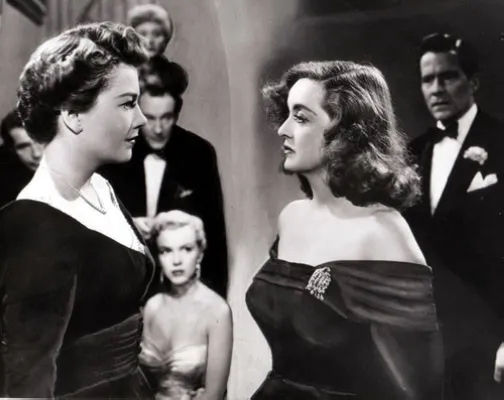
All About Eve
1950 ‧ Comedy/Drama ‧ 2h 18m
All About Eve is one of those films that seems to stand halfway between cinema and the theater, not because it is limited by dialogue, but because it turns dialogue itself into action, strategy, and seduction. The story moves less through events than through spoken maneuvering, glances, timing, and tiny shifts in behavior, and what keeps it so gripping is that every line seems to carry a hidden intention beneath it. Psychological movement becomes the real drama. The film is constantly pulling the viewer deeper into a space where performance and sincerity, stage and life, truth and manipulation can no longer be cleanly separated. That blurring is part of its magic. It can make you lose yourself in lies without ever letting the tension go slack. At the center is a whole circuit of female desire, ambition, insecurity, envy, and self-invention, a three-woman theater of repetition where one generation of hunger prepares the next. That is why the film keeps asking a harder question than simple ambition. At what point does a dream stop being a dream and become a form of vanity, obsession, or possession.
118

Underground
1995 ‧ War/Comedy ‧ 2h 50m
Underground earns the word epic not just through its historical scale, but through the way it lets private lives be swallowed, distorted, and mythologized by war. The span of time is vast, the background enormous, yet Kusturica keeps everything moving with the energy of a grotesque carnival. There are clear traces of Fellini in the film’s chaos, excess, and theatricality, even if Kusturica is less radical formally, but what gives Underground its real force is that beneath all the noise there is genuine thought and real feeling. At first the film can seem unruly to the point of confusion, almost as if it is refusing to tell you where to stand. Then, gradually, the disorder begins to cohere, and details that once felt scattered start locking together with startling clarity. That delayed revelation is part of the film’s power. The underground itself becomes one of the great metaphors of modern political cinema, a fabricated world sustained by war profiteers, where time loses meaning and history becomes a tool of manipulation. Fifteen years, twenty years, it hardly matters once suffering has been sealed inside a lie. By weaving fictional lives together with actual historical footage, Kusturica turns the whole film into a bitter joke about nationalism, war, and the absurd theater of political myth.
119

Das Boot
1981 ‧ War/Thriller ‧ 2h 29m
Das Boot belongs in any conversation about the greatest war films, and much of that comes from how mercilessly it turns space into pressure. The submarine is not just a setting but a machine of suffocation, a narrow metal world where fear, exhaustion, obedience, and routine are compressed until every movement feels dangerous. The last hour in particular is extraordinary. From the unbearable tension of survival under impossible conditions to the savage irony of escaping death only to be destroyed at the threshold of home, the film earns its classic status with absolute force. What gives it even more weight are the details surrounding that descent. The near-apocalyptic revelry before departure, the confused intelligence, the uselessness of command, the helplessness before Allied destroyers, the cruelty of ordering a breakthrough when death is almost certain, the rotting bureaucratic core of the German war machine hiding safely in Spain, all of it points far beyond the submarine itself. Petersen keeps the camera with the lower-ranking officers and sailors rather than the Nazi center of power, yet almost every turn in the story traces the larger collapse of the Third Reich. That is what makes the film so powerful. It never needs grand speeches about history. History is already there, sealed into the steel, the water, and the slow sinking of the boat itself.
120

The Texas Chain Saw Massacre
1974 ‧ Horror/Crime ‧ 1h 23m
What makes Hooper so great is that he understands the deepest source of horror is not what remains unseen, but what is unmistakably there, occupying space, refusing to be cut away. In the second half, Sally’s screaming flight goes on and on with almost unbearable duration, and the film resists using montage to soften or compress that distance. The chase becomes physical. You do not simply watch escape, you feel the body trapped inside its continuity. That is what gives the violence its nauseating force. The space is whole, and because it is whole, the terror cannot be edited into something cleaner or more abstract. Hooper is just as exact with Leatherface himself. The camera lingers on the labor of killing, the pulling of the saw, the handling of flesh, the ugly procedural detail of it all, and that detail matters. It makes the violence feel less like performance than like a brutal material fact. Leatherface is frightening not because he is theatrical, but because he seems to exist with the weight of machinery. By the end, when he is left alone on the empty road, swinging the chainsaw wildly against the setting sun, the film arrives at one of the most deranged closing images in horror. It is grotesque, ecstatic, and weirdly pure, as if terror itself had been stripped down to motion, sound, and heat.
121

The White Ribbon
2009 ‧ Mystery/Drama ‧ 2h 24m
In The White Ribbon, Haneke’s images feel like damaged sacred objects, austere, severe, almost devotional in their stillness, yet quietly rotting from within. The long takes carry a beauty that is never consoling. They hold on to faces, rooms, fields, and snow-covered silence until something close to pure evil seems to begin waking beneath all that order and cleanliness. What makes the film so frightening is that suspense does not build toward revelation in any ordinary way. It slowly dissolves into a deeper uncertainty, and the truth, though constantly pursued, never fully arrives. What remains instead is a residue of dread, the sense that violence has already won long before it is named. Haneke refuses emotional release at every turn. He strips away warmth, withholding psychology, melodrama, even the comfort of explanation, and lets the film move forward through distance, observation, and the cold persistence of inquiry. That is why its real target is never just the crime itself, but the structure that makes such crimes imaginable. The patriarchal authority, the moral repression, the training in obedience, the habits of humiliation and submission, these are what the film truly puts on trial. By the end, it feels less like a mystery solved than a historical wound exposed at its point of origin. Few films have made inherited violence feel this heavy.
122

Fantastic Planet
1973 ‧ Sci-fi/Drama ‧ 1h 12m
Fantastic Planet is the kind of film that leaves you stunned by the sheer exactness of its invention. Every design choice feels handcrafted to the point of perversity, as if the whole planet had been built not just as worldbuilding but as a philosophical object. The animation has that unmistakable strange beauty only Laloux could sustain, grotesque, elegant, alien, and deeply hypnotic all at once. The score matters just as much. Its psychedelic, off-kilter mood keeps the film floating in a state of eerie fascination, where nothing feels stable and everything seems slightly hostile to human perception. What makes the film so memorable is the way it uses the viewer’s sensory alignment with the tiny human figures to sharpen the violence of hierarchy. Superior and inferior species, domination and revolt, technology and ritual, even reproduction and meditation are all reimagined through a civilizational perspective that feels both wildly imaginative and coldly analytical. Laloux is not interested in building a perfectly rational sci-fi system. He is after something stranger and more enduring, a full alien world that becomes a diagram of class conflict, otherness, and the terror of being made small.
123

Once Upon a Time in America
1984 ‧ Crime/Thriller ‧ 3h 49m
Once Upon a Time in America moves like memory after it has already begun to rot. Leone takes the gangster epic and turns it into something far stranger and sadder, less a rise-and-fall saga than a long hallucination of friendship, betrayal, desire, guilt, and time. What makes the film so powerful is that everything seems to arrive through afterimage. The past is never simply revisited. It leaks, distorts, seduces, and accuses. That is why the film’s scale feels so unusual. Its grandeur is real, but it is always shadowed by decay. Leone stages New York not just as a historical world, but as a dream-space where intimacy and violence are constantly folding into one another. The performances, Morricone’s aching score, the soft drift between time periods, the opium haze hanging over the whole structure, all of it gives the film an almost narcotic melancholy. Beneath the crime story is something even more devastating, the realization that a life can be ruined not only by what happened, but by the way memory keeps reshaping what happened after the fact. Few epics feel this large and this intimate at once.
124

Christine
1983 ‧ Horror/Fantasy ‧ 1h 50m
Few films have ever given us car imagery this seductive. From the opening on the assembly line, where the bright red anomaly already stands out against industrial uniformity, Carpenter begins treating Christine as something more than a machine. The rearview-mirror point-of-view shot is really the moment she receives a soul, and after that the car’s gaze becomes impossible to ignore. Whether subjective or objective, the image keeps returning to the presence of the automobile itself, with those blazing headlights turning the whole screen into proof of her will. The film’s core conflict is built around the response of human and machine alike to violation, humiliation, and intrusion. Even after extreme damage, Christine can return under a gaze charged with erotic provocation, rebuilding herself and seeking revenge at any cost, even through repeated self-destruction. By the end, when her blood-marked body is pinned down beneath a stronger industrial machine, the film pushes its B-movie justice into something strangely brutal and sexual at once, turning the final destruction into both punishment and the last cry of a living force. The humor comes through the music, the night wraps itself around the act of driving, the tactile beauty of the film clings to metal and chrome, and all of its meaning is delivered through genre itself. It is one of Carpenter’s purest and most complete achievements.
125

Ritual in Transfigured Time
1946 ‧ Short ‧ 15 mins
Ritual in Transfigured Time gathers almost everything that makes Maya Deren singular. The dream logic and fractured editing recall Meshes of the Afternoon and At Land, the fascination with dance and the expressive body carries forward what she was already pursuing elsewhere, and even the thread imagery returns in transformed form through another kind of childhood game. But what makes this film especially important is that it names the force moving beneath all of those elements. Time is the true subject. Deren is not only repeating actions or slowing them down. She is demonstrating that cinema can seize time, suspend it, fracture it, and remake it according to inner rhythm rather than ordinary chronology. That is why the film feels so fluid and so uncanny at once. Bodies pass from social ritual into something closer to trance, gesture becomes destiny, and movement itself seems to slip free of physical law. Even the final negative-image plunge anticipates later experiments, as if the film were already pointing beyond itself. Deren does not simply record choreography here. She turns cinema into a ritual for transforming time.
126

Diaries Notes and Sketches
1968 ‧ Documentary ‧ 2h 57m
Watching Mekas’s private images, the mind is almost instantly carried elsewhere, to New York, to memory, to the strange way fragments of life can gather into something crystalline. Faces flicker, moments blur, gestures pass too quickly and yet remain uncannily real. That is the beauty of the film. It is made of scraps, glances, accidents, and unstable pieces of time, but together they form a living archive of presence. Mekas films from every possible angle, and that openness gives the whole work its energy. What he records is never grand in the usual sense, yet it is full of life because it comes out of a genuine love for living. That sincerity is what makes the film so moving. The past always seems to carry a quality of homesickness, even when it is joyful, and Diaries, Notes and Sketches turns that feeling into cinema. You watch it and feel time moving through people, through streets, through light itself. The camera finally becomes something very close to the eyes, but eyes that can preserve what memory will inevitably lose. In that sense, these rough and unembellished images are not minor scraps at all. They are the scattered remains of life that cinema alone can keep from vanishing completely.
127

Stranger Than Paradise
1984 ‧ Comedy/Indie film ‧ 1h 29m
With Stranger Than Paradise, Jarmusch more or less arrived fully formed. The cool detachment, the deadpan pose, the dry humor, the sense of emotional distance that would define so much of his later work are already all here. The film’s structure is deceptively simple, built out of spare black-and-white long takes separated by blackouts, a budgetary solution that ends up becoming one of its strongest formal choices. Those interruptions do not just save money. They externalize the film’s estrangement. Jarmusch keeps the camera back, often in static wide framings, letting each shot function almost like a sealed-off unit of time and space. People talk, drift, wait, joke, and waste time together, yet never seem to close the distance between themselves. Their relationships are held in place less by emotional intimacy than by the spaces they happen to share. That is what makes the film so moving beneath its cool surface. The bond between these young people feels fragile, provisional, almost accidental, yet somehow stubbornly durable too. Out of that contradiction Jarmusch creates a whole mood of modern emptiness, where inner vacancy and the dullness of everyday life keep people from ever fully reaching one another.
128

The Searchers
1956 ‧ Western/Adventure ‧ 1h 59m
Bazin once argued that beyond all the familiar images of the western, the blowing dust, the riders, the gunfire, the duel, the genre is first of all a myth, a myth about how human beings enter a land and try to adapt themselves to it. Ford understands that completely. His landscapes are monumental, but he rarely lets them overwhelm the people inside them. Again and again he frames figures through doorways, thresholds, and deep-space openings, giving the world a strange sense of embeddedness, as if each body were being tested against the space that contains it. But what makes The Searchers so great is that Ford is not simply repeating the western myth he had already mastered. He is revising it. Beneath the search narrative lies a far more troubling question about American civilization itself, about race, adoption, contamination, belonging, and the fantasy of purity. The film turns its central journey into something close to an anthropological crisis, asking what it means for a society built on violence to confront mixture, kinship, and the possibility that the boundary between settler and native can never remain clean. That is why the film still feels so charged. It is not just a western at its most iconic, but a myth of America thinking through its own racial unconscious.
129

The Third Man
1949 ‧ Noir/Thriller ‧ 1h 44m
One of the film’s most unsettling formal choices is the way it uses canted framing even within shot-reverse-shot patterns, letting imbalance infect the image from both directions and quietly turning moral and legal instability into something the viewer can feel before fully naming it. That sense of vertigo runs through the whole film. And then Welles arrives. As both filmmaker and performer, he has that rare ability to steal the center of gravity from everyone else, and here his entrance remains one of the great appearances in film history. The charm is part of the danger. His amused arrogance, his ease, the elegance of his self-possession make it almost impossible to look at him only as evil. Instead the viewer gets caught in the spell of his face, and more importantly in the light arranged around that face. This is where the film becomes truly extraordinary. Light is not just atmosphere or decoration. It becomes an active force in the narrative, revealing, seducing, concealing, and corrupting at once. That is why The Third Man lingers so powerfully. It understands that evil is often most persuasive when it first appears as style.
130

La Ciénaga
2001 ‧ Drama ‧ 1h 43m
Martel almost builds La Ciénaga out of weather, not just visual weather but acoustic weather. Sound here is never secondary. It carries heat, dampness, rot, irritation, exhaustion, and the thick physical drag of a world that seems to be slowly decomposing in place. That is part of what makes the film so singular. Rather than relying on conventional dramatic emphasis, Martel lets bodies, noises, fragments of conversation, offscreen space, and environmental pressure accumulate until the whole film begins to feel like a climate system of class, decay, and unease. The family at its center is not simply dysfunctional. They seem to be sinking into a condition, moral, social, and sensory at once. What makes the film so brilliant is that nothing is overexplained. Meaning seeps outward through gestures, through lethargy, through children wandering at the edge of danger, through the way space itself feels sticky, crowded, and faintly poisoned. Martel’s images are precise, but her real mastery may be in the soundtrack, in how she makes hearing become a way of sensing invisible collapse. La Ciénaga is not just a family film or a social film. It is almost a meteorological study of decay, where atmosphere becomes fate.
131

The Maltese Falcon
1941 ‧ Noir/Crime ‧ 1h 41m
John Huston’s debut already arrives with astonishing assurance, and The Maltese Falcon still feels like one of the true origin points of film noir. What makes it so decisive is not just the plot machinery, but the figure at its center. Humphrey Bogart’s Sam Spade is cool, sharp, amused, and morally elusive, a detective whose intelligence depends less on heroism than on his ability to see through everyone else’s performance. In that sense, the film did not simply give Bogart a great role. It helped define the entire screen persona that would follow him. The visual style is also revealing in its relative restraint. The high-contrast lighting is already there, but not yet pushed into full noir abstraction. Interiors dominate, shadows are used carefully rather than extravagantly, and Huston seems less interested in visual flamboyance than in tension created through blocking, rhythm, and the clash of personalities inside enclosed rooms. That restraint is part of the film’s strength. It gives the intrigue a hard, clean surface while allowing corruption, greed, and desire to poison the atmosphere from within.
132

Singin' in the Rain
1952 ‧ Musical/Comedy ‧ 1h 43m
Singin’ in the Rain is one of the great meta-cinematic narratives, but what makes it so brilliant is that it never wears that cleverness heavily. The film wraps its critique of the studio system in buoyant rhythm, bright color, and sheer musical exhilaration, so the satire arrives almost weightlessly. That lightness is precisely what gives it force. By keeping everything playful, the film can place its sharpest ideas fully in the open without becoming didactic. The shift from silent cinema to sound, the replacement of one kind of labor by another, the movement from body double to voice double, the gap between screen persona and lived reality, all of it becomes part of the same layered reflection on performance. What happens onstage, offstage, onscreen, and behind the screen keeps folding into each other. That is why the film feels so complete. It is not just a joyous musical, but a film about cinema discovering how to laugh at its own machinery while still remaining completely in love with it.
133

Modern Times
1936 ‧ Drama/Comedy ‧ 1h 27m
The opening metaphor alone nearly earns the film a place in history. The rush of workers is aligned with the movement of sheep, and within that mass the black sheep quietly marks out Chaplin’s figure from the start. In one gesture, the film establishes its whole vision of industrial society. Human beings are herded, timed, processed, and made to serve a system that no longer recognizes them as fully human. Chaplin’s factory sequences remain astonishing because they turn the conflict between man and machine into something both hilarious and deeply brutal. In that sense, the film’s critique of mechanized life loses nothing beside the grander dystopian visions of the era. What gives Modern Times its lasting force, though, is that Chaplin never lets social cruelty harden into pure despair. The poor are exploited everywhere, work offers no real dignity, society provides no true home for those at the bottom, and yet the film refuses spiritual defeat. The Tramp keeps moving. That final walk matters because it transforms endurance into a form of grace. The road ahead may still be uncertain, but Chaplin lets it open toward dawn.
134

Sherlock Jr.
1924 ‧ Comedy ‧ 45 mins
Buster Keaton’s cinema never stops feeling inventive, and Sherlock Jr. may be the clearest proof of just how far ahead he was. The fusion of comedy and action is so exact, so fearless, and so physically intelligent that nearly a century later the film still feels fresh enough to embarrass half the directors working now. What makes it truly great, though, is the film-within-the-film sequence, still one of the most astonishing passages in silent cinema. In an era with no digital effects to hide behind, Keaton creates a leap into the screen that remains genuinely magical. But the brilliance is not just technical. He does not use that device as a one-off trick. He builds an entire logic out of it, turning the nested fiction into a full narrative playground where space itself keeps transforming beneath the character’s feet. The sudden shifts from house to street to cliff to zoo to desert to island still feel exhilarating, not only because they are so cleverly staged, but because they reveal how elastic cinema already was in Keaton’s hands. Sherlock Jr. is not simply a great comedy. It is one of the earliest films to show that cinema could dream, cut, and move with a freedom no other art had ever possessed.
135

Possession
1981 ‧ Horror/Fantasy ‧ 2h 4m
Very few films feel this violently alive. Possession unfolds as if every relationship, every room, every gesture were already infected by breakdown, and the whole film keeps pushing that state until daily life itself turns into something unrecognizable. What makes Żuławski so overwhelming here is that he does not treat emotional collapse as private melodrama. He lets it expand outward until it absorbs politics, faith, sexuality, paranoia, and metaphysical terror into the same fevered world. Everyone is already at the edge of self-destruction, and the film never gives them the distance or calm to step back from it. Then there is the creature in the apartment, one of the most unforgettable monstrosities in modern cinema. It feels less like a monster in the usual sense than the embodiment of something unspeakable, a bloodied and shapeless apocalypse that hungers equally for death, desire, and reproduction. Adjani becomes its vessel, the body through which annihilation takes on form. By the end, its emergence no longer registers as metaphor alone. It feels like the arrival of doom itself. That is where the film reaches its highest pitch. Żuławski takes his understanding of love, division, ideology, and spiritual fracture and drives it so far that all of them collapse into catastrophe.
136

Irréversible
2002 ‧ Thriller/Crime ‧ 1h 37m
Gaspar Noé’s breakthrough arrived like a detonation. Irreversible is at once a Cannes competition film and the kind of work people immediately wanted to call forbidden, which already says something about how violently it entered public consciousness. What makes it so singular is not only its extremity, but the precision of its form. The fully reversed chronology, the stalking long takes, the camera swings so violent they seem to make the image physically ill, the inverted titles, the black-red-yellow expressionist palette, all of it turns the film into a machine for dread. The story itself is unbearably sad and simple, but Noé’s method makes that sadness feel inescapable. Everything moves backward, yet nothing can be undone. That is where the film’s central idea lands hardest. Time destroys everything, but cinema, by reversing time, can only make that destruction more cruelly visible. Even when Noé seems to offer a second path through subjective cues embedded inside apparently objective long takes, that gesture only deepens the tragedy, because the possibility of escape is felt more intensely precisely when it is already too late. Irreversible is not just a film about violence. It is a film about fate, about the trap of time, and about how form itself can become the instrument of despair.
137

The Holy Mountain
1973 ‧ Fantasy/Adventure ‧ 1h 54m
The Holy Mountain is one of the most excessive and intoxicating works ever made, lush, grotesque, dazzling, obscene, and fiercely alive. Its two major movements may seem split at first, but they are bound together by a single line of searching, first through corruption and growth within the madness of the earthly world, then through ascension and anti-growth in the direction of spiritual stripping-down. The first two thirds move through magical realism and expressionist satire, attacking religion, capitalism, colonial violence, war, sex, and spectacle with savage wit. The final stretch shifts into something more primitive, mystical, and surreal, a journey toward self-knowledge that is also a dismantling of illusion. What makes the film so overwhelming is that its visual density never becomes mere chaos. The color is extraordinary, the music just as potent, and the symbolic overload of cross-cultural and esoteric imagery is constantly held in tension with startlingly clean compositions, symmetry, centrality, circles, ritual order. Jodorowsky also uses zooms, sudden push-ins, pull-backs, hard cuts, and jump cuts with incredible force, not just for flourish but to produce revelation, rupture, and astonishment. Then the ending arrives and pushes that logic to its farthest extreme, with a final withdrawal so audacious it seems to tear the floor out from under the entire film. Even the production history feels like an extension of the work itself, huge in scale, risky to the point of madness, made with non-professionals, without the normal protections, always chasing some form of truth through lived ordeal. That reckless commitment is part of why the film still feels so dangerous.
138

City of God
2002 ‧ Crime/Drama ‧ 2h 10m
Few films handle narrative fragmentation with this much velocity and control. The story keeps splitting, circling back, changing perspective, and redistributing its climaxes so that intensity never belongs to one single peak but becomes the film’s whole rhythm. That is one of its great achievements. The repeated shifts in point of view gradually push the film beyond any one individual story and into something larger, a sense of fate reproducing itself through the social body. What makes City of God so gripping is that its razor-sharp editing creates such overwhelming momentum that even moments of structural looseness get swept up into the force of the whole. The viewer is dragged into a world of disorder, seduction, terror, and normalization, where violence is no longer an interruption but the atmosphere itself. In this place, evil is not simply chosen once. It is inherited, imitated, rewarded, and absorbed into the logic of everyday survival. That is what makes the film so bleak beneath its energy. No one easily steps outside the group, yet to remain inside is to sink deeper into the same cycle. The tragedy of City of God is not only that people are destroyed by violence, but that violence becomes the language through which the world keeps renewing itself.
139

Wanda
1970 ‧ Crime/Drama ‧ 1h 42m
Wanda can be read as one of the starkest feminist texts in American cinema, a portrait of bare life stripped almost completely of social protection, value, or place. Wanda has no real property, no political weight, no stable home, no vocation, no dignity recognized by the world around her. She seems to drift outside both family and society, not in freedom but in a kind of exposed remainder, suspended between use and abandonment. That is what makes the film so devastating. The softness and passivity that mark her do not protect her. They only make her easier for predatory men to absorb, exploit, and discard. Most of the time she endures rather than resists, attaching herself to others just enough to escape total nothingness without ever escaping dependence. But Loden refuses any comforting arc of liberation. There is no awakening, no redemption, no feminist triumph waiting at the end of this departure from ordinary order. Instead the film approaches something closer to cosmology. Wanda enters from a state of emptiness and seems to return to it, her final lost expression giving the whole film the shape of a life suspended between negation and erasure. That is why the film lingers so deeply. It asks not only what brought this woman here, but how many forms of social life quietly produce the same condition.
140

Demons
1971 ‧ Horror/Drama ‧ 2h 15m
There is something deeply fatalistic running through so many traditional ghost and period dramas, where character tragedy and destiny tragedy are never fully separable. In Demons, Toshio Matsumoto takes that atmosphere and pushes it into a zone between theatrical adaptation, nightmare, and historical collapse. The film keeps moving between dream and reality, yet neither realm offers relief. Both are equally cruel, equally inhuman. This is a world where deception is built into the possibility of ordinary life itself, and where loyalty can only be performed through money, transaction, and compromise. That is what gives the film its bitter force. A fading samurai ethic and an increasingly money-driven social order become tangled together until honor itself starts to look hollow. Matsumoto makes that contradiction unmistakable, especially in the ending, where gold and maps flare up as emblems of the new logic governing everything. By then, each individual has already become part of the killing field. The bodies piling up at the end feel not only like the climax of a nightmare, but like the revelation of a reality that could never have been avoided. No matter how often the image repeats, free will is never enough to alter the outcome.
141

Rome, Open City
1945 ‧ War/Thriller ‧ 1h 43m
Made under severe material limitations and drawn from real resistance history, Rome, Open City still carries the shock of something wrested directly from life. Rossellini had neither the resources nor the polished technical conditions of studio filmmaking, yet that lack becomes part of the film’s power. Location shooting, natural light, and the presence of non-professional performers all contribute to the rawness that would help define Italian Neorealism, even if the film still retains traces of melodrama and more classical narrative shaping. You can feel the cuts, the leaps, the unevenness, but none of that weakens it. If anything, it gives the film a nervous urgency, as though reality were pushing through the frame faster than form can fully contain it. What remains most moving is the plain sincerity of its moral energy. The occupation, the resistance, the fear, the sacrifices, all of it is rendered without decorative grandeur, yet with enormous feeling. And Magnani is unforgettable. Her performance gives the film some of its deepest human force, making the historical tragedy feel immediate, embodied, and impossible to shake.
142

Pickpocket
1959 ‧ Crime ‧ 1h 15m
Bresson strips Pickpocket down so severely that the world around the characters almost disappears. There are hardly any orienting wide shots, almost no true facial close-ups, and the film is built instead from eye-level medium framings and those astonishingly precise insert sequences of theft. The result is a cinema of removal, where environment, psychology, and even performance are pared back until only gesture, rhythm, and moral tension remain. The actors move with that unmistakable Bressonian quality, closer to models or puppets than expressive performers, yet this austerity never kills feeling. It only redirects it. Even the use of dissolves and fades contributes to that strange suspended state, as if events were passing through consciousness rather than unfolding in ordinary dramatic time. The sparse bursts of baroque music matter for the same reason. They do not overwhelm the film, only briefly open an emotional register that the rest of the style keeps tightly contained. Because the film is so minimal, the voiceover and diary structure become essential, carrying narrative information while exposing the protagonist’s ongoing effort to justify himself to himself. That is what makes the film so subtle. The elegance and lightness of the stealing, almost like choreography, keep colliding with the heaviness of the story, and in that contradiction you can feel the character’s inner argument taking shape.
143

Cleo from 5 to 7
1962 ‧ Drama/Music ‧ 1h 30m
Through the endless reflections in glass, mirrors, windows, and surfaces, Varda keeps exposing something fundamental about the medium itself. To look is already to anticipate, and to anticipate is already to begin shaping what is seen. That is why the film’s treatment of reality feels so rich. The world itself remains largely gray, ordinary, uncertain, while the tarot cards alone arrive in color, as if reminding us that meaning only becomes vivid once it has passed through perception. We do not simply receive life. We give it contour through the will to look, through interpretation, through the mediations that stand between us and the real. That is where the film becomes so philosophically sharp. Media never delivers reality in a pure state. It always separates us from it, even as it becomes the only way we can approach it. And when the mirror shatters, when glass breaks, that rupture does not restore direct access to truth. It merely produces another layer of mediation, another image to be read. Varda understands that no objective world stays objective for long. Sooner or later it fuses with subjectivity and becomes something unstable, intimate, and impossible to know with certainty. In that sense, the title itself is already a quiet trick. Seven o’clock never fully arrives. What matters is the suspended time of waiting, looking, and becoming.
144

Tango
1981 ‧ Animation/Short ‧ 8 mins
In Tango, a cramped room becomes a whole world. Too many bodies, too little space, too much repetition, until ordinary life begins to swell into suffocation. Everyone moves with purpose yet seems to see no one. Each person lives inside a private rhythm, as if the only way to survive density is to stop truly registering the presence of others. What looks slow at first gradually turns dizzying. Once history is compressed, layered, and replayed within the same enclosed space, daily life stops feeling mundane and starts resembling a frantic choreography, a tango of collision, indifference, and disappearance. That is what makes the film so haunting. All these people briefly share one room, one world, one slice of time, and yet they never really belong to one another. After eight minutes of confusion, intrusion, routine, growth, aging, and departure, the room remains, the child grows, the old leave, the ball from outside moves on again, and calm returns as if nothing had happened. The film leaves behind a quietly devastating thought. Human beings pass through the world like temporary visitors, tiny against the scale of history, yet endlessly busy imagining their own importance.
145

The Godfather
1972 ‧ Crime/Drama ‧ 2h 55m
Coppola’s command of the ensemble here is so complete that the complexity of the Corleone world never feels labored for a second. Relationships, loyalties, generational shifts, private tensions, and power structures all emerge naturally through behavior, placement, ritual, and atmosphere, often with the environment itself quietly registering changes in status long before anyone speaks them aloud. That is part of what makes the film so masterful. It does not simply narrate the rise and consolidation of a mafia dynasty. It turns that history into a family tragedy of almost operatic weight. What gives The Godfather its greatness is not only the crime saga, but its understanding of how power enters the home, how intimacy curdles into strategy, and how time turns protection into corruption. Every element serves that larger design. The use of light is legendary, the music unforgettable, the dialogue endlessly quotable without ever feeling overwritten, and both Brando and Pacino give performances so exact that the film seems to rearrange itself around them. Beneath all its grandeur is an acute grasp of human relations and historical change, which is why the film feels at once monumental and painfully personal.
146

Ballet Mécanique
1924 ‧ Experimental ‧ 19 mins
Ballet Mécanique stands as one of the key works of French avant-garde cinema and one of the clearest expressions of cinematic Cubism. The title says almost everything. This is a film of objects, machines, gears, fragments, and repeated forms set into motion until they begin to resemble a dance. What makes it so fascinating is that it is not abstract in the pure sense. The things we see are mostly ordinary things, everyday objects pulled from recognizable life, but once they are broken apart, repeated, enlarged, and linked through rhythm or visual resemblance, they stop behaving like mere objects and become part of a new perceptual system. That is where the film’s force lies. It is obsessed with visual rhythm, with the pulse created by repetition, interruption, similarity, and acceleration. Instead of telling a story, it teaches the eye to experience movement itself as structure. Ordinary reality is not erased here. It is reorganized into cinema’s own mechanical music.
147

An Andalusian Dog
1929 ‧ Fantasy ‧ 16 mins
An Andalusian Dog stands at the origin of surrealist cinema, and it still feels like a rupture. Built from dreams by Dalí and Buñuel, the film does not ask to be “solved” in any complete sense, because what it stages is precisely the world of the irrational, the unconscious, and dream logic. That is why every attempt to pin it down through Freud or through purely formal analysis will always miss something. The film is not hiding a neat secret behind its strangeness. Its strangeness is the point. What remains so powerful is the violence of its imagery and the precision of its associations. The montage of the sliced eye and the cloud crossing the moon is still one of the great shocks in film history, and the ants emerging from the hand remains just as uncanny and fertile. Those moments did not simply scandalize audiences. They permanently expanded what cinema could show, connect, and disturb.
148

Greed
1924 ‧ Drama ‧ 2h 20m
Even in its damaged form, Greed still feels monumental, as if the film were bleeding through the version history has allowed it to keep. The original cut was mutilated so severely that more than two thirds disappeared, and the reconstructed edition, however valuable, can only gesture toward what Stroheim actually built. Yet the power that remains is enough to make the loss itself part of the film’s legend. What survives already shows an extraordinary command of image, structure, and material detail. The visual language is rich without ever feeling ornamental. Gold-tinted teeth, blood, and birds keep returning as central motifs, binding together labor, desire, mortality, and captivity. The birds matter especially, moving from the tenderness of rescue to the cruelty of mutual entrapment, until release itself becomes one of the film’s last bitter gestures. Elsewhere, the recurring accordion, the funeral passing outside the wedding, the parallel side stories moving toward opposite destinies, and the slow corrosion of the soul by money all deepen the sense that greed is not just a vice but a total disordering force. What makes the film so haunting is that Stroheim never reduces this corruption to abstract moral lesson. It is always embodied, social, environmental, visible in faces, rooms, habits, and gestures. That fullness of observation is what makes Greed remain so overwhelming even as a ruin.
149

The Fall of the House of Usher
1928 ‧ Horror/Drama ‧ 1h 3m
The Fall of the House of Usher brings together beauty and grief with almost shocking intensity. Working from Poe’s gothic world, Epstein absorbs German Expressionist set design while bathing the film in a mistier, more impressionist visual atmosphere, and from that combination produces some of the most inventive editing of the silent era. Fog and veils drift around the old house, candle flames merge with trees, wind enters the hall and scatters pages, and suddenly the natural world no longer feels like background but like an active force, as if it were conspiring in the resurrection of the dead. The film keeps pushing everything toward a state of haunted animation. Close-ups of faces drive the drama forward, while slow motion and an unrestrained use of montage dissolve both narrative and image into something increasingly dreamlike. The concrete world is steadily softened, blurred, and spiritualized. With the help of that ravishingly classical score, the whole film seems to pass from gothic tale into pure visual lament.
150

The Phantom Carriage
1921 ‧ Horror/Fantasy ‧ 1h 47m
As Sjöström’s greatest achievement, The Phantom Carriage stands at a point where cinema already seems to know far more than it should. Its influence would reach directly into Bergman and Kubrick, but the film still feels startling on its own terms. The double-exposure imagery is central to that power. Rather than using trick effects merely for spectacle, Sjöström turns transparency, layering, and spectral superimposition into a way of making the supernatural feel cold, tangible, and mournful. The ghostly carriage moving through deserted streets or across violent waters remains one of the great images of silent cinema, and the technique still has not lost its force. Just as impressive is the structure. The film works through a nonlinear design full of flashbacks nested within flashbacks, memory opening into dialogue and dialogue opening into deeper recollection, until time itself begins to feel haunted. What is astonishing is not only that such a method existed so early, but that it is handled with such clarity and emotional control. The Phantom Carriage is formally adventurous, spiritually bleak, and narratively intricate all at once, a film that feels a century ahead of its moment.
151

The Adventure
1960 ‧ Mystery/Romance ‧ 2h 23m
The Adventure moves with a slowness that is never empty. The disappearance of Anna is never truly resolved, and that refusal is exactly what gives the film its force. Antonioni is not interested in mystery as a puzzle to be solved, but in what remains once meaning fails to arrive. What emerges instead is a world of wealthy modern people hollowed out by comfort, drifting through desire, boredom, and emotional fraudulence without ever fully touching one another. The long takes, empty spaces, medium and distant framings, and exquisitely controlled ambient sound all turn inner desolation into something architectural. Islands, deserted towns, ruined churches, bare landscapes, each place seems to mirror the emotional vacancy of the people moving through it. From beginning to end, the film is filled with a sense of erosion. Everything looks slightly worn down, as if intimacy itself had already begun to decay. That is why the characters appear so lonely within the frame. In Antonioni’s world, love has become unstable, accidental, perhaps nothing more than an event mistaken for feeling.
152

A Page of Madness
1926 ‧ Horror/Drama ‧ 1h 11m
A Page of Madness remains one of the great milestones of Japanese modernist cinema. Adapted from a story by Kawabata, it abandons dialogue almost entirely and relies on image, rhythm, and music to generate both atmosphere and psychology, which is why the narrative no longer unfolds in orderly terms but in a fractured, expressionist flow. What makes the film so striking is its use of light and shadow, especially the way faces are distorted, layered, and broken apart until relationships themselves seem unstable. Madness here is never just a subject. It becomes the film’s visual condition. The editing is restless, the imagery feverish, and yet certain moments land with extraordinary clarity. The overlapping of wheels and bodies near the end is one of them, an image so forceful it feels like it echoes far beyond its period. At the center is the life of a woman already shattered beyond repair, as irretrievable as a broken bowl. The image of the daughter sitting alone on the stepped seats before leaving carries the whole family tragedy in one gesture, turning private breakdown into something spatially visible.
153

The General
1926 ‧ Comedy/Action ‧ 1h 7m
The General is Keaton at his most complete, folding action, adventure, romance, and war into one of the great classical comedies. The achievement is even more astonishing when you remember how much of it was built through speed, improvisation, and Keaton’s own body taking the full risk of the stunts. What makes the film so satisfying is its structural clarity. The narrative is beautifully classical, almost architectural in its symmetry, and the two great train chases mirror each other with such elegance that the whole film feels like a machine running perfectly on comic logic. Yet none of that precision ever feels stiff. The gags emerge naturally from movement, space, timing, and danger, and the action is staged so cleanly that the camera never seems to strain for effect. That ease is part of the genius. Keaton makes impossible things look matter-of-fact. Moments like the train sequence in motion or the final kiss-and-salute are unforgettable because they condense everything the film does best, physical daring, romantic wit, and absolute formal grace.
154

Safety Last!
1923 ‧ Comedy/Thriller ‧ 1h 14m
Safety Last! is one of the great silent comedies, and also one of the purest examples of how suspense and laughter can sharpen each other instead of competing. Harold Lloyd’s appeal is very different from Chaplin’s melancholy or Keaton’s deadpan fatalism. What he brings is momentum, optimism, and the desperate energy of a small man trying to climb into a bigger life. That is what gives the film its brightness. It is funny almost without pause, but never weightless. The whole climb sequence remains extraordinary, both technically and emotionally, and the image of hanging from the clock has long since become one of silent cinema’s defining icons. What makes it even better is how much of the film’s visual intelligence is already present elsewhere, in the clever use of perspective tricks, substitute framing, and misdirection. Even early on, the film keeps turning ordinary setups into elegant illusions. Beneath all the comic invention is a very direct fantasy of striving, embarrassment, improvisation, and hope. That sincerity is part of why the film still works so well. It wants the little man to make it, and somehow makes that wish feel exhilarating rather than sentimental.
155

Viridiana
1961 ‧ Drama ‧ 1h 31m
With Viridiana, Buñuel appears to move back toward realism, but the blade of his irony never softens. The film is full of concrete situations, social detail, and recognizable behavior, yet almost every scene is charged with symbolic force. What makes it so devastating is the way Buñuel attacks religion without ever reducing it to simple mockery. Viridiana takes on a saintly role, trying to shelter the poor, instruct them, redeem them, almost imagining herself as a figure of pure charity. But the people around her do not become a redeemed community. They remain restless, hungry, vain, cruel, ridiculous, fully human in the ugliest sense. That is where Buñuel’s real provocation lies. He refuses the fantasy that goodness, piety, or self-sacrifice can purify the world by themselves. The beggars speak the language of devotion when it suits them, but beneath that performance lies appetite, resentment, mockery, and disorder. Religion here is not a cure. It is another costume draped over human contradiction. By the end, when faith has collapsed and Viridiana is seated at the table with her cousin, the film lands its most merciless idea. Religion and the bourgeois world do not truly oppose each other. They converge. That final gesture is Buñuel at his sharpest, suggesting that sanctity and property, piety and power, may have been sharing the same table all along.
156

Renaissance
1963 ‧ Animation/Short ‧ 9 mins
In Renaissance, stop motion becomes a strange kind of reverse time machine. Out of wreckage, scattered objects slowly reassemble themselves into the corner of an ordinary domestic interior, as if history were briefly granting the world a second chance. That process is mesmerizing on its own, but Borowczyk does not leave it there. The reconstructed life is quickly subjected to rapid cutting, explosive sound, and a violent acceleration that makes destruction return all over again. What emerges is a devastating loop. Creation and ruin are locked together, and the home becomes only a temporary pause between catastrophes. The film’s meaning is hard to miss. Whether read in relation to war more broadly or to the afterimage of genocide, it carries a clear antiwar force. What makes it especially powerful is the use of sound. The soundtrack introduces noises that evoke battle, violence, and threat even when the image itself remains detached from those events, which gives the whole film a haunted pressure. History is not always visible, but it is always there, pressing from outside the frame.
157

The Parallel Street
1961 ‧ Drama/Experimental ‧ 1h 26m
The Parallel Street may be one of the most radically forward-looking works of early New German Cinema. It begins with an almost absurdly simple setup, five men in a state of unexplained confinement, commenting on, arguing over, and trying to interpret a series of image fragments, but from that premise the film keeps opening outward with startling ambition. It is meta-cinema, certainly, but not in any easy or decorative sense. The film uses the act of looking itself as a trap, forcing language, interpretation, and authority into constant confrontation with the image. That is where its affinity with Situationist thinking begins to emerge, though Straub gives the whole thing a drier irony and a more elusive playfulness. What makes the structure so fascinating is the way linear narration and cyclical temporality keep rubbing against each other. The discussion moves forward, but the relation between image and commentary keeps pulling the film toward questions of death, recurrence, and rebirth, until time itself starts to split. And then the whole thing expands again, reaching toward religion, ethics, capital, love, power, nearly the whole horizon of human civilization. It is an immense intellectual gamble, but one held together by a remarkably strange and elegant architecture.
158

The Trial
1962 ‧ Thriller/Drama ‧ 1h 59m
Welles turns Kafka’s peculiar nightmare of repetition, futility, and bureaucratic absurdity into something far more fevered and expressionistic, a film overflowing with panic, dread, and visual delirium. What is dull and maddening in the novel becomes violently cinematic here. The greatest achievement may be the construction of space itself. Rooms are either too cramped or too vast, too crowded or too empty, and each variation pushes K further into estrangement. The bedroom ringed by doors and windows, the tribunal with its dense rows of eerily synchronized onlookers, the office hall filled with endless clerk-like figures, the labyrinthine court interiors, the tunnel-like stairways where bodies press and pull from all sides, all of it turns architecture into accusation. And then Welles counters this with another kind of terror, the desolation of empty streets, modernist buildings caught in wide-angle distortion, endless shelves, and open terrain that seems to offer no refuge at all. The camera keeps intensifying that instability through canted framing, aggressive high and low angles, hard contrast lighting, jagged cutting, and music that feels permanently off balance. What results is not just an adaptation of Kafka, but a total sensory system of persecution, where law, space, and consciousness collapse into the same nightmare.
159

Xala
1975 ‧ Comedy/Drama ‧ 2h 3m
Sembène’s background as a novelist shows immediately in Xala. The satire is written with unusual sharpness, direct, bitter, and almost merciless in the way it targets the absurdities of the postcolonial bourgeois order and the rot of patriarchy. The film keeps returning to the briefcase and the car horn as recurring motifs, turning them into little signals of power, vanity, and corruption. What makes the film so strong is how openly it links everything together. Marriage, gender, class, politics, money, masculinity, all the forms of exploitation in the film are exposed without disguise. Nothing is softened, and that directness is part of the sting. Even when the film is funny, the reality underneath is harsh enough to leave a bruised feeling behind. The ending is especially forceful in that regard, with its symbolism landing so clearly that it almost feels like an accusation hurled straight at the whole social order. Visually, the film is freer and rougher than its conceptual precision might suggest. The camera can feel casual, even loose, but that looseness has bite. The handheld passages, the abrupt movement, the low-angle attention to shoes, the frequent broken-axis cuts all contribute to a style that feels unstable in exactly the right way, as if the form itself were mocking the fragile dignity of the people on screen.
160

Elevator to the Gallows
1958 ‧ Crime/Noir ‧ 1h 31m
What first appears to be a chain of accidents, chance errors, and butterfly-effect misfortune gradually reveals something harsher beneath it, a world where contingency itself seems to answer to fate. The plot keeps tightening with almost mechanical precision, but that precision never feels artificial. It grows out of a social and political climate already primed for collapse. The male protagonist’s tragedy is rooted in the afterlife of war, especially the violence and moral dislocation surrounding Algeria, while the drifting, impulsive youth in the film reflects another postwar wound, rebellion without cause, a generation staring into its own emptiness. What gives the film its lasting ache, though, is Jeanne Moreau moving through the night. Her wandering becomes the emotional center of the film, and Louis Malle films her with such fragile intensity that she seems to carry all the loneliness of the city in her face. With Miles Davis’s score unfolding around her, the film reaches a rare kind of nocturnal beauty, cool, wounded, and fatalistic. And then that ending arrives, with the truth preserved in photographic revelation, and suddenly the whole film hardens into heartbreak.
161

Taxi Driver
1976 ‧ Crime/Noir ‧ 1h 54m
The greatest films become portraits of their era while also slipping beyond it, and Taxi Driver does exactly that. Travis may belong to the broken America of the late sixties and seventies, shaped by Vietnam, political violence, urban decay, and a country losing its sense of itself, but he is also disturbingly recognizable now. The difference is only in the medium of his rage. Today’s alienated men may vent themselves through screens, fantasies, and endless denunciation, while Travis steps outside and acts. That is what makes him so frightening. The famous image of him raising the gun toward the mirror is not just an icon of one historical moment. It is the embodiment of a type that keeps returning, the isolated extremist, the wounded narcissist, the man who longs to cleanse the world without ever understanding what his fury is actually aimed at. His anger feels absolute, but it comes from emptiness. That is why the film still cuts so deep. It shows how an empty soul can mistake violence for purpose, and how easily private rot can start imagining itself as historical mission.
162

The Matrix
1999 ‧ Action/Sci-fi ‧ 2h 16m
The Matrix does not just offer a striking sci-fi premise. It builds an entire worldview out of it. By introducing a high-concept system in which human beings are cultivated, harvested, and used not only for energy but also as the hidden substrate of machine intelligence, the film imagines a future where artificial intelligence has effectively evolved by feeding on both human life and human thought. That is part of what makes its world so rich. The matrix itself is not simply an illusion imposed from above, but a carefully designed reality built to keep people comfortable inside domination. Human beings are allowed a world they can live in, desire within, and mistake for freedom, precisely because pain has been displaced elsewhere. What gives the film its political force is the idea that there will always be a few who refuse that arrangement, people unsettled enough to see through the “natural order” imposed on them and willing to resist it. In that sense, the film’s rebellion can be read as a condensed historical allegory, a struggle in which humanity keeps trying to move beyond inherited systems of control toward some higher form of collective emancipation. That is why The Matrix remains so potent. Beneath the action, style, and philosophical spectacle lies a very old question about false consciousness, liberation, and whether people can ever truly wake up.
163

There Will Be Blood
2007 ‧ Western/Drama ‧ 2h 38m
In There Will Be Blood, oil is never just oil. It carries the weight of original sin, as if the ground itself had been soaked in blood long before the drilling began. The opening stretch, nearly fifteen minutes without dialogue, is already enough to leave you stunned. PTA’s control is so total that movement, labor, landscape, and sound alone are enough to establish an entire moral universe. This may be the film where his directing reaches its most severe and complete form. Daniel Day-Lewis, in turn, gives one of those performances that seem to erase the line between actor and role, all appetite, will, charm, and spiritual corrosion. Opposite him, Paul Dano’s preacher is vanity and bad faith disguised as holiness, and the struggle between them becomes one of the film’s deepest structures. It is never just a clash of personalities. It is a confrontation between industrial capitalism and the crisis of belief, between extraction and salvation, between material power and theatrical piety. Everything in the film pushes toward that collision. The score is tense and unpredictable, the cinematography magnificent, and the whole work keeps darkening as it follows a man whose ambition is so absolute that it eventually burns away every remaining human bond.
164

Yi Yi
2000 ‧ Drama/Romance ‧ 2h 53m
Yang’s greatness lies first in restraint. Watching Yi Yi, you often stop feeling as though you are watching a “movie” in any obvious sense, because the usual traces of direction are so carefully withdrawn. The distant framing, the refusal of manipulative scoring, the absence of conventional dramatic punctuation, all of it makes Yang seem less like a narrator than like a lucid, patient witness who refuses to tell us what life means before life has had the chance to simply unfold. That distance is never emptiness. It is the condition that allows the film to see so much. What makes Yi Yi extraordinary is Yang’s sensitivity to mental and emotional life. Different generations, different relationships, different forms of disappointment, longing, embarrassment, and quiet despair all emerge with astonishing precision. The family becomes a whole map of modern consciousness, with each age carrying its own version of confusion and loss. And Yang never rushes toward reconciliation, never offers some neatly shaped lesson or therapeutic exit. He lets things continue, unresolved, unfinished, painfully ordinary. That kind of control is exceptionally hard to sustain. To refuse easy answers and still create images this rich, this exact, this emotionally lasting, that is where Yang’s greatness truly lies.
165

Ran
1985 ‧ Action/War ‧ 2h 42m
Ran stands as one of Kurosawa’s late monumental achievements, a film that takes King Lear, passes it through the violence of the Sengoku era and a Buddhist sense of worldly impermanence, and arrives at something vast, pitiless, and mournful. Power and human nature are stripped bare here. Kurosawa once described the film as if seen from a height above the chaos of the human world, and that perspective is everywhere in the form. The camera often stays in medium or long distance, with many fixed compositions that preserve a kind of theatrical and moral distance, refusing easy intimacy even as catastrophe unfolds. That distance only makes the destruction feel more absolute. The colors are extraordinary, rich, violent, ceremonial, and the costumes and sets carry an expressive precision that turns every frame into a battlefield of rank, identity, and doom. Against that visual splendor comes the sound of the flute, aching and desolate, and around it all Kurosawa gathers clouds, blood-red light, empty landscapes, and figures already wandering toward blindness or ruin. Ran is not just epic in scale. It is epic in its vision of a world where authority collapses, loyalty rots, and human beings are left exposed beneath a sky that offers no mercy.
166

Unforgiven
1992 ‧ Western/Thriller ‧ 2h 11m
Unforgiven is what happens when the western turns around and looks at its own mythology with exhausted, unsparing eyes. Eastwood strips away the glamour of violence until what remains is awkward, ugly, humiliating, and final. The film is full of guns, legends, and men trying to live inside old stories about masculinity, justice, and reputation, but it keeps showing how thin and destructive those stories really are. No one here is clean. Heroism has curdled into memory, cowardice into survival, and killing into something that leaves a stain no rhetoric can wash off. What makes the film so powerful is that it never simply “deconstructs” the western from a distance. It still understands the pull of that old genre language, the loneliness, the frontier codes, the fatalism, and uses that pull against itself. By the end, Unforgiven is not just a great revisionist western. It feels like a reckoning with violence as inheritance, and with the lie that brutality can ever make a man whole.
167

The Thin Red Line
1998 ‧ War/Adventure ‧ 2h 50m
For all its extraordinary cast, The Thin Red Line has no true human protagonist. That absence matters. The film is not really about the heroism or psychology of particular men, but about the terrible smallness of human conflict when set against the life of the natural world it keeps violating. Only Malick would make a war film this way. The lush island setting is not just beautiful background. It is the film’s moral ground, a living paradise slowly scarred and trampled into ruin by military invasion. That is why the so-called “empty” shots are never merely lyrical interludes. The camera in this film feels almost inhabited, as if it belonged less to the soldiers than to the grass, the water, the birds, the wind, the animals, the earth itself. Nature is not passive scenery. It is a presence, a witness, an order of being that war enters only as desecration. Through that anonymous, searching camera, Malick forces us to see battle from outside human self-importance and back toward something older and more sacred. The world is not cruel to us. We are the ones who never knew how to cherish it.
168

Thelma & Louise
1991 ‧ Crime/Adventure ‧ 2h 10m
Thelma & Louise begins almost disarmingly plain, then suddenly tips into catastrophe. Because the film tells us so little about the two women at first, the viewer is thrown into the same state they are, shocked, confused, desperate to know what comes after the “accident” and whether escape is even possible. That is what makes the structure so smart. Only once the road opens does the film begin revealing who they are, piece by piece, through detours, encounters, arguments, silences, and brief flashes of tenderness. The result is that we do not simply watch them. We travel with them. We get to know them the way real companionship sometimes works, through shared danger and accumulated time. A script built this carefully could easily harden into cleverness, but the ending does something rarer. It no longer depends on human strategy at all. A force larger than calculation takes over, and what arrives is not merely tragedy, but a kind of release. The road finally leads beyond the roads laid out for them. That is why the film lands so powerfully. It understands that the deepest freedom in the road movie may begin exactly where the mapped world ends.
169

Paths of Glory
1957 ‧ War/Drama ‧ 1h 28m
Kubrick is the kind of director who makes thinking feel exhilarating, because he keeps intensifying the force of every choice. In Paths of Glory, his vision of power and human nature takes shape through the tension between ranks, where command, obedience, evasion, and sacrifice become part of a whole bureaucratic machinery. The film is brilliant at showing how responsibility gets displaced upward and downward at once, how decisions are issued, adjusted, negotiated, and betrayed across layers of authority until human life becomes the price of procedure. And yet Kubrick never lets the film dissolve into pure system. Through Dax, sympathy, justice, truth, and moral clarity break through with real sharpness. Even a close-up can become an ethical event. That is where Kubrick’s power lies. The environment is never just background but a shaped material force, light falling on bodies, trenches pressing inward, ceilings and corridors turning hierarchy into space. Low angles, top lighting, those relentless tracking shots through the trenches, all of it gives physical form to spiritual pressure. What is so astonishing is the precision. Kubrick makes difficult control look effortless, as if form itself had been stripped down to something clean, exact, and merciless.
170

Casablanca
1942 ‧ Romance/War ‧ 1h 42m
What gives Casablanca an added weight is not only what it is on screen, but when it was made. Released at the height of fascism’s most violent expansion, it came out at a moment when the ending of the war was still unknown. That matters enormously. The people making films like this were not working with the safety of hindsight. If fascism had won, the actors, directors, writers, and so many others involved in these anti-fascist cultural works could easily have faced punishment, erasure, or worse. That courage is part of the film’s greatness. Casablanca is often remembered for its romance, its elegance, its dialogue, its atmosphere, and all of that is real. But beneath the glamour is a film about moral choice under historical pressure, about whether private feeling can survive contact with public catastrophe, and about the moment when neutrality becomes impossible. That is why Rick’s arc still lands so strongly. He is not simply choosing between two loves, but between cynicism and commitment, detachment and history. In that sense, the film’s famous emotional pull is inseparable from its political force. At one of the hardest moments in the twentieth century, films like Casablanca helped keep alive the idea that resistance, sacrifice, and solidarity still meant something.
171

City Lights
1931 ‧ Comedy/Romance ‧ 1h 27m
City Lights has that rare balance of criticism, humor, and warmth that only Chaplin could sustain. In his last silent masterpiece, the bond between the Tramp and the blind flower girl becomes one of cinema’s purest love stories, not because it is idealized, but because it is built out of fragility, misrecognition, and impossible kindness. The comedy never stops giving. The boxing sequence alone remains one of the great miracles of screen rhythm. But beneath the laughter runs something much sadder. This is a film about class, humiliation, and the unstable dignity of the poor. The Tramp and the flower girl cling to each other in a world where wealth is fickle, status is cruel, and survival often depends on absurd performance. Chaplin understands that the city can be cold, but he also insists that small acts of love and tenderness can still flicker inside it like light. That final flower carries all of that at once, joy, pain, hope, embarrassment, and something close to grace. So many later films about little people and wounded goodness still seem to begin here.
172

Wild Strawberries
1957 ‧ Drama/Melodrama ‧ 1h 31m
Wild Strawberries follows an old man looking back across his life, and what makes it so moving is how quietly Bergman lets memory, dream, regret, and self-recognition flow into one another. The surreal dream sequences are among the film’s most beautiful achievements. Strange, blurred, and faintly uncanny, they carry a poetic force that never feels overworked or self-conscious. They do not exist to show off technique, but to open a path into the inner life. What begins in unease gradually moves toward something gentler, a form of reckoning that finally makes room for forgiveness. Taken purely as plot, the film may seem simple today, even spare, but that simplicity is part of its sincerity. Bergman lays a whole life out at the edge of reality and dream, at the edge of honor and decline, and from that position allows reflection itself to become drama. What remains is not grand revelation, but something more intimate and lasting, the possibility that self-knowledge, even late in life, can still become a kind of redemption.
173

Tables Turned on the Gardener
1895 ‧ Comedy/Indie film ‧ 1 min
First privately screened in La Ciotat in September 1895, L’Arroseur arrosé is often recognized as the earliest comedy and the first film built around a fictional gag. That alone would make it historically essential, but it is also simply one of the most enjoyable and technically meaningful works among the earliest Lumière films. What makes it so important is that cinema stops merely recording an event and begins staging one. A prank, a reaction, a reversal, a punchline, suddenly the screen is not just capturing life but organizing it for laughter. You can already see the foundation of silent comedy here. The exaggerated reaction, the bodily timing, the clean cause-and-effect setup, all of it anticipates the performance logic that later comedians would refine on a much larger scale. Even the great masters of silent comedy, Chaplin, Keaton, and others, seem to echo something first tested in miniature here. It is a tiny film, but also a genuine beginning.
174

To Be or Not to Be
1942 ‧ Comedy/War ‧ 1h 39m
To Be or Not to Be is one of the most perfectly calibrated comedies ever made. The script is a model of structure, the satire is razor-sharp, and Lubitsch’s touch is so elegant that even the heaviest political material seems to glide. That is part of the miracle. The film uses comic form to carry themes of war, nation, performance, and survival without ever becoming stiff or self-important. It lifts enormous weight with impossible lightness. What makes it so brilliant is the way the theater troupe, the stage space, and the internal dramatic material all lock seamlessly into the real wartime situation outside them. Performance becomes strategy, rehearsal becomes disguise, and the line between acting and survival keeps tightening with every scene. The result is a chain of escalating comic complications that never loses momentum. Everything moves with extraordinary smoothness, even when the stakes are deadly. The repeated use of Shakespeare is especially marvelous. The same lines keep returning in new contexts, taking on different functions, generating irony, suspense, and comic reflection through repetition itself. That economy is part of the film’s greatness. Lubitsch keeps reusing what is already present and making it newly alive each time. The effect is graceful, playful, and devastating all at once.
175

The Human Condition: Part 5 & 6
1961 ‧ War/Drama ‧ 3h 10m
With the final two parts, The Human Condition fully earns the stature of a great human epic. What is so remarkable here is that Kobayashi finally strips away the limits of any single moral posture and transforms his protagonist from a somewhat naïve saint into a figure of real resolve, someone who must act, endure, and carry his belief forward without illusion. There is no false neutrality in him, no convenient third position, and no real retreat into self-cancellation. The one thing driving him onward is the memory of what he lost when he still belonged to the human world in any ordinary sense. That is what gives these final chapters such force. They become the triumph of principled drama. From beginning to end, his belief never changes, to treat human beings as human beings, and that belief remains the engine of the entire narrative. Every crisis, every humiliation, every conflict grows out of the world’s distortion, betrayal, or destruction of that simple principle. That is why the films become so overwhelming. They are not just about war, survival, or ideology, but about what it costs to hold onto a human vision in a world built to crush it.
176

Gone with the Wind
1939 ‧ Romance/War ‧ 3h 56m
Gone with the Wind remains one of the rare literary adaptations that achieves its own kind of cinematic grandeur without being crushed by the weight of the source. Even with the inevitable reductions in the war material, the film still feels astonishingly full. Its place in film history is obvious, not least as the first color film to win Best Picture, but what continues to impress is how completely it understands the expressive power of color and scale. The repeated silhouettes against burning skies, the sweep of the landscapes, the visual elegance of destruction and spectacle all give the film a monumental radiance. At the center is Scarlett, one of classical Hollywood’s most contradictory and compelling figures. She begins as spoiled and self-regarding, then hardens through war, loss, and survival into someone fiercely self-reliant, relentless, and emotionally dangerous, a woman whose hunger for life and security becomes inseparable from illusion, denial, and desire. That complexity is a huge part of the film’s force. And then there are the great visual shocks, the crane movement revealing endless wounded bodies, the damaged plantation spaces, the constant sense that private feeling is being dwarfed by historical catastrophe. However compromised its politics may be, the film’s formal power and its creation of Scarlett as a figure of endurance, vanity, and delusion remain impossible to dismiss.
177
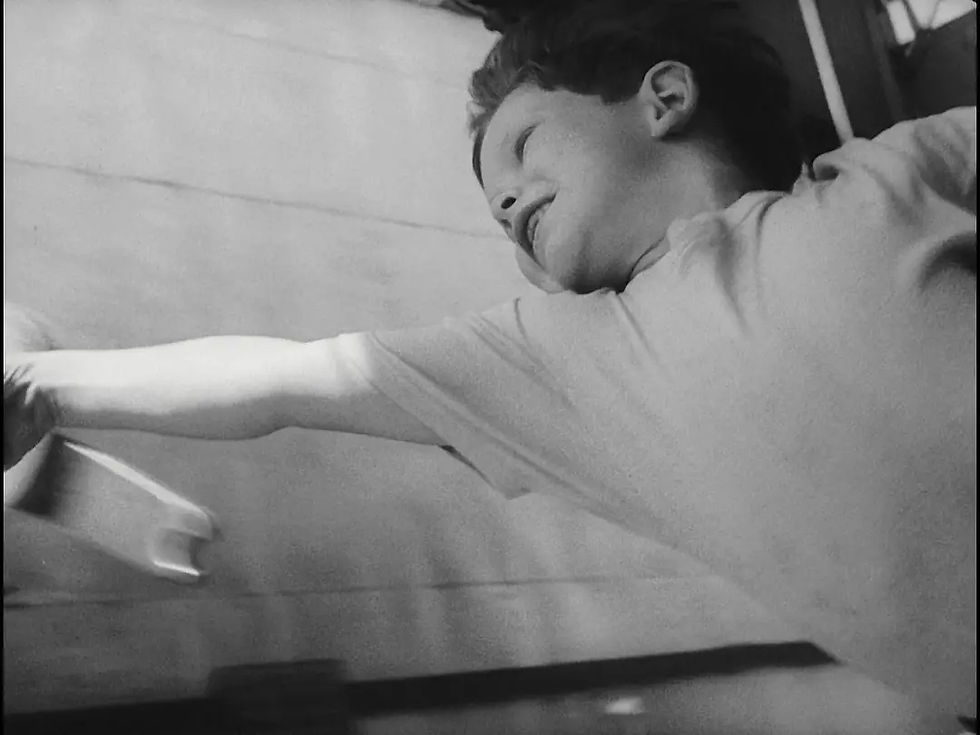
Little Fugitive
1953 ‧ Family/Adventure ‧ 1h 20m
There is something remarkable in the fact that John Ford, so often taken as a pillar of American conservatism, could adapt Steinbeck’s great left-wing novel and still preserve so much of its moral force. The result may bend more toward idealism in the end, but that does not diminish the film’s power. If anything, it proves that truly great images can cross ideology, time, geography, and race to find the people who still need them. Watching The Grapes of Wrath now, more than eighty years later, the shock remains almost physical. It feels distant from us in history, language, and circumstance, yet unbearably close in what it reveals about poverty, displacement, exploitation, and the quiet endurance of ordinary people. That is what makes the film so unsettling. It is not just a document of one place or one era, but a declaration on behalf of the dispossessed, a people’s testament that keeps returning wherever systems ask human beings to survive humiliation as if it were natural. Ford gives that suffering a monumental plainness, never emptying it of dignity, and that is why the film still trembles with life.
178

India Song
1975 ‧ Romance/Fantasy ‧ 2 hours
India Song remains Duras’s most celebrated work as a director, and one of the purest experiments in radical sound-image separation. The images move with languid grace, full of decay, stillness, and a strange exhausted elegance, while the camera glides slowly as if drifting through memory rather than through space. What makes the film so singular is the way the soundtrack opens an entirely different dimension. Voices arrive as poetic exchanges, detached, questioning, remembering, while layered sounds, stray dialogue, and rich ambient noise create a deep offscreen world that both connects to and slips away from what we see. The image and the story of the voices are displaced from each other, yet never fully severed. That gap is where the film lives. The actors’ slowed gestures and heavy, suspended expressions recall Resnais, but Duras goes even further into a kind of sculptural cinema, where bodies, mirrors, repetition, and echo turn the image into something almost architectural and dream-bound. At the center is one of Duras’s great themes, a love so absolute and dislocated that reality itself has no place to contain it. What makes the film historically decisive is that Duras does not simply loosen the bond between sound and image. She frees them from each other almost completely, then proves they can still generate meaning through distance, tension, and haunting repetition. That experiment would be pushed even further in the next year’s Son nom de Venise dans Calcutta désert, where the same soundtrack is laid over entirely different images, carrying the rupture to its furthest point.
179

Cinema Paradiso
1988 ‧ Drama/Melodrama ‧ 2h 35m
Cinema Paradiso is one of the ultimate acts of cinematic self-reflection, a film that turns love of movies into love of life itself. What makes it so affecting is the way it blurs the boundary between reality and illusion through a double movement. Cinema becomes part of living, and living in turn begins to resemble cinema. Inside the theater, those two worlds fold into each other and are filtered through Toto’s entire emotional life, his childhood, his friendships, his first love, his losses, his departures. That is why the film reaches so many people. It understands that every life is in some sense a film, and every film is also a fragment of history. To project images is to summon memory, to let the past appear again in light. But the film never slips into easy nostalgia. It also knows that life is harsher than the movies, and that if one never leaves, one may mistake the limits of a small town for the limits of the world itself. That tension is exactly what gives the film its ache. Even when the theater collapses, the emotional force it once held does not vanish with the building. The medium may decay, the space may disappear, but the feeling remains. That is the film’s deepest belief, that what cinema leaves inside people can outlast the place where they first learned to love it.
180

The Last Emperor
1987 ‧ Drama/History ‧ 2h 43m
Bertolucci begins with Puyi’s point of view, but what emerges is far larger than one man. The film reconstructs history with extraordinary richness and turns biography into something genuinely epic, yet its grandeur is always shadowed by isolation, humiliation, and loss. That is what makes it so haunting. The lighting, the production design, the score, the performances, everything is shaped with immense care, and the result never feels merely ornamental. History here is tactile, ceremonial, and cruel. The dual structure of present-tense imprisonment and flashback gives the film its rhythm, while desire, repression, erotic confusion, and emotional dependency are woven into the political collapse without ever feeling forced. Bertolucci never lets the historical pageant harden into museum drama. He keeps it sensuous, unstable, alive. The recurring symbolism of doors is especially powerful. Puyi’s life is one long sequence of thresholds he cannot truly cross, a reign defined by enclosure. The cricket is just as brilliant, a small object of continuity that outlives authority and returns memory in miniature. Moments like the touch through white silk, the tennis farewell, or the final dance all carry that same bittersweet precision. The Last Emperor is a film about power, but even more about captivity.
181

Requiem for a Dream
2000 ‧ Drama ‧ 1h 42m
Requiem for a Dream is one of the bleakest films ever made about desire, and its force comes from how completely form itself becomes part of the collapse. The score is unforgettable, not simply accompanying the film but drilling into it, while Ellen Burstyn gives the kind of performance that seems to cost the actor something real. Aronofsky’s visual method is just as relentless. Rapid-fire montage, punishing rhythmic repetition, body-mounted shots, violent camera pushes and pulls, spins, shakes, speed shifts, layered dissolves, every device is pushed to the edge until the film starts to feel like addiction turning into image. What makes it so devastating is that the spectacle is never empty. The changing seasons, the shifts in color, the escalating tempo, all of it maps a descent so total that by the end despair feels built into the structure of time itself. The film may seem on the surface to be about drugs, but what it really exposes is something larger and more modern, the machinery of wanting, the way desire under capitalism keeps promising transformation while hollowing people out from within.
182

Bad Education
2004 ‧ Thriller/Crime ‧ 1h 46m
Bad Education is one of Almodóvar’s most personal works, and one of the clearest examples of how naturally he can fuse melodramatic artifice with genuine emotional pain. The film’s structure is beautifully slippery. Flashbacks, scripts, performances, letters, memories, and stories within stories keep folding into one another, and the more the timelines loosen, the more intense the pleasure of recognition becomes. What looks tangled slowly clarifies, though never by restoring any stable boundary between fiction and reality. That instability is exactly the point. In Almodóvar’s cinema, narrative itself becomes a site of desire, concealment, and reinvention. What gives the film its deeper charge is the sense that cinema has replaced religion as the true faith of the modern world. Priests, institutions, and childhood trauma all remain present, but movies offer another system of confession, projection, and belief. The posters, the theater, the erotic charge of spectatorship, even the feeling that films are somehow secretly speaking one’s own life back to oneself, all of that runs through the film with quiet intensity. Visually, it is unmistakably Almodóvar. The reds burn, the blues chill, and the whole surface carries that lushness only to reveal something wounded underneath. That balance between theatrical beauty and buried damage is what makes Bad Education so haunting.
183
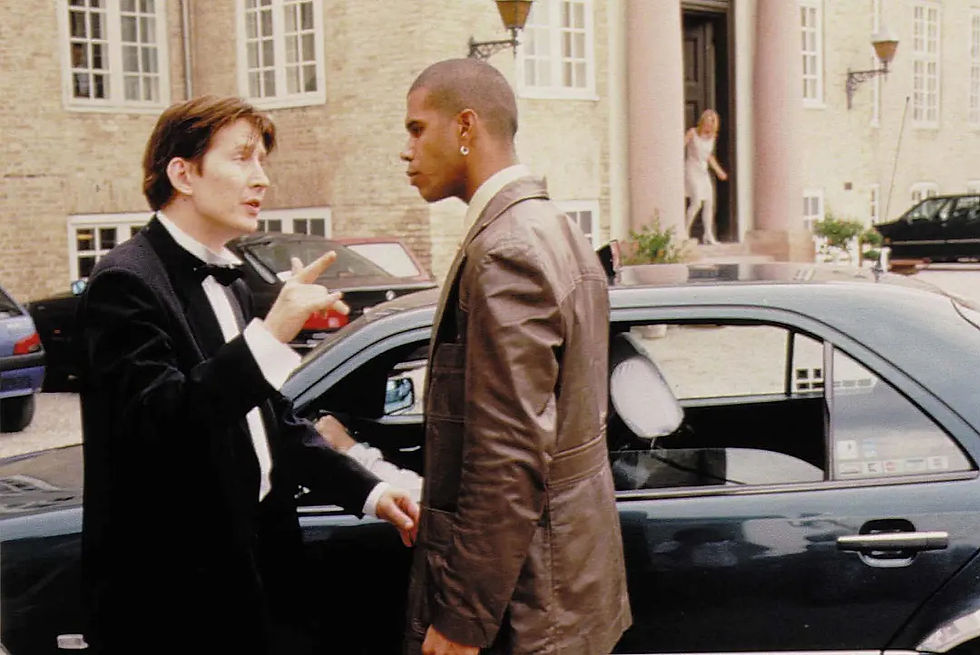
The Celebration
1998 ‧ Drama ‧ 1h 46m
The Celebration feels like a direct assault on the idea of polished, respectable filmmaking. Vinterberg does not care about smoothing over ruptures, hiding imperfections, or preserving the illusion of mechanical control. Blurred images, unstable framing, accidental-looking moments, all of it is left exposed because the film’s real project is to break apart inherited film grammar and rebuild it around raw emotional violence instead. That roughness never becomes an obstacle. It becomes the method. And it is exactly the right method for a story like this, one that tears away the elegant surface of a seemingly dignified family and forces its buried rot into the open. The handheld camera, always shifting, peering, tilting, catching things from unstable angles, gives the whole film the feeling of nerves on the verge of snapping. The house itself becomes a pressure chamber. What makes the film so exhilarating is that its looseness is never careless. The editing may feel jagged and impulsive, but it knows exactly when to let chaos build and when to sharpen it into revelation. Even a sequence like the siblings searching in the bathroom becomes electrified through cross-cutting, proving how much force Vinterberg can generate while seeming to reject forceful control altogether.
184

Song of Avignon
1998 ‧ Documentary/Short ‧ 8 mins
Song of Avignon continues Mekas’s gift for turning private fragments into a form of cinema that feels at once diaristic and strangely expansive. The film is built from scattered images, passing moments, handheld glances, and unfinished impressions, yet out of that brokenness it produces something deeply lyrical. What makes it so affecting is that Mekas never isolates pain as a dramatic event. His sorrow is folded into ordinary looking, into the way he returns to light, faces, streets, and fleeting instants as if memory itself were trying to hold together a damaged self. The handheld camera does not simply record the past. It searches through it, tests it, circles around time as something both lost and still vibrating. That is why the film feels like both introspection and release. A broken person trying to gather himself again already carries the shape of poetry. Along the way, the film fills with philosophical murmurs, emotional spirals, and questions that do not expect clear answers. That openness is part of its beauty. Mekas keeps filming not to solve pain, but to remain in contact with life despite it, and that is why his private images can still touch strangers so directly.
185
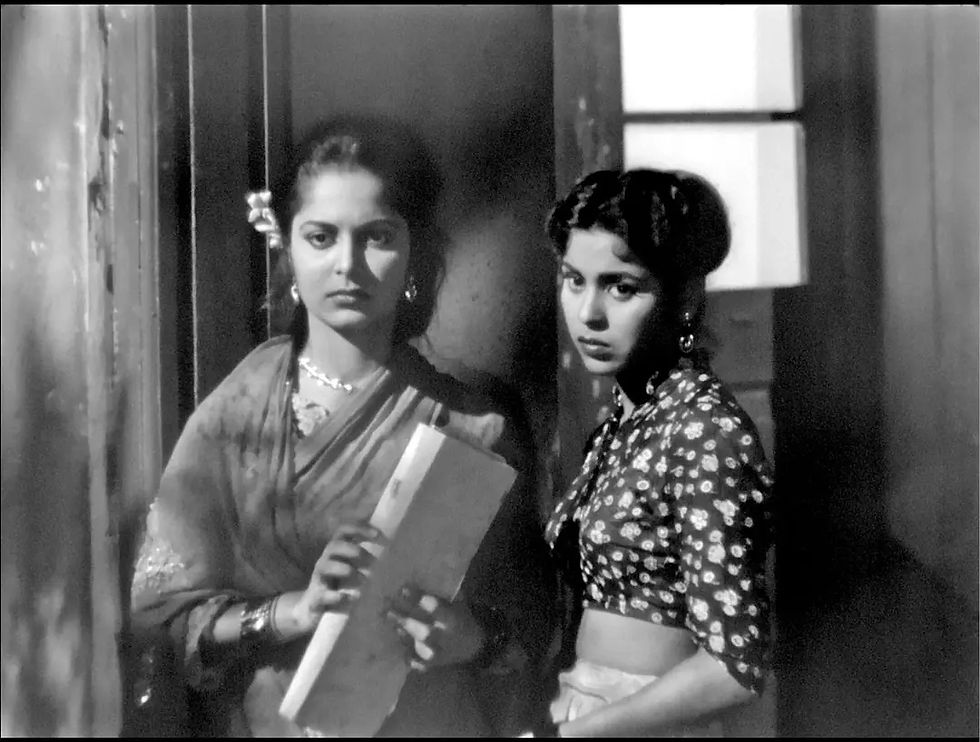
Pyaasa
1957 ‧ Romance/Musical ‧ 2h 26m
Pyaasa is one of the decisive films in Indian cinema because it shows how popular form could be transformed without losing emotional reach. Guru Dutt takes the familiar pleasures of mainstream storytelling and raises them into something far more wounded, critical, and artistically ambitious. The story of the poet becomes tragic and bitter, but never heavy in a dead way. Humor, romance, music, and sorrow keep colliding, and out of that mixture the film opens a sharper social consciousness. What makes it so powerful formally is how expressive every layer becomes. Railings, frames, and shadows keep cutting across bodies, turning space into a prison of value and recognition. Deep-focus compositions and intense close-ups work together with extraordinary force, while the songs do far more than entertain. They become interior cinema, a way of projecting longing, humiliation, idealism, and despair outward into the world. That is where the film’s grandeur comes from. Beneath the melodrama is a profound conflict between worldly success and inner conviction, between the moral poverty of society and the fragile dignity of the individual. In the context of post-independence India, that conflict feels even sharper. Pyaasa belongs to a moment when cinema began confronting modern nation-building not as triumph alone, but as a field of compromise, inequality, and spiritual damage.
186

Once Upon a Time There Was a Singing Blackbird
1970 ‧ Comedy/Musical ‧ 1h 25m
This is one of the great films about being chased by time without ever fully realizing it. The whole day seems to pass in a blur of errands, interruptions, half-finished obligations, chance meetings, and empty social drift. One thing leads to another, one person hands the protagonist over to the next, and before long life itself begins to look like a chain of distractions mistaken for activity. That is what makes the film so sharp. Otar Iosseliani captures the comedy of modern busyness, but underneath it lies something much sadder. The protagonist appears light, mobile, adaptable, almost charmingly free, yet he is also someone with no real center, no stillness, no true intimacy, only momentum. The ticking structure matters because it slowly builds toward inevitability. Looking back, the details were all there from the beginning, small objects, passing gestures, accidents waiting in plain sight. He thinks he is navigating life, but really he is being carried by it. That is why the film still feels so modern. Too much noise exhausts us, too much quiet unnerves us, and in between the two we fill our days with endless movement, hoping it will add up to meaning.
187

Goodfellas
1990 ‧ Crime/Thriller ‧ 2h 26m
Goodfellas moves fast, talks fast, cuts fast, yet somehow never loses control for a second. The story sprawls, the details pile up, the time slips by almost casually, and before you know it an entire era has risen, curdled, and begun to rot. That is part of Scorsese’s brilliance. What looks showy is actually incredibly disciplined. The film is loud, flashy, funny, vulgar, and full of surface seduction, but underneath all that energy is a very exact sense of decline. Nothing here ever really changes in a moral sense, and yet by the end it feels as though something essential has fallen away. The cast is a perfect balance of forces. De Niro gives the world its cold stability, Pesci its explosive terror, Liotta its nervous hunger, and together they create a gangster universe that is always smiling while quietly threatening to kill you. The dark humor matters too. So much of the film feels like lived-in routine rather than heightened legend, and that is exactly why its violence and emptiness hit so hard. The famous Copacabana tracking shot still works like a charm, not just because it is technically dazzling, but because that winding movement through back corridors and hidden entrances says everything about the film’s allure. It lets you feel what seduction looks like before the fall.
188

Anticipation of the Night
1958 ‧ Short ‧ 42 mins
Anticipation of the Night can be seen either as a child’s-eye experiment or as an experiment in recording childhood itself, and that doubleness is part of what makes it so rich. The film builds its first movement out of repeated visual procedures that feel both playful and exact: inverted interior shadows, shifting reflections in windows, quick upward sweeps across plants, lateral captures of streets and passing scenery from a moving car. These images do not simply imitate how a child sees. They also use that mode of seeing to approach the child as subject. In this way form and content become inseparable. What follows is even more remarkable. A structure initially grounded in physical time gradually loosens, warm yellow floods the frame as day passes into evening, and the earlier fragments begin returning in more unstable combinations. By the time the amusement park appears, with spinning rides accelerated or fused with rapid pans, the film’s language starts slipping from patterned disorder into something far less graspable. The car shots remain, but night changes everything. Darkness makes visibility itself uncertain, and the film’s earlier logic begins to dissolve. After the glowing buildings and streetlamps, what remains are children asleep, tree shadows, swans, polar bears, dream images passing in alternation. Once the directional continuity of movement fades away, the film seems to enter another order entirely, where the shadows of night mark time, the child anchors subjectivity, and the animals become emblems of dream. In reaching the night, the film also fulfills its title, and then, just as quietly, begins to move toward dawn.
189

Pulp Fiction
1994 ‧ Crime/Thriller ‧ 2h 34m
Pulp Fiction is Tarantino’s defining film, and one of the clearest examples of how structure itself can become style. Its circular, broken chronology does far more than shuffle events for novelty. It changes the emotional weight of every scene, letting death, humor, tension, and absurdity echo across different moments until the whole film feels held together by rhythm rather than by linear progression. That is where its brilliance begins. The editing is just as exact. Cross-cutting, shifts in shot scale, changes in tempo, and the stretching of time in key sequences all show a filmmaker who understands suspense and comedy as matters of timing above all else. The Mia revival scene is a perfect example, turning a simple action into a prolonged nervous spectacle. Then there is the dance, one of the film’s most iconic passages, at once casual, stylized, and already haunted by cinema history. What makes Pulp Fiction so enduring, though, is that beneath all the cool surfaces and quotable swagger lies an extraordinary control of tone. Black humor, menace, accident, philosophy, banality, and violence all coexist without canceling each other out. Tarantino turns pulp into architecture.
190

Under the Skin
2013 ‧ Sci-fi/Horror ‧ 1h 48m
The most hypnotic thing here is those pure black, viscous spaces where people seem to vanish without sound. The premise itself is not entirely new, but Glazer transforms it through image and sound so completely that the film becomes a triumph of cinema at its most elemental. The documentary-like surfaces of the everyday world are rendered with a strange mechanical coldness, while the abstract sequences of seduction and erasure push the film into something almost inhumanly beautiful. That contrast is where its power lies. As the act of hunting gradually turns into a process of sensing, hesitation, and curiosity, this alien being begins to develop a fragile desire to belong, to change, to inhabit human life with something like warmth. The moments of looking, touching, and testing are filled with a quiet expectancy, as if she were trying to understand not just flesh, but the possibility of personhood. And because that longing is doomed from the start, because the gap between self and world can never truly be crossed, the film becomes unexpectedly heartbreaking. Out of that contradiction Glazer creates a profound loneliness, one that keeps deepening until the whole film feels suspended between fascination and grief.
191

Dr. Strangelove
1964 ‧ Comedy/War ‧ 1h 35m
With Dr. Strangelove, Kubrick turns the logic of nuclear annihilation into one of the great black comedies. The premise is essentially one giant catastrophic misunderstanding, but the brilliance lies in how completely the film commits to the absurdity without ever weakening its political bite. Every character is exaggerated just enough to become unforgettable, and the dialogue keeps landing with that uniquely Kubrickian precision, dry, ridiculous, and terrifying at once. The war room argument, the obsession with bodily purity, the anti-communist paranoia, the pilot’s stiff heroism, the lingering Nazi shadow inside Strangelove himself, and the final doomsday mechanism all build a world where global destruction feels less like an exception than the natural endpoint of bureaucratic madness. That is why the film still feels so sharp. It refuses to treat the Cold War as solemn historical furniture. Instead it exposes the whole confrontation as a theater of male vanity, ideological delusion, and technological death wish. Even the music helps push the comedy into something more estranging, making catastrophe feel weirdly buoyant and even more obscene because of it. Kubrick’s genius here is that the laughter never cancels the horror. It only makes it more exact.
192

Dogtooth
2009 ‧ Drama ‧ 1h 34m
Dogtooth is not only a brilliantly constructed cinematic allegory of authoritarianism, but a film that produces a much stranger sensation as well, a kind of baffled unease, as if the world had slipped into a nightmare where signifier and meaning no longer line up. That is part of what makes it so disturbing. Lanthimos builds the family as a closed political system, one held together by incest, indoctrination, punishment, and the absolute pressure of invented language, until the house itself starts to feel like a miniature state of terror. Form is crucial to that effect. The severed compositions, the awkward framing, the hard cuts, the slight disjunctions between sound and image all create a narrow, airless distance that makes everything feel even more pathological. And yet what keeps breaking through that control are the body’s own unruly instincts. Sex, aggression, repetition, the urge to wound, destroy, imitate, or escape, these cannot be fully domesticated. The licking, the hammering, the mutilated doll, the cries, all of it keeps reminding us that beneath ideological conditioning there remains something raw and intractable. That is where the film becomes more than an exercise in cruelty. Lanthimos’s signature deadpan estrangement turns out to be perfectly suited to political expression, because it reveals domination not as spectacle, but as a system so normalized it has become absurd.
193

La Haine
1995 ‧ Thriller/Crime ‧ 1h 38m
Kassovitz captures youth as agitation before it has found a direction, restless, humiliated, volatile, and already half-formed by the violence around it. What gives La Haine its force is that it never isolates that rage as a purely personal emotion. It emerges from a specific social environment, the neglected banlieue, racial tension, police hostility, and the deadening sense of being trapped outside the promises of the republic. The film makes that world visible without reducing it to sociology. Form matters too much for that. The long takes, tracking shots, shifts in movement, aerial flourishes, and zooms often push close to bravura, but the energy is not empty. It gives the film the pulse of bodies that cannot settle, of a city and its margins locked in constant friction. Vincent Cassel is unforgettable at the center of it, all nerves, bravado, danger, and instability. What lingers most is the feeling that the film is not simply about explosion, but about the time before explosion, when anger is already in the air and no one knows how to stop its fall.
194

Portrait of a Lady on Fire
2019 ‧ Romance/Drama ‧ 2h 1m
Portrait of a Lady on Fire begins with pursuit and stolen observation. A painter watches, studies, memorizes, while the woman being watched remains at first the object of a task, a commission, a face to be captured for someone else. What makes the film so beautiful is the way that structure keeps shifting. The right to look, to paint, to define, to ask, to withhold, to desire, all of it gradually rotates between them until the relation of subject and object can no longer remain fixed. By the time love fully arrives, it does so not as possession but as mutual recognition, the gaze finally becoming reciprocal. And yet even this island of women is not outside patriarchy. Men barely appear, but their authority is everywhere, issuing the commission, awaiting the image, setting the terms under which women may be seen and named. That absence makes their presence even more suffocating. Sciamma understands this perfectly, which is why the film’s politics never need to be declared loudly. They are built into who gets to look, who gets to make, and who gets to sign. The visual world is just as precise. The painterly compositions, the long takes, the candlelit interiors, the firelit night, the cliff edges, the sea, the sky, the silhouettes against evening light, all of it gives the film a rare tactile elegance. It is a love story, but also a meditation on image-making, memory, and the ache of having once truly seen and been seen.
195

Outer Space
1999 ‧ Experimental/Short ‧ 10 mins
Outer Space takes material from The Entity and tears it apart until horror is no longer located only in the woman onscreen, but in the image, the room, and the act of watching itself. That is what makes the film so ferocious. The story is still there in some ghostly outline, a woman enters a room and is overtaken by something invasive and impossible to name, but Tscherkassky pushes it so far into abstraction that dream, reality, memory, and cinematic violence all start collapsing together. The editing is savage, the frame tilts and shakes, flashes split the image open, multiple exposures and collage textures keep scraping against each other, and suddenly the entire interior feels as though it is being ripped apart from within. What is so brilliant is that the terror no longer belongs only to a haunted body. The space itself seems to disintegrate. The flickering surfaces, scarred film textures, violent sound-image clashes, and high-speed cutting create a state of total instability, where perception loses any secure ground. Outer Space does not simply remake a horror film. It makes cinema itself look possessed.
196

Taxi
2015 ‧ Drama/Comedy ‧ 1h 22m
Taxi is one of those films that hurts almost quietly, which somehow makes it hurt more. I have almost no resistance to this kind of fake-documentary form that keeps blurring the boundary between record and construction, especially when what it reflects feels so painfully close to recognizable social reality. Panahi does something extraordinary here. He keeps everything light, witty, mobile, even playful, and yet inside that looseness sits an entire society under pressure. The taxi becomes a miniature public sphere, carrying death penalty debates, religion, censorship, women’s rights, political control, everyday survival, and the absurd compromises people learn to make under restriction. That compression is one of the film’s great achievements. Nothing feels over-explained, but everything is there. The humor matters too. The bootlegger and the niece bring a kind of irresistible vitality, and their presence keeps the film from sinking into pure bitterness. That tonal balance is exactly what makes Panahi so special. He can sigh without collapsing, accuse without shouting. Even the formal setup, the windshield camera, the handheld additions, the sense of cinema surviving in reduced conditions, turns the film into a small miracle of freedom under confinement. It is a realist film, but also a rose growing behind bars.
197

The Bridges of Madison County
1995 ‧ Romance/Drama ‧ 2h 15m
The Bridges of Madison County unfolds like something half-remembered, half-lost, as if the entire film had already begun dissolving the moment it started. What makes it so affecting is the patience with which it builds intimacy. The feeling does not arrive all at once. It opens gradually through small hesitations, careful glances, testing words, and the slow recognition of two lives unexpectedly answering each other. By the time love takes shape, it feels less like a sudden accident than like something uncannily fated, as though they had met too late and exactly on time. That is why the film hurts so deeply. This may be the one reckless, wholehearted possibility either of them will ever have, and yet it appears inside a world already bound by duty, habit, family, and irreversible choices. Eastwood understands that the film’s true tragedy lies not in the intensity of desire, but in the knowledge that love may have to survive through renunciation rather than possession. When the rain comes and longing gives way to stillness, the film reaches its most devastating register. Nothing needs to be said. A look becomes enough. In that silence, the whole weight of love, ethics, sacrifice, and irretrievable time passes between them.
198

Silent Light
2007 ‧ Drama/Melodrama ‧ 2h 7m
Silent Light is one of those rare films that makes room for the miraculous. On the surface, it tells a familiar story of adultery within a Mennonite family in Mexico, but Reygadas approaches it with such natural patience and such luminous seriousness that the ordinary gradually takes on a spiritual charge. The film’s structure already suggests this larger rhythm. It opens with darkness and a sky slowly turning toward dawn, and closes by moving back upward from sunset into night, holding human life inside a broader cosmic cycle. That sense of duration matters. Again and again Reygadas turns to long distant views of sky, clouds, and open land, asking us to slow down enough to feel time not as narrative urgency but as something inward and elemental. Even the barely perceptible movement of clouds becomes part of the film’s method, teaching us to see that what seems still is always changing. Indoors, the wide-angle lens subtly warps walls, doorways, and domestic space, giving everyday life a pressure and strain that words alone never express. The absence of score is just as important. In its place come insects, birds, cattle, wind, water, rain, a whole field of natural sound that reopens the senses and lets the world breathe around the characters. What emerges is not just a story of guilt and longing, but a film in which nature, time, and grace seem to wait quietly behind every image.
199
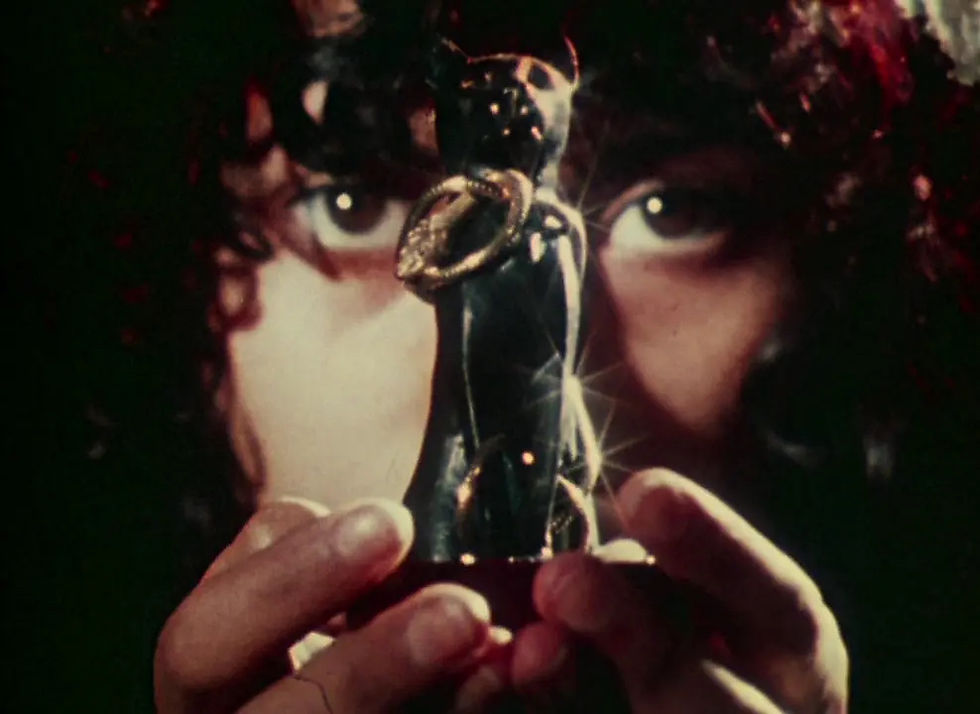
Lucifer Rising
1972 ‧ Fantasy/Horror ‧ 30 mins
Lucifer Rising may be Anger’s most complete film, the point where his occult imagination, symbolic density, and visual control all reach their highest level. The move into exterior locations and more refined cinematography gives the film an unusual clarity for something so drenched in mysticism. Every image feels charged, not because it explains itself, but because Anger understands that experimental cinema can work like a field of ready-made symbols, a place where visual art, ritual, mythology, and cultural debris are already waiting to be recombined. That is exactly what he does here. Egyptian, pagan, satanic, and esoteric elements are thrown together in a way that is unmistakably postmodern, yet never empty. The montage keeps pushing symbolic cinema one step further, making meaning less a matter of narrative than of collision, rhythm, costume, landscape, gesture, and light. What remains is a dazzling stream of surreal images, beautiful, excessive, and faintly dangerous, a cinema of cult ceremony, ecstatic pageantry, and cosmic disorder. Lucifer Rising does not invite interpretation so much as initiation.
200

Wind
1996 ‧ Drama/Short ‧ 6 mins
Built from a 1952 photograph of three standing women, Wind does something astonishing with almost nothing. In just six minutes, one sweeping 360-degree movement begins with those three women and ends with them again, turning a static image into a full meditation on death, witness, and time. The single long take is so clean and decisive that it never feels strained or ornamental. It simply moves, and in moving, it opens the world around them. The black-and-white image gives everything a severe, elemental force, as if life, labor, landscape, and death had all been stripped down to their most permanent form. What makes the film so powerful is that it says almost everything through that one gesture of rotation. A whole human condition passes through the frame, and then returns to the same three women, still standing there, as if they had seen it all. Their gaze becomes the true force of the film. It moves like wind itself, passing over the grass, the cattle, the cart, the houses, even the hanging body, and in doing so transforms them into silent witnesses of history rather than figures left at its margins.